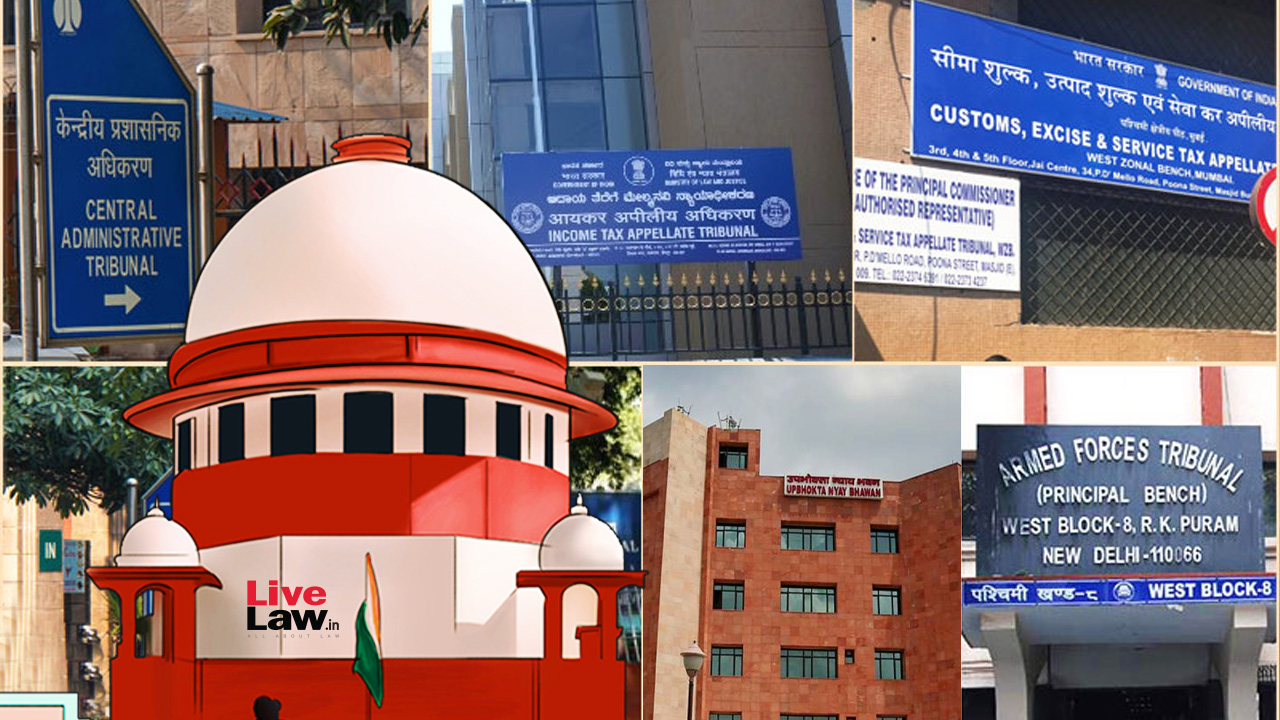
Supreme Court Triumph: Tribunal Reforms Act 2021 Overturned for Threatening Judicial Independence!

The Supreme Court of India on Wednesday struck down the Tribunal Reforms Act, 2021, which addressed the appointments, tenure, and service conditions of tribunal members. Chief Justice BR Gavai, along with Justice K Vinod Chandran, voiced strong disapproval of the Union Government’s failure to implement prior court directives regarding tribunal appointments. The judges found that the Act merely rehashed provisions previously deemed unconstitutional, thereby undermining the court’s authority.
In its ruling, the bench explicitly stated that the Act could not stand, noting violations of the crucial principles of separation of powers and judicial independence. The judgment asserted that the legislation constituted a “legislative overruling” of binding judicial decisions without rectifying any identified issues. “The Impugned Act cannot be sustained,” the ruling noted, emphasizing that it contradicts essential constitutional principles and fails to address concerns previously highlighted by the court.
The court reiterated that until Parliament enacts a new law consistent with its previous judgments, the directives from earlier cases-especially those involving the Madras Bar Association-will remain in effect. These prior judgments established that tribunal members should have a minimum tenure of five years and that only lawyers with a decade of experience should be eligible for appointment.
The Supreme Court’s ruling came in response to a petition filed by the Madras Bar Association, challenging the 2021 Act’s inconsistencies with earlier court decisions. The decision mandates the establishment of a National Tribunal Commission within four months, an essential step toward improving tribunal governance.
For sitting tribunal members and chairpersons whose selection occurred prior to the 2021 Act’s implementation, the court provided protections. Their appointments will continue under the conditions previously established, dismissing the altered tenure and service conditions imposed by the Act.
In earlier judgments, the Supreme Court had already invalidated similar provisions in the Tribunal Rules 2020 and the Tribunal Reforms Ordinance 2021, reinforcing the mandate for a minimum five-year tenure. However, the 2021 Act proposed a reduced tenure of four years and set a minimum age for appointments at 50. It also modified the selection process for chairpersons, deviating from the guidelines established in previous cases.
During the hearings, Chief Justice Gavai expressed discontent with the Attorney General’s attempts to prolong the process, questioning whether these actions were intended to delay the proceedings amid the Chief Justice’s retirement.
Senior Advocates representing the petitioners included Arvind P. Datar, C. S. Vaidyanathan, and Sidharth Luthra, while R. Venkataramani, the Attorney General for India, and Additional Solicitor General Aishwarya Bhati represented the Union Government.
This latest ruling reaffirms the Supreme Court’s commitment to maintaining judicial independence and upholding constitutional integrity, laying down a clear path for future legislative efforts regarding tribunal governance. As the legal landscape evolves, the development serves as a critical reminder of the importance of adhering to constitutional principles in judicial appointments and operations.
Original Source: https://www.livelaw.in/top-stories/supreme-court-strikes-down-tribunal-reforms-act-2021-says-it-violated-judicial-independence-310436
Category :
Tags:
Publish Date: 2025-11-19 11:16:00