Big Oil Faces Crucial Crossroads: Navigating a Future of Diminished Profits and Uncertain Choices

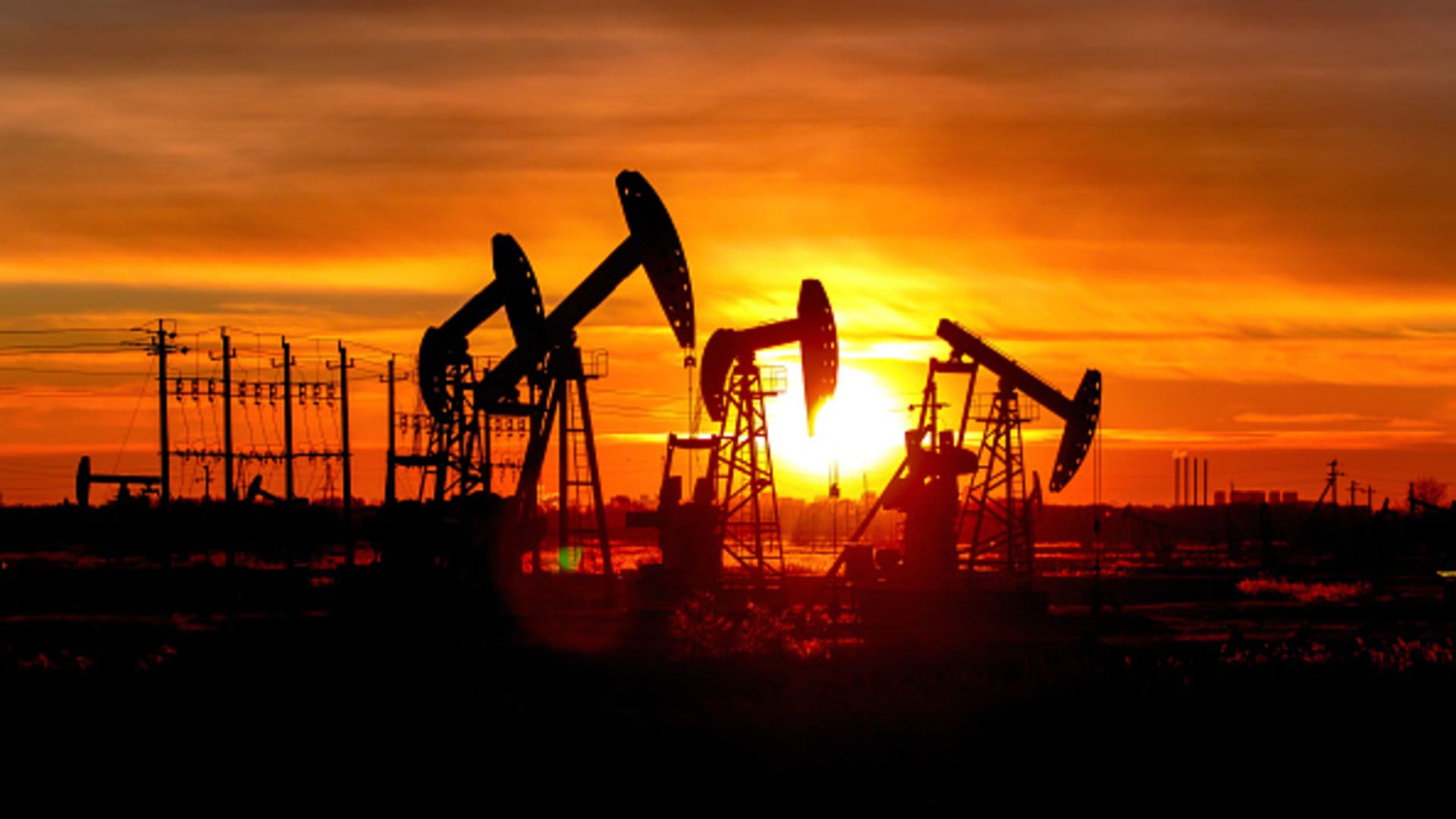
Oil pumpjacks at Daqing Oilfield in Heilongjiang Province, China, symbolize the challenges facing major oil companies as they navigate a turbulent market marked by declining crude prices. As energy supermajors like Exxon Mobil, Chevron, Shell, and BP adapt to this weaker environment, their previously generous shareholder payouts are expected to face significant scrutiny. The shift in strategy comes after a boom period; in 2022, the top five oil companies amassed nearly $200 billion in profits, fueled by soaring fossil fuel prices in the wake of Russia’s invasion of Ukraine.
Flush with cash, these firms rewarded shareholders with record dividends and aggressive share buyback programs, often described by U.N. Secretary-General António Guterres as “monster profits.” Recently, however, this trend appears to be reversing. Maurizio Carulli, a global energy analyst at Quilter Cheviot, notes that cash returns from operations have reached around 50% for some companies in recent quarters. Yet, Carulli warns that maintaining this level of payout in a declining price environment could lead to unsustainable debt levels.
BP recently scaled back its share buybacks from $1.75 billion to $750 million following first-quarter profits that missed expectations. TotalEnergies has also adjusted its buyback pace, citing economic and geopolitical uncertainties. Carulli describes these steps as a pragmatic shift, with other oil majors likely to follow suit.
According to Thomas Watters, managing director at S&P Global Ratings, the pressure on oil companies is palpable as crude prices soften, with predictions of a potential downturn into the $50 range next year as OPEC increases production and global inventories rise. In this climate, companies are compelled to cut costs and limit capital expenditures to sustain returns.
Clark Williams-Derry, an energy finance analyst at the Institute for Energy Economics and Financial Analysis (IEEFA), argues that trimming share buybacks is an easier option for Big Oil. “Buybacks are gravy for investors, but dividends are the meat,” he pointed out. A reduction in dividends, however, could significantly unsettle Wall Street, as evidenced by Saudi Aramco’s recent cut to its hefty dividend amid uncertain oil price forecasts.
The current condition of Big Oil is perhaps not as dire as initially feared. Peter Low, co-head of energy research at Rothschild & Co Redburn, noted that oil prices have remained surprisingly resilient, hovering between $65 and $70 per barrel, despite predictions of a market glut. However, this week, international benchmark Brent crude traded at around $63.61, while U.S. West Texas Intermediate futures rested at $59.77, prompting questions about future shareholder distributions.
Looking ahead to the third quarter earnings reports, due at the end of October, investors are keen to see how the lower commodity price environment will impact distributions and buybacks. TotalEnergies and Shell will report on October 30, followed by Exxon Mobil and Chevron on October 31, with BP set to reveal its results on November 4. As energy companies weigh their options amid this complex landscape, one thing is clear: whatever path they choose is likely to disappoint some investors while striving to sustain their financial health in a shifting market.
Original Source: https://www.cnbc.com/2025/10/13/big-oil-to-confront-tough-choices-as-mega-profits-fade-into-memory.html
Category :
Tags:
Publish Date: 2025-10-13 13:17:00