Transforming Microbial Harmony: How Aztreonam Rebalances Pseudomonas aeruginosa and Streptococcus salivarius Interactions

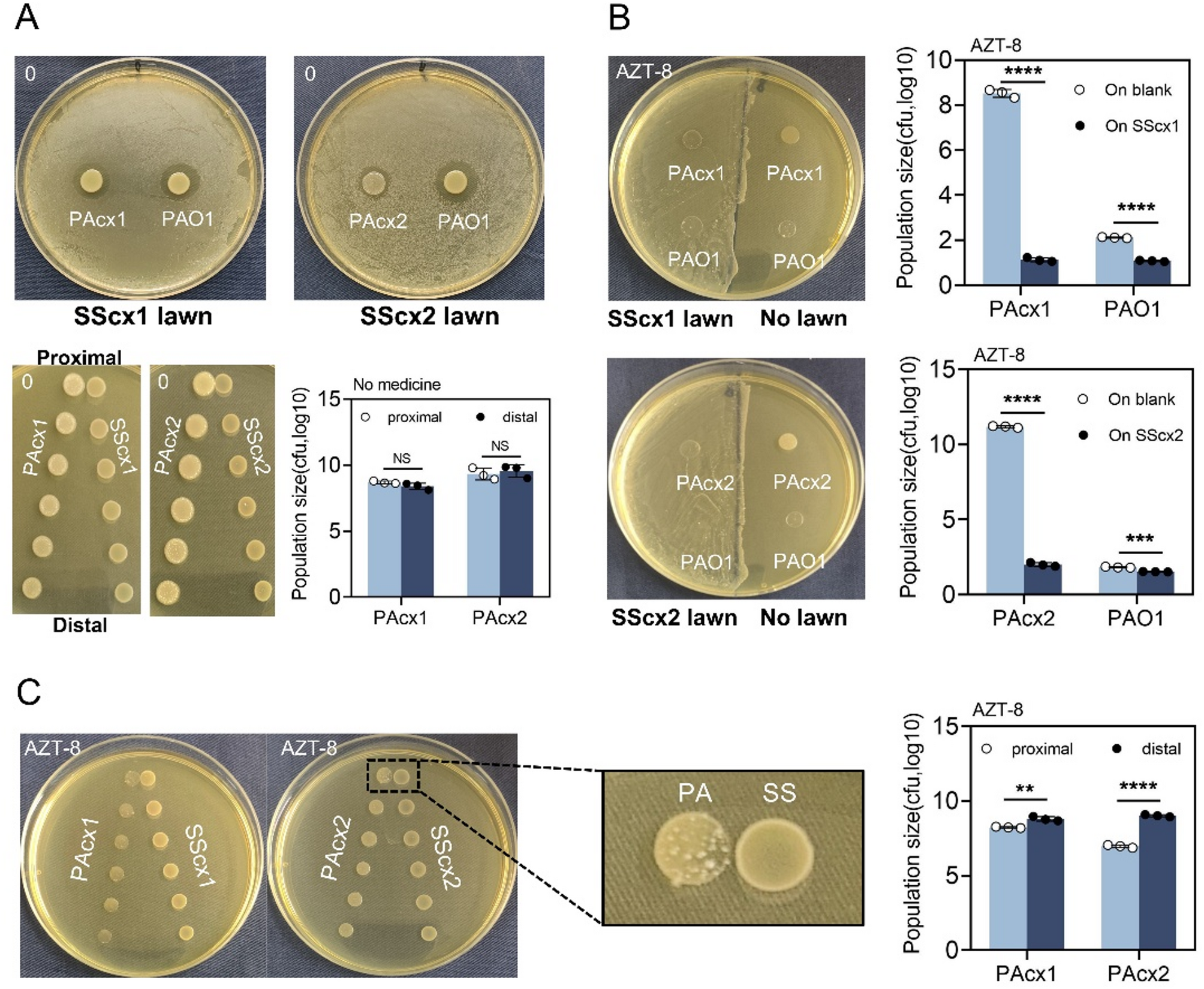
Recent research has unveiled intriguing dynamics in bacterial interactions, particularly between Pseudomonas aeruginosa and Streptococcus salivarius, highlighting how aztreonam, a β-lactam antibiotic, alters their competitive behavior. This study began by observing these bacteria on BHI agar plates, revealing that P. aeruginosa strains, regardless of type, thrived on S. salivarius lawns, creating inhibition zones indicative of their competitive growth. However, S. salivarius was unable to survive on P. aeruginosa.
Previous tests established the minimum inhibitory concentration (MIC) of antibiotics for both species, revealing significant disparities in their resistance to aztreonam. Further experiments confirmed that at a low concentration of aztreonam (8 µg/mL), S. salivarius growth remained unaffected, whereas P. aeruginosa exhibited an initially delayed growth rate. Remarkably, after 24 hours, P. aeruginosa reached near-control density levels. When the antibiotic concentration was escalated, P. aeruginosa struggled to thrive on S. salivarius lawns, indicating the bacterium’s enhanced resistance.
Investigations also included pairwise proximity assays to study the mutual effects of their extracellular products. Results showed that S. salivarius did not inhibit or stimulate P. aeruginosa growth in antibiotic-free environments, but with aztreonam present, it effectively hindered the formation of P. aeruginosa colonies. This suggests that antibiotic presence may alter interspecies interactions, giving S. salivarius the upper hand in competition.
The study emphasized the dynamic interactions between the two species under varying conditions, revealing that P. aeruginosa typically dominates in non-treated environments but faces challenges in the presence of aztreonam. Co-culturing these bacteria demonstrated that S. salivarius could overtake P. aeruginosa when aztreonam was part of the equation, showcasing the antibiotic’s role in changing interspecies competition.
Moreover, extracellular products from S. salivarius inhibited the expression of virulence genes in P. aeruginosa, including pyocyanin-a key factor in the severity of infections. Notably, higher concentrations of S. salivarius culture supernatants significantly curtailed pyocyanin production, especially in a P. aeruginosa mutant strain.
Through sophisticated cross-feeding experiments, researchers discovered that aztreonam treatment activated S. salivarius genes while inhibiting those in P. aeruginosa, further underscoring the drug’s profound effect on the microbial ecosystem. This alteration in gene expression also correlated with reduced virulence, as observed in C. elegans model experiments, where nematodes exposed to P. aeruginosa with aztreonam or S. salivarius supernatants exhibited significantly improved survival rates.
In summary, this research clearly demonstrates that aztreonam can fundamentally alter the competitive dynamics between P. aeruginosa and S. salivarius. By enhancing the inhibitory effects of S. salivarius on P. aeruginosa, aztreonam not only impacts bacterial growth but also holds potential therapeutic implications for managing infections where these species interact, offering new avenues for antibiotic usage in complex microbial environments.
Original Source: https://bmcmicrobiol.biomedcentral.com/articles/10.1186/s12866-025-04303-x
Category :
Tags:
Publish Date: 2025-10-10 09:20:00