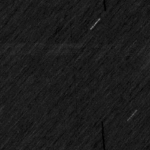

Two spacecraft currently orbiting Mars have provided new insights into the interstellar comet 3I/ATLAS, capturing images during its closest approach to our neighboring planet. This encounter constitutes the European Space Agency’s (ESA) most detailed view of the comet, which hails from a distant star system beyond our solar neighborhood. The comet is on an extensive journey through the inner solar system, making its closest approach to Mars on October 3, in anticipation of a significant interaction with the sun set for October 30.
During this flyby, ESA’s ExoMars Trace Gas Orbiter (TGO) and Mars Express orbiter observed 3I/ATLAS as it zipped past at a staggering speed of approximately 130,000 mph (210,000 km/h). Although Mars Express was unable to capture adequate images due to the comet’s faintness-estimated to be ten thousand to one hundred thousand times dimmer than typical targets-ExoMars TGO successfully recorded a series of photographs. These images have been compiled into an animated GIF by ESA, showcasing 3I/ATLAS as a fuzzy, luminous dot moving through space.
In the imagery, the bright dot corresponds to the comet’s nucleus, an icy core, and its accompanying coma-a cloud of gas that expands as the comet approaches the sun. According to NASA, as comets near the sun, sublimated ice transforms into gas, enlarging the coma and intensifying its brightness. Additionally, the solar wind plays a role in sculpting the comet’s distinctive tail by pushing gas and dust away from the sun.
Nick Thomas, principal investigator for ExoMars’ Colour and Stereo Surface Imaging System, emphasized the challenges posed by the comet’s dimness, stating, “The comet is around 10,000 to 100,000 times fainter than our usual target.” Consequently, the currently captured images do not display a visible tail. Nevertheless, ESA scientists speculate that as 3I/ATLAS continues its approach toward the sun, both its coma and tail are expected to become more pronounced.
Meanwhile, an image captured by the Mars Perseverance rover on October 4 may provide additional evidence of 3I/ATLAS, appearing as a bright streak against the Martian sky. However, due to the ongoing U.S. government shutdown, NASA has halted public communications, leaving the image unconfirmed as of now.
3I/ATLAS is notable for being the third confirmed interstellar object, following 1I/’Oumuamua and 2I/Borisov, and is potentially the largest discovered to date, measuring between 3 and 7 miles (5 to 11 km) wide. Its trajectory suggests that this ancient comet has traveled through the galaxy for billions of years and predates the formation of our sun.
Currently, the comet is located on the far side of the sun, out of sight from Earth, but it is expected to become visible to ground-based telescopes again in early December. Following its close encounter with the sun, 3I/ATLAS will make a swift pass by Jupiter in March 2026, before permanently exiting our solar system.
Stay tuned as ESA continues to analyze data from its Mars satellites, hoping to unlock more secrets about this mysterious interstellar traveler.
Original Source: https://www.livescience.com/space/comets/closest-view-yet-of-interstellar-comet-3i-atlas-captured-by-mars-orbiter
Category :
Tags:
Publish Date: 2025-10-08 01:23:00