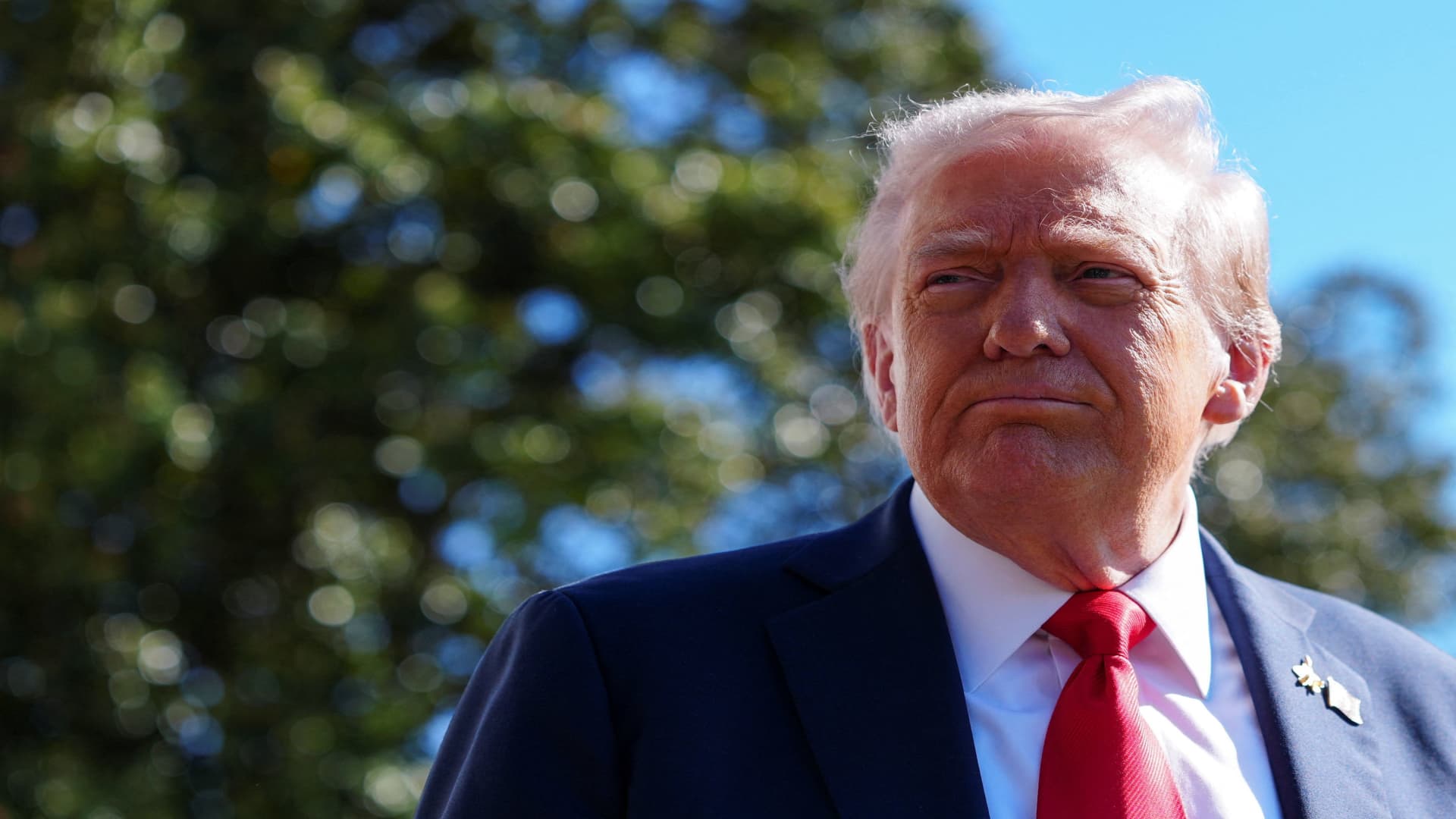

President Donald Trump has authorized the deployment of 300 Illinois National Guard troops to Chicago to safeguard federal officers and assets amid ongoing civil unrest. This action represents a significant escalation in Trump’s federal intervention strategy across various cities. However, a similar initiative in Oregon to mobilize 200 National Guard troops was stymied by a federal judge, who ruled that Trump appeared to be overreaching his legal authority in response to comparatively minor protests outside a U.S. Immigration and Customs Enforcement (ICE) building in Portland.
On Sunday, Trump expressed his frustration with the ruling from U.S. District Court Judge Karin Immergut, whom he appointed during his first term. He criticized her decision, stating that she “ought to be ashamed” and arguing that Portland was in a state of chaos. White House spokesperson Abigail Jackson defended the deployment in Illinois, citing ongoing violence and lawlessness that local leaders have failed to control.
Trump has described both Chicago and Portland as plagued by crime. He referred to Portland as a “war zone” and suggested that a strong federal response is necessary to restore order. Since assuming office, Trump has discussed deploying troops to several cities, including Baltimore, Memphis, and San Francisco, among others. In stark contrast, the governors of Illinois and Oregon have voiced strong opposition to these federal actions. Illinois Governor JB Pritzker labeled Trump’s ultimatum as “outrageous and un-American,” insisting that such military interventions should not be enforced against a state’s will. Oregon Governor Tina Kotek, who previously spoke with Trump, called the planned deployment unnecessary and refused to call up Oregon National Guard troops.
In a notable development, U.S. Attorney General Pam Bondi released a memo directing agencies within the Department of Justice, including the FBI, to assist in protecting ICE facilities in major cities like Chicago and Portland.
In Chicago, racial profiling concerns have surged, particularly as armed, camouflage-clad Border Patrol agents have made arrests near prominent downtown locations amid heightened immigration enforcement efforts. The Department of Homeland Security reported that an armed U.S. citizen was shot by federal agents in a separate incident, which underscores the tense atmosphere in the city. Advocates for immigrant rights have criticized federal enforcement tactics, claiming that agents have used aggressive measures, including tear gas, during raids.
Simultaneously, Judge Immergut’s ruling on Saturday highlighted a critical legal perspective, emphasizing the long-standing American principle against government overreach and military intrusions in civil matters. The ruling blocked the deployment of federalized forces in Portland, stressing the importance of state sovereignty. Despite Trump’s claims of rampant violence, local officials contend that he often bases his assertions on outdated images from previous protests following George Floyd’s death.
Meanwhile, in Memphis, a federal law enforcement task force, which began operations as part of Trump’s crime-fighting initiative, has gained traction. Tennessee Governor Bill Lee expressed support for this effort, though apprehension remains among residents regarding potential immigration detentions.
In Louisiana, Governor Jeff Landry has requested National Guard assistance as crime rates rise in various cities, despite reports indicating a recent decline in violent crime in places like New Orleans.
As Trump’s federal actions provoke varied responses from state officials, the ongoing legal battles and public discourse suggest that the contentious issues of federal military deployment and state rights will continue to shape the landscape of American civil rights and law enforcement policy.
Original Source: https://www.cnbc.com/2025/10/05/trump-troops-illinois-oregon.html
Category :
Tags:
Publish Date: 2025-10-05 21:50:00