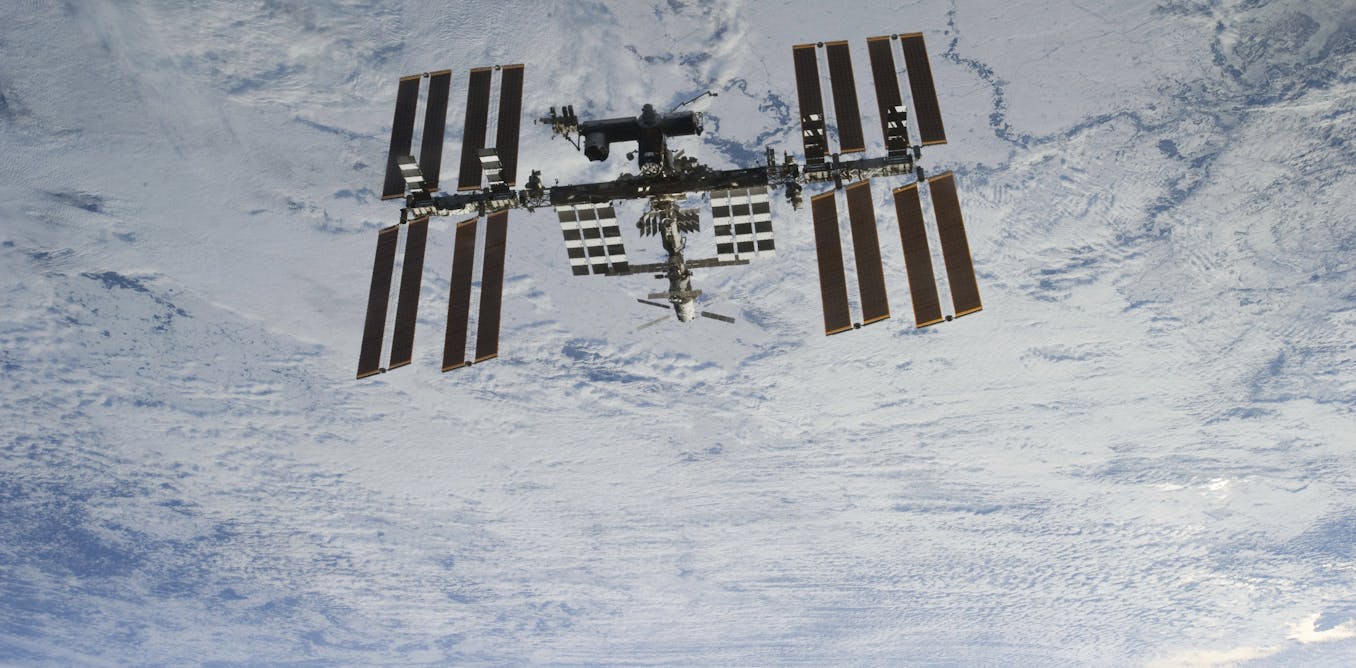
NASA Bids Farewell to the International Space Station in 2030: Embracing a Bold New Era of Commercial Space Stations!

Since November 2000, the International Space Station (ISS) has maintained a continuous human presence in low-Earth orbit, with at least one American astronaut aboard at all times, amassing nearly 25 years of operational history. This collaboration, involving partners from the United States, Europe, Canada, Japan, and Russia, stands as one of humanity’s most significant achievements in space exploration.
However, the ISS’s time is running out. NASA plans to deorbit the station in 2030, directing it to a remote area of the Pacific Ocean. For those deeply invested in aerospace, like myself-a seasoned aerospace engineer who has devoted over 30 years to the field, including 17 years at NASA-the impending end of the ISS marks a poignant moment.
Since the station’s first components were launched in 1998, the ISS has been a hub for groundbreaking research across various scientific fields, including materials science, biotechnology, and Earth sciences. Astronauts have conducted numerous experiments, both inside and outside the station, resulting in more than 4,400 research publications. These studies have significantly advanced our understanding of phenomena such as thunderstorms, cancer treatments, and DNA sequencing in microgravity.
The research conducted aboard the ISS takes advantage of the unique conditions of space-namely, low gravity, a vacuum, extreme temperature fluctuations, and radiation. More than 4,000 experiments have been launched aboard the ISS, illustrating its unparalleled role as a laboratory for scientific discovery that has broader implications for life on Earth and future space endeavors.
As the ISS approaches retirement, NASA is not stepping back from its low-Earth orbit ambitions; instead, it is pivoting towards commercial alternatives. In December 2021, NASA announced significant investments aimed at encouraging the development of privately owned space stations. Having successfully collaborated with commercial partners for supply missions, NASA is poised to extend this partnership model to crewed missions.
In September 2025, the agency solicited proposals for the next phase of commercial space station development. Selected companies will receive funding to conduct crucial design reviews and demonstrate their capacity for extended crewed missions. This robust approach will enable NASA to ensure these new stations meet safety standards while allowing for future partnerships to secure services akin to those currently enjoyed with the ISS.
While NASA explores these new opportunities, China continues to operate its own crewed facility, the Tiangong space station, which has been occupied for around four years. Should the ISS cease its occupancy, Tiangong will take the title as the longest continuously inhabited space station.
As we approach the decommissioning of the ISS, it’s essential to appreciate the view it offers. Often visible on clear nights, the ISS shines as a brilliant point of light, gracefully moving across the sky at approximately 17,500 miles per hour (28,000 kilometers per hour). It’s a testament to human ingenuity-our capacity to design and construct such a remarkable object in the cosmos.
In the coming years, both the world and the scientific community will witness a transition from the ISS to new commercial endeavors. Until then, take a moment to look up. The ISS represents an extraordinary chapter in our collective journey into outer space, one that reflects our relentless pursuit of knowledge and exploration.
Tags: International Space Station, NASA, space research, commercial space stations, human spaceflight, low-Earth orbit exploration.
Original Source: https://theconversation.com/nasa-will-say-goodbye-to-the-international-space-station-in-2030-and-welcome-in-the-age-of-commercial-space-stations-264936
Category :
Tags:
Publish Date: 2025-09-24 17:43:00