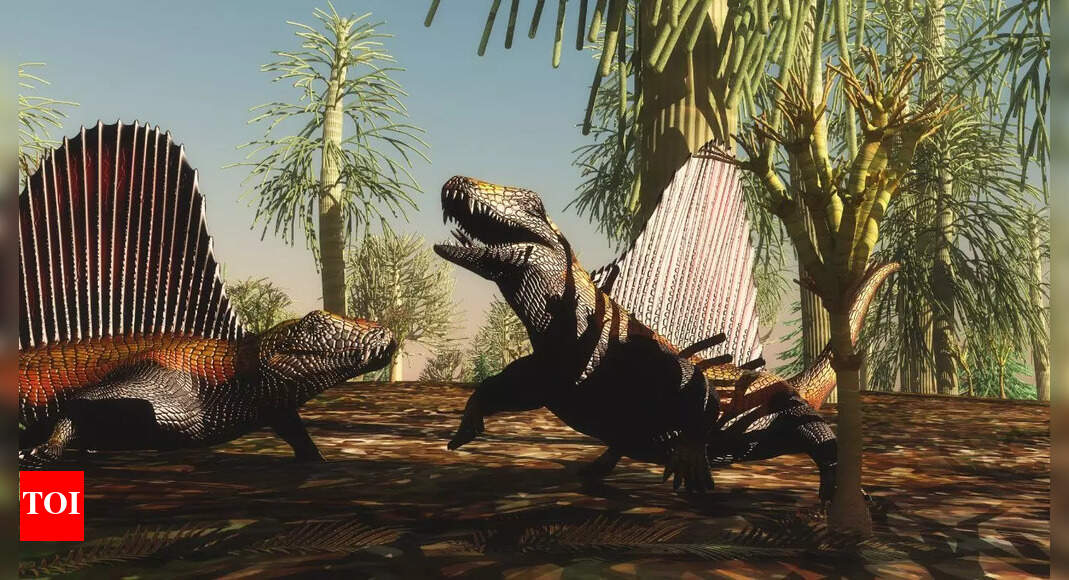
Unearthing the Past: Astonishing 250 Million-Year-Old Fossils Discovered, Unraveling Secrets Before the Great Dying Extinction!

The Permian period, which lasted from approximately 299 to 252 million years ago, represents a time of remarkable ecological diversity. Early forests flourished, and a variety of reptile-like and amphibious creatures inhabited this dynamic environment. However, this era met a tragic end with the Great Dying, the most catastrophic mass extinction in Earth’s history, which eradicated nearly 70% of terrestrial species and an even higher percentage of marine life. Recent research sheds light on the Permian ecosystem, thanks to extensive excavations conducted by a team from the University of Washington and the Field Museum in southern Africa.
For over 17 years, the researchers have focused on sites in the Karoo Basin of South Africa as well as the Ruhuhu Basin in Tanzania and the Luangwa and Mid-Zambezi basins in Zambia. Their findings have been documented in the Journal of Vertebrate Paleontology. According to Christian Sidor, a biology professor at the University of Washington and a curator of paleontology, these discoveries are pivotal: “This mass extinction was nothing short of a cataclysm for life on Earth and changed the course of evolution. But we lack a comprehensive view of which species survived, which didn’t, and why.” The fossils collected from Tanzania and Zambia are set to provide a broader perspective on this unprecedented time in natural history.
In August 2025, the Journal of Vertebrate Paleontology published a collection of 14 peer-reviewed studies highlighting new fossil discoveries, including saber-toothed gorgonopsians, burrowing dicynodonts, and salamander-like amphibians. These well-preserved specimens allow researchers to make detailed comparisons with species previously identified in the Karoo, facilitating a deeper understanding of the late Permian ecosystem. This extensive fieldwork has involved traversing challenging terrains and working alongside local authorities, resulting in a significant quantity and quality of fossil finds that illuminate life in southern Pangea prior to the Great Dying.
Moreover, Sidor emphasizes the importance of these findings in examining geographic variations within Pangea. “We can now compare two different geographic regions of Pangea and see what was happening both before and after the end-Permian mass extinction,” he states. This comparative analysis enables researchers to delve into crucial questions about species survival and extinction.
In conjunction with these newer findings, additional studies have indicated that after the Great Dying, tetrapod fauna became regionally fragmented, shifting from a homogeneous community in the late Permian to localized ecosystems in the Triassic. This transition may have facilitated the emergence of new groups such as archosaurs. The fresh fossil discoveries in Zambia and Tanzania provide a more balanced view of one of Earth’s most significant evolutionary events, fostering a better understanding of the biological landscape during this transformative period.
As this research unfolds, the implications for our understanding of ecological resilience and evolutionary processes become ever clearer. By examining the survivors of this mass extinction and the ecological shifts that followed, scientists are paving the way for new insights into the complexities of life on Earth, offering a glimpse into a world profoundly altered yet resilient. The continuous exploration of these prehistoric landscapes promises to enrich our knowledge of the past and its impact on the present.
Original Source: https://timesofindia.indiatimes.com/etimes/trending/scientists-find-mysterious-250-million-year-old-fossils-that-roamed-the-earth-before-the-great-dying-extinction-to-open-doors-to-new-discoveries/articleshow/123520203.cms
Category :
Tags:
Publish Date: 2025-08-26 14:00:00