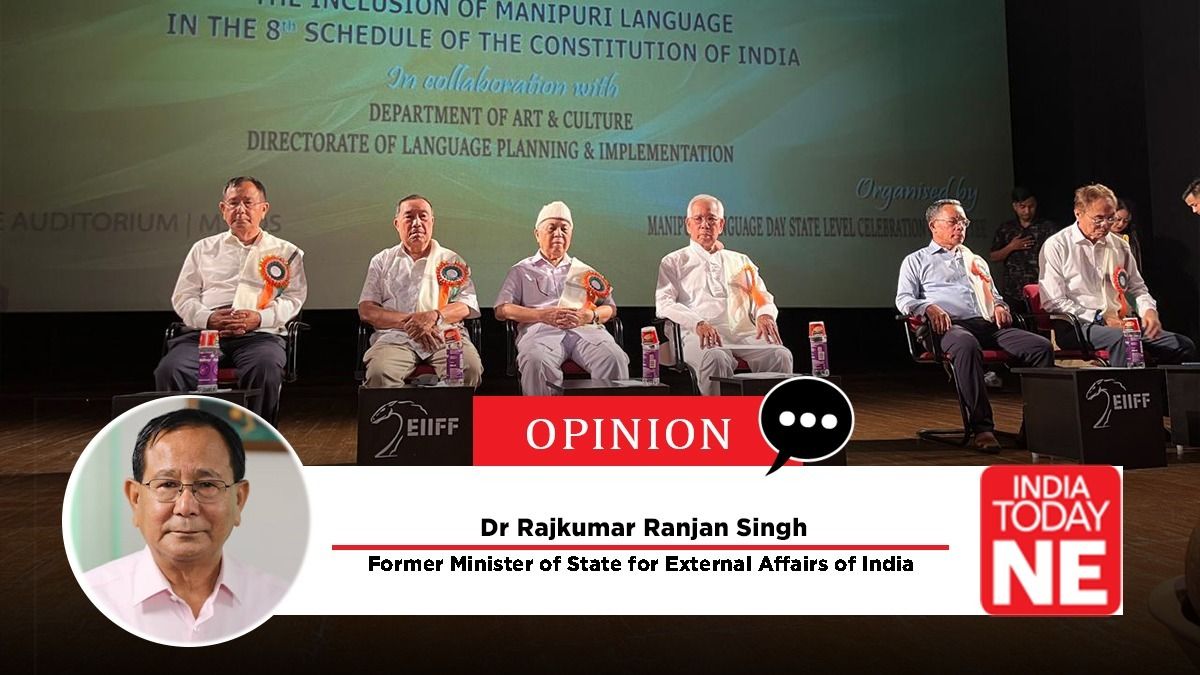

The Manipuri language is not just a tool for daily communication; it embodies the living history of an ancient civilization. Its roots are intricately linked to the culture and heritage of Manipur, known as the Land of Jewels. Esteemed scholars often highlight significant literary works, including Numit Kappa, Poireiton Khunthok, and royal chronicles like Cheitharol Kumbaba, which reflect the life, beliefs, and creativity of a society that has thrived for nearly two thousand years.
Archaeological evidence, including copper plate inscriptions and ancient coins, provides concrete proof of the language’s deep historical significance. The elegant Manipuri script remains an enduring emblem of cultural richness, having withstood colonial challenges and been revitalized by dedicated reformers and educators.
The ongoing demand for Manipuri’s inclusion in the Eight Schedule of India’s Constitution has grown from years of advocacy, peaceful protests, and cultural events. This inclusion would grant Manipuri official recognition alongside other Scheduled Languages in India, enable its use in Union Public Service Commission (UPSC) examinations, and provide vital support for its academic growth, translation, and preservation initiatives. Most crucially, such recognition would validate the cultural dignity of the Manipuri people, affirming that their language is central to India’s diverse linguistic heritage.
Additionally, the quest for Classical Language status emphasizes the historical and civilizational importance of Manipuri. To qualify for this prestigious recognition, the language must demonstrate extensive historical depth, a rich body of ancient literature, originality, and distinct differences between its ancient and modern forms. Manipuri meets all these criteria with a unique literary tradition that includes epic poetry and devotional hymns, distinguishing itself as a major representative of the Sino-Tibetan family. Its ancient literature presents philosophies and narratives that set it apart from other Indian literary traditions.
Achieving this recognition could unlock numerous opportunities, such as specialized university departments, dedicated research funding, and increased global academic exchange, ensuring comprehensive preservation and promotion of Manipuri heritage.
In an era where lesser-known languages are threatened by globalization, protecting Manipuri is not merely a cultural obligation; it is a pressing moral imperative. As years pass without formal acknowledgment, the risk of marginalizing the language in both public discourse and academic circles increases. Formal recognition would not fracture national unity but rather enhance the principle of unity in diversity that is foundational to the Indian Republic.
The movement for recognition has united people across various sectors, from student groups to notable scholars and politicians. Grassroots successes in cultural programming, archival initiatives, and the revival of Manipuri script in educational institutions exemplify the community’s determination to preserve their language. Driven by respect for their heritage rather than mere administrative goals, advocates are committed to ensuring its survival.
As we celebrate the 34th Manipuri Language Day in 2025, it is crucial to energize our efforts moving forward. Policymakers must hear the persistent call for inclusion in both the Eight Schedule and the Classical Languages list. Each Manipuri speaker, whether residing in Manipur or abroad, has a pivotal role: promoting the language at home, safeguarding its literature, backing documentation projects, and advocating collectively for official status.
The journey may present challenges, but the importance of this cause cannot be overstated. Official recognition will honor not only the past but will also secure a vibrant future for the Manipuri language, allowing future generations to inherit a resilient and dynamic linguistic legacy. This day is not just a celebration of words; it symbolizes a civilization expressed in syllables, seeking rightful acknowledgment within India’s rich linguistic tradition. Jai Hind. Long live Manipuri.
Original Source: https://www.indiatodayne.in/opinion/story/manipuri-language-day-2025-a-timeless-tongues-journey-towards-national-and-classical-1264284-2025-08-20?utm_source=rssfeed
Category:
Tags:
Publish Date: 2025-08-20 14:46:00