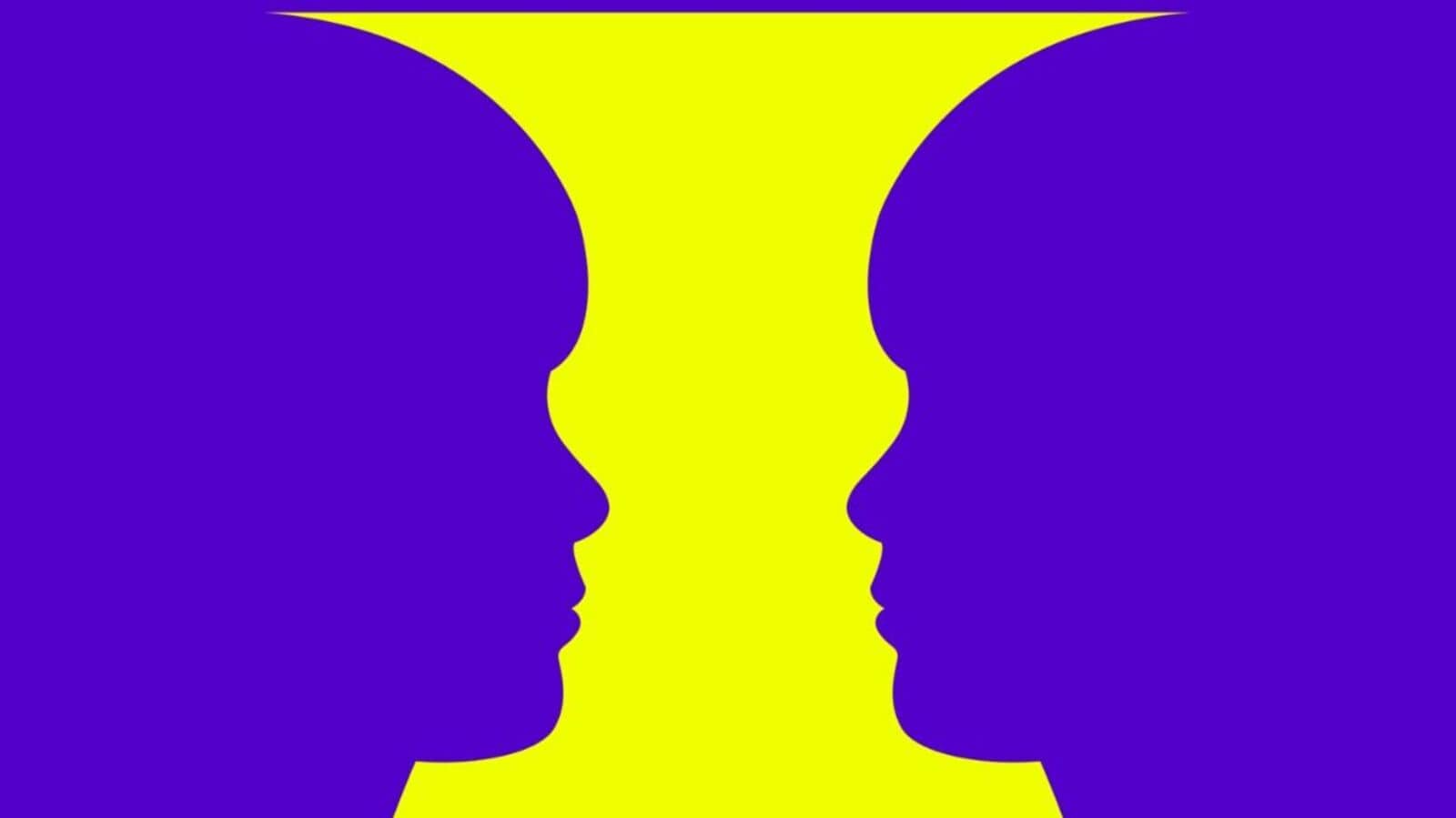
Unravel the Mystery: Are You Captivated by the Vase or the Faces in This Stunning Optical Illusion?

Have you ever gazed at an image and saw two completely different things? If so, you’ve encountered an optical illusion-a visual trick that reveals the complexities of human perception. One of the most renowned examples is the Rubin Vase, a striking image where your brain alternates between perceiving a vase and two faces in profile. This paradox is just one of many illustrations that showcase how our minds interpret the world around us.
Optical illusions are images designed to deceive the brain, leading us to perceive something that diverges from actual physical reality. Our brains constantly process visual information, attempting to make sense of what our eyes see. However, this can lead to misunderstandings or shifts in perception between equally valid interpretations.
The Rubin Vase, also referred to as the Figure–Ground Illusion, was crafted by Danish psychologist Edgar Rubin in 1915. At first glance, the image appears to be a solid black vase. However, a subtle shift in focus can reveal two white faces gazing at one another instead. The catch? It’s impossible to see both the vase and the faces simultaneously. This limitation arises because our brains must determine which elements represent the “figure” (the main object) and which serve as the “ground” (the background). This visual tug-of-war elegantly demonstrates how we assign depth and meaning to what we see.
Why can’t we perceive both images at once? The answer lies in a phenomenon known as perceptual bistability. While our brains excel at filtering visual stimuli, they can only focus on one interpretation at a time. If we could process multiple versions of reality simultaneously, it would result in sensory overload. Thus, the brain selects a dominant interpretation, discarding other possibilities until it decides to switch. This cognitive process simplifies visual information by distinguishing between figure and ground, forcing the brain to choose what makes the most sense based on contour and shape.
Beyond their playful nature, optical illusions hold significant scientific value. They assist researchers in understanding the brain’s processing of depth, shape, and motion, and contribute to enhancing computer vision and artificial intelligence systems. Additionally, they can aid in designing better user interfaces, warning signs, and even visual art, while providing insights into neurological conditions where perception may falter.
Frequently asked questions about the Rubin Vase often revolve around its dual interpretation. The image can be seen either as a central vase (the figure) or as two silhouette profiles (the ground). This phenomenon is a result of perceptual bistability-the brain’s inability to focus on more than one interpretation at a time. Edgar Rubin’s creation continues to influence fields like cognitive psychology, neuroscience, and artificial intelligence as a tool to explore how organisms and machines process complex visual data.
The Rubin Vase ultimately illuminates a crucial aspect of the human brain: perception is not a passive experience. Our brains actively interpret sensory information, fill in gaps, shift focus, and can mislead us based on context and expectation. Its influence extends beyond psychology, inspiring logo design, art, and advertising, where figure-ground reversals create compelling visuals and metaphors. The Rubin Vase also serves as an educational resource, teaching about perception and cognitive flexibility in an engaging manner.
In summary, optical illusions like the Rubin Vase are not only captivating visual puzzles but also vital tools in deciphering the intricate workings of the human mind, offering profound insights into how we perceive reality.
Original Source: https://www.livemint.com/news/trends/optical-illusion-can-you-spot-the-vase-or-the-faces-first-most-people-cant-see-both-at-once-11753981279322.html
Category :
Tags:
Publish Date: 2025-07-31 23:06:00