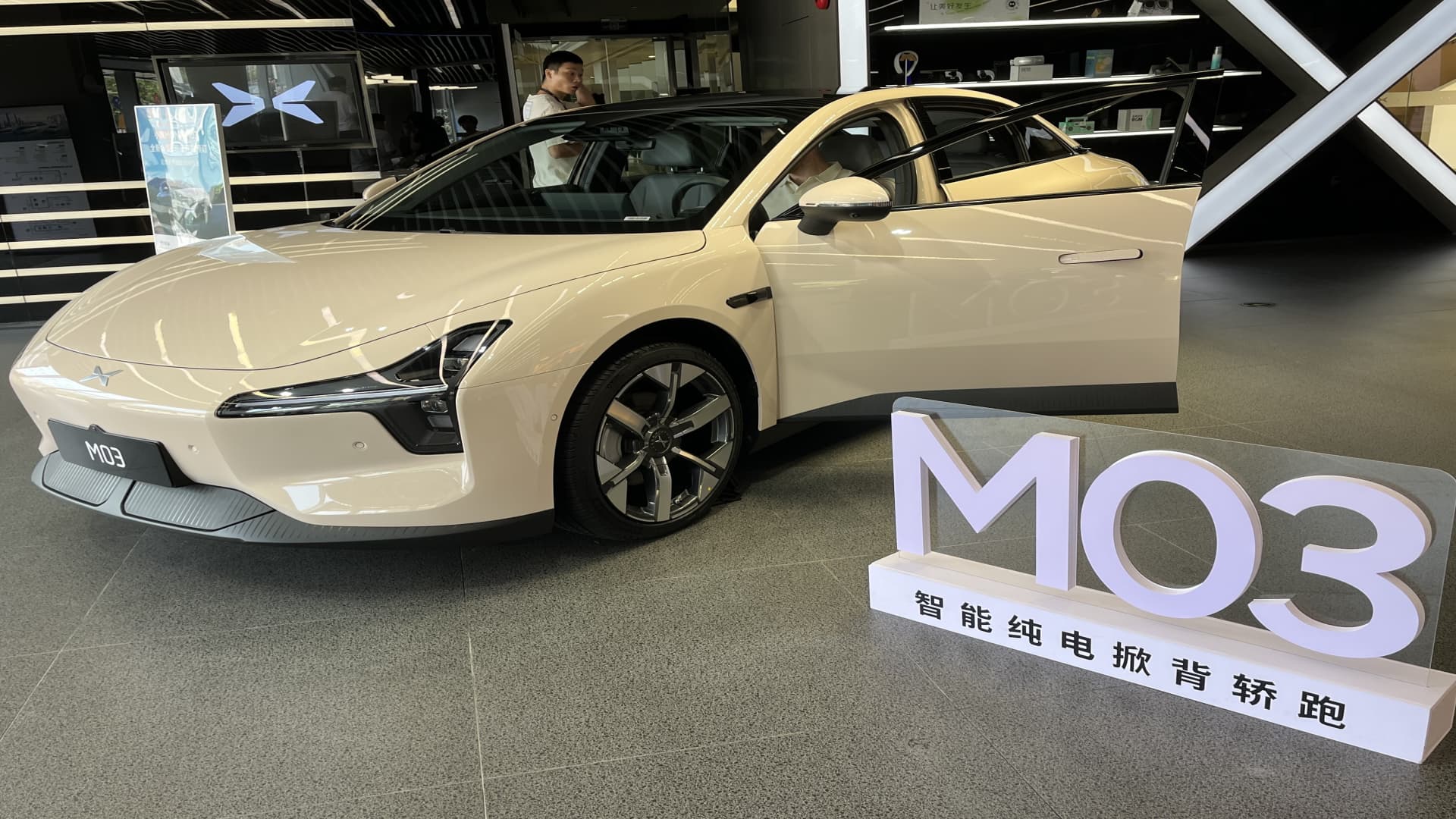

Chinese electric vehicle startup Xpeng is showcasing resilience in a fiercely competitive market, reporting steady sales even as BYD continues to solidify its dominance amid an escalating price war in China’s automotive sector. In June, Xpeng announced it delivered 34,611 vehicles, marking the eighth consecutive month of surpassing the 30,000 deliveries threshold. The company’s shares rose over 2% during trading in New York following the announcement.
China’s current electric vehicle price war has drawn governmental criticism for creating an environment of excessive competition, which Chinese President Xi Jinping addressed in a recent meeting, calling for stricter governance of what he termed “low price, disorderly competition.” This comes as market players grapple with incentives and pricing strategies to attract customers in a crowded marketplace.
In contrast to Xpeng’s strong performance, its U.S.-listed competitors targeting the premium segment saw more mixed results. Geely-backed Zeekr reported 16,702 deliveries in June, reflecting an 11.7% decline from May and a 16.9% drop year-over-year. Meanwhile, Nio achieved 24,925 deliveries, a modest increase from the previous month, buoyed by its premium offerings along with lower-priced models like Onvo and Firefly. Although Li Auto’s June deliveries fell by 11.2% to 36,279 units, the company reported a total of 111,074 vehicles for the second quarter, exceeding its own revised guidance.
Investigations into Li Auto’s sales practices revealed that the company has curbed excessive commission-sharing incentives among salespeople, a strategy aimed at improving service quality and brand loyalty as it seeks to distinguish itself in a saturated market. Notably, most of Li Auto’s models are SUVs equipped with a fuel tank, addressing range anxiety among consumers-a significant concern in the EV segment.
Xiaomi, the tech giant, reported over 25,000 electric vehicle deliveries for June, despite facing slight declines. Following a price cut on its newly launched YU7 SUV, which undercuts Tesla’s Model Y by 10,000 yuan ($1,400), Xiaomi indicated it had amassed over 240,000 pre-orders for the model. However, expected delivery timelines have been extended to six months or longer, raising concerns regarding demand and production capacity.
Analysts forecast that Tesla’s sales in China for the second quarter may reach approximately 128,000 units, a 12% decline year-over-year, attributed to the rising competitive pressures from local brands. In response, Tesla has also adjusted prices for its Model 3 long-range variant, raising costs amid fluctuating demand dynamics.
BYD remains the dominant player in the market, reporting sales of 377,628 vehicles in June, with battery-only cars constituting over half of those sales. In the first half of the year, BYD’s total passenger car sales reached an impressive 2.1 million units. In contrast, both Leapmotor and Li Auto reported deliveries exceeding 200,000 cars, while Xpeng approached that mark with 197,189 units over the same period. Xiaomi’s cumulative deliveries surpassed 150,000 units.
Industry experts are closely watching the potential fallout from ongoing price wars, with Michael Dunne, head of consultancy Dunne Insights, suggesting that companies like BYD and Xiaomi are well-positioned to thrive amidst potential market consolidation, while Nio could face challenges due to its financial performance, despite offering competitive products.
As the electric vehicle landscape continues to shift, the strategies and adaptations of these companies will play a crucial role in shaping their futures within the rapidly evolving automotive industry.
Original Source: https://www.cnbc.com/2025/07/02/xpeng-china-ev-price-war-zeekr-nio-xiaomi-xpeng-tesla-li-auto-byd-june-sales.html
Category :
Tags:
Publish Date: 2025-07-02 10:10:00