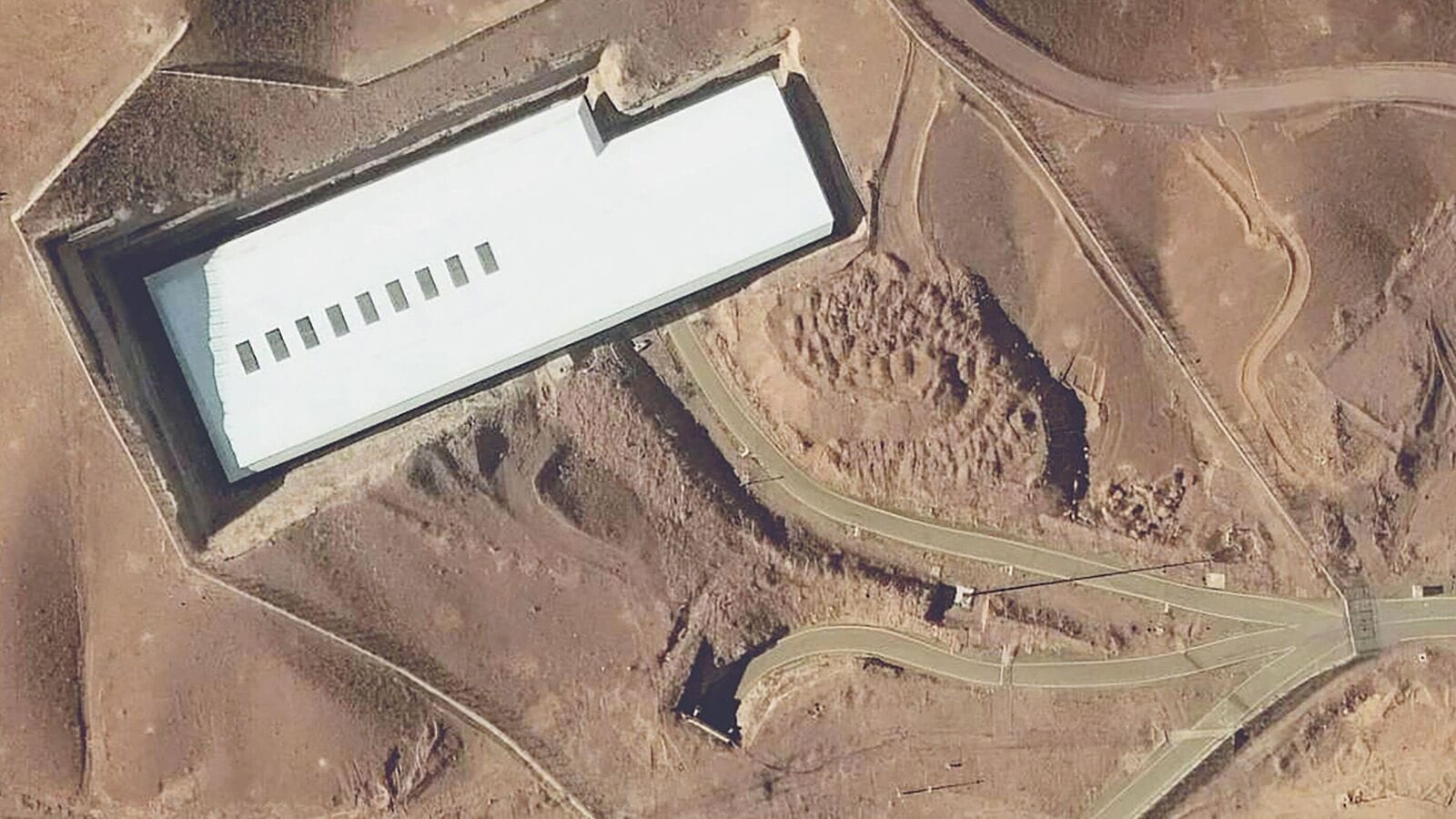
US General Exposes Bunker-Buster Bombs as Utterly Ineffective Against Iran’s Isfahan Nuclear Facility!

The U.S. military strategically refrained from using bunker-buster bombs on Iran’s Isfahan nuclear complex due to the site’s extreme depth, which renders such weapons largely ineffective. This revelation was confirmed by Joint Chiefs Chair Gen. Dan Caine during a classified Senate briefing. The underground facilities at Isfahan house approximately 60% of Iran’s enriched uranium, crucial for bomb development, buried far beyond the reach of America’s GBU-57 Massive Ordnance Penetrators (MOPs). Instead of targeting these fortified structures directly, the military opted to deploy Tomahawk missiles launched from submarines to strike surface targets.
This disclosure, initially reported by CNN, highlights significant tactical limitations faced by the U.S. when dealing with Iran’s heavily fortified nuclear sites. While B-2 stealth bombers were able to drop 14 bunker-buster bombs on the shallower Fordow and Natanz facilities, the geology of Isfahan necessitated alternative approaches. CIA Director John Ratcliffe emphasized that much of Iran’s nuclear stockpile remains concentrated in Isfahan and Fordow, raising strategic concerns over the untouched reserves of enriched uranium.
The decision to avoid using bunker-busters reveals a disconnect between military capabilities and presidential claims. Despite President Trump asserting that U.S. strikes had “obliterated” Iran’s nuclear program, an early assessment by the Defense Intelligence Agency (DIA) indicated that the core facilities had survived the attacks, delaying enrichment only by a few months. Additionally, satellite imagery analyzed by expert Jeffrey Lewis pointed to vehicles near Isfahan’s tunnels in the days leading up to the strike, suggesting that uranium may have been relocated before the attack.
Technical analyses further reinforce the notion that bunker-busters would likely have failed. The Fordow facility, for instance, is situated 90 meters underground-far exceeding the MOP’s 25-meter penetration capacity in medium-strength rock. At Isfahan, even the most powerful 30,000-pound bombs lacked the capability to reach the chambers housing centrifuges. IAEA chief Rafael Grossi acknowledged that “annihilated” may be too strong a word to describe the impact, though he did confirm “enormous damage” to above-ground structures.
Following the briefing, Democratic Sen. Chris Murphy expressed concern, noting that certain Iranian facilities are buried so deeply that they remain unreachable by American bombing capabilities. He warned that Iran has the potential to relocate much of its saved material to areas protected from U.S. strikes.
While some Republican lawmakers conceded that uranium stocks likely remain intact, they defended the mission’s broader scope. Republican Rep. Michael McCaul of Texas remarked, “There is enriched uranium in the facilities that moves around, but that was not the intent or the mission.” He called for full transparency regarding Iran’s enriched uranium, asserting that it remains within the facilities rather than being transported out of the country.
Contradictory narratives continue to emerge, with the White House claiming that “nothing was moved” prior to the strikes, contrary to DIA evidence and Israeli assessments indicating a “significant hit” rather than total destruction. With Tehran now suspending access to the International Atomic Energy Agency (IAEA), verifying the status of uranium reserves becomes increasingly difficult, creating a significant gap in understanding the operation’s true impact.
Original Source: https://www.livemint.com/news/us-news/us-skipped-bunker-busters-at-key-iran-nuke-site-due-to-depth-general-reveals-11751139712295.html
Category :
Tags:
Publish Date: 2025-06-29 01:20:00