Speaker Johnson Declares War Powers Act Unconstitutional: A Bold Stand for Freedom and Accountability!

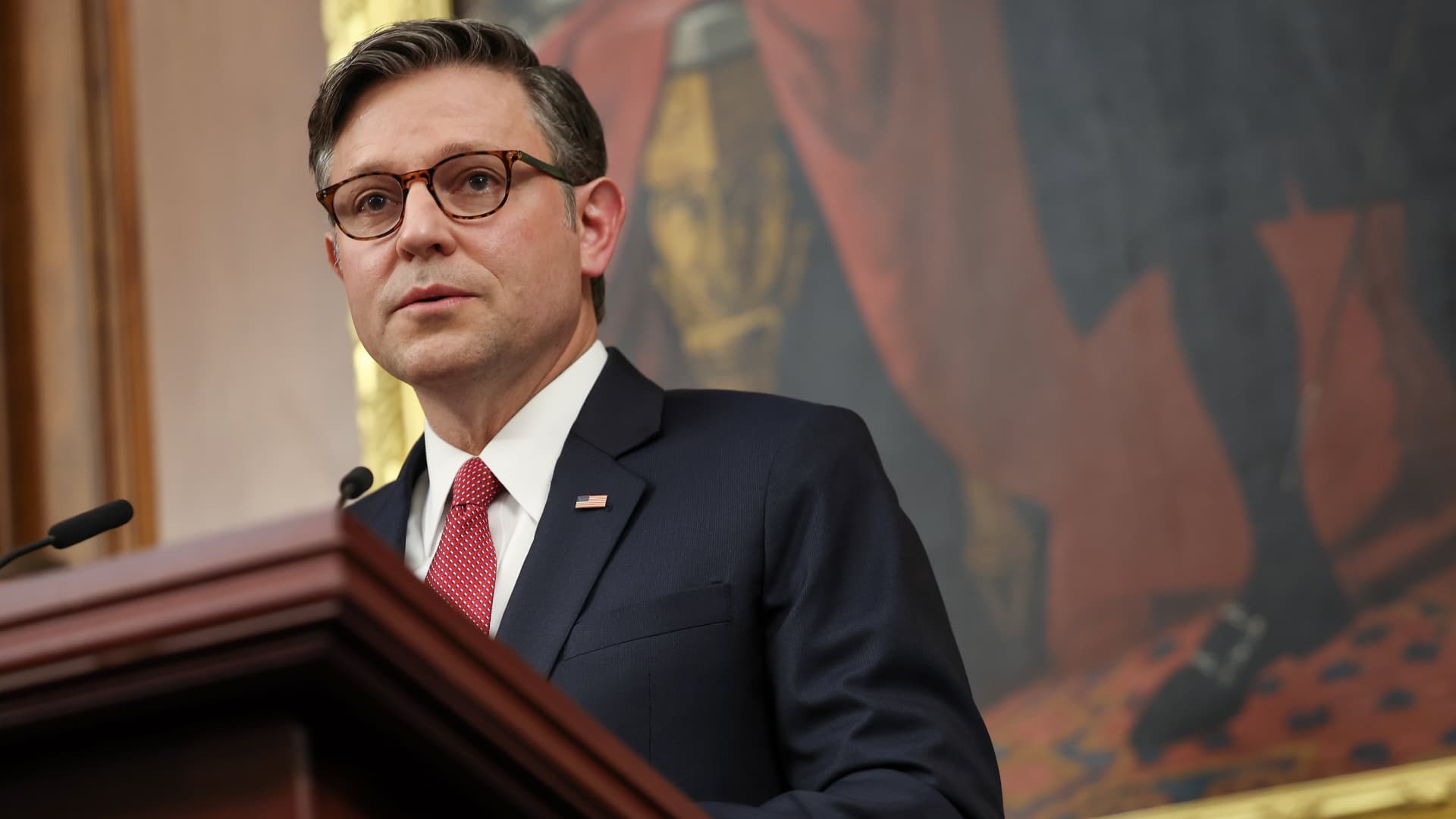
House Speaker Mike Johnson (R-LA) made headlines Tuesday by declaring the War Powers Act unconstitutional during his weekly press conference. The Nixon-era legislation, which imposes restrictions on the president’s ability to initiate military action without congressional approval, is under scrutiny following President Donald Trump’s recent airstrikes on Iranian nuclear sites. Johnson argued that Trump’s actions were well within his rights under Article II of the U.S. Constitution, emphasizing his belief that many constitutional scholars share this perspective.
“The Constitution grants Congress the authority to declare war,” Johnson stated to reporters. However, he pointed out that Congress has not formally declared war in the ongoing conflict between Iran and Israel, a trend dating back to World War II. This absence of a formal declaration raises questions about the legislative branch’s role and authority amid escalating tensions.
The War Powers Resolution of 1973 mandates that presidents inform Congress within 48 hours of deploying troops, requiring the military engagement to cease within 60 days unless Congress acts to declare war or extend military operations. Amid recent developments, Rep. Thomas Massie (R-KY) and Democratic Rep. Ro Khanna (CA) introduced a War Powers resolution aimed at prohibiting unauthorized U.S. military actions in Iran. This measure is supported by over a dozen House Democrats and has a companion bill in the Senate from Sen. Tim Kaine (D-VA).
Although the resolution is deemed “privileged,” allowing for potential rapid consideration in the House, Johnson’s opposition looms large. Massie indicated he would refrain from pursuing the resolution if a ceasefire between Iran and Israel remains effective. This announcement came as Trump targeted Massie in social media posts, branding him a “Third Rate Congressman” and a “LOSER” for his dissent against a key tax-and-spending bill pushed by the administration.
In light of Trump’s ceasefire announcement, Johnson queried Massie about the relevance of the resolution. Massie reportedly agreed that the measure might become a “moot point.” Johnson responded by expressing hope that they wouldn’t need to act on the resolution, citing concerns about its appropriateness and the likelihood of its failure in the House.
As political tensions heighten and military strategies evolve, the debate surrounding the War Powers Act continues to unfold, pitting constitutional interpretations against contemporary national security challenges. The operational dynamics suggest that while Trump retains significant latitude in military decision-making, the legislative branch is wrestling with its own diminishing role in authorizing acts of war. This ongoing dialogue is crucial as both sides seek to navigate the complexities of governance in a rapidly changing geopolitical landscape.
The discourse surrounding the War Powers Act and the recent airstrikes underscores the intricate balance between executive power and congressional authority, a theme that will likely play a significant role in future policy debates. As discussions continue, lawmakers will need to consider the implications of the current legal framework on U.S. military engagement abroad.
Original Source: https://www.cnbc.com/2025/06/24/johnson-war-powers-trump-iran.html
Category :
Tags:
Publish Date: 2025-06-24 22:57:00