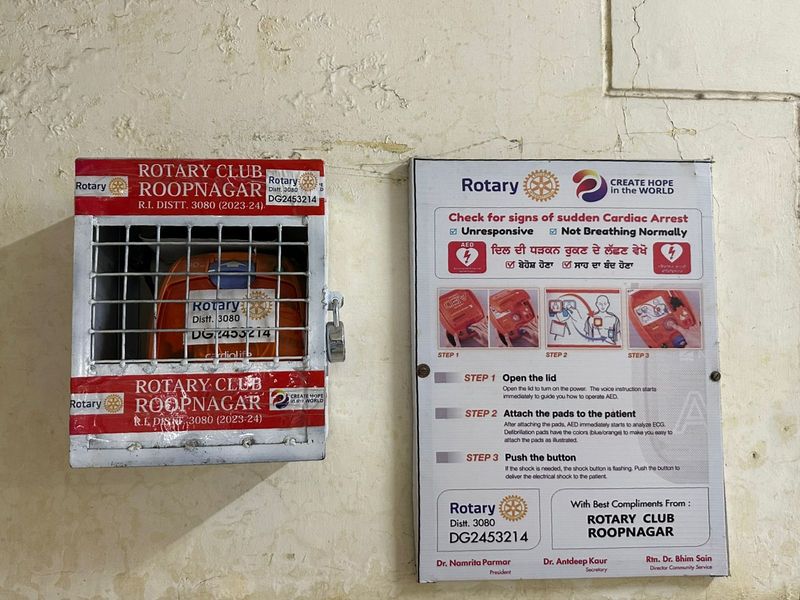

The Ropar district is facing a critical shortage of electrical defibrillators in both private and government hospitals, devices essential for saving lives during sudden cardiac arrest. This lack of emergency treatment facilities contributes to the tragic loss of hundreds of lives each year in the district, as residents cannot access immediate care through electrical defibrillators or cardiopulmonary resuscitation (CPR). The nearest viable emergency care options are located at district headquarters or in the neighboring Mohali district.
According to Dr. Balwinder Kaur, Civil Surgeon of Ropar, there are only four defibrillators available in the government sector-three at Ropar Civil Hospital and one in Anandpur Sahib. In the private sector, similar devices are found in just a couple of hospitals. Sub-divisions such as Nangal and Chamkaur Sahib completely lack electrical defibrillators in both sectors.
An electrical defibrillator delivers an electric shock to the heart, aiming to restore a normal rhythm in potentially life-threatening situations. Dr. RS Parmar, a senior surgeon in Ropar, noted that without CPR or defibrillator treatment, the survival chances for victims of sudden cardiac arrest can plummet to as low as 1-2 percent.
Dr. Bhanu Parmar, also a prominent surgeon in the area, highlighted alarming statistics reported by the international journal Lancet, indicating that between 500,000 to 600,000 individuals in India die from sudden cardiac arrest annually. This condition can cause an individual to collapse suddenly due to dangerous heart rhythm disturbances, allowing only minutes for intervention. In more than 90% of cases, this leads to sudden cardiac death. Unless immediate action is taken, there is little hope of survival.
Dr. Parmar emphasized the urgent need for better public knowledge of CPR, which could provide vital time for victims until emergency responders arrive. Presently, widespread ignorance about CPR, coupled with policy issues and fears of legal repercussions, hampers bystanders’ ability to assist in such emergencies. Consequently, survival rates for sudden cardiac arrest victims in India remain exceptionally low, at just 1-2%.
To address this crisis, Dr. Parmar advocates for adopting practices from Western countries, where bystander CPR is more common, and the public has better access to automated external defibrillators (AEDs). These measures have significantly increased survival rates-by as much as 60-70%—in countries that prioritize immediate public response to cardiac emergencies.
Original Source: https://www.tribuneindia.com/news/punjab/dist-hospitals-lack-life-saving-machine-for-sudden-cardiac-arrest/
Category:
Tags:
Publish Date: 2025-06-22 02:01:00