Revolutionizing Treatment: Pfizer, AstraZeneca, and Merck Champion Groundbreaking Alternatives to Chemotherapy

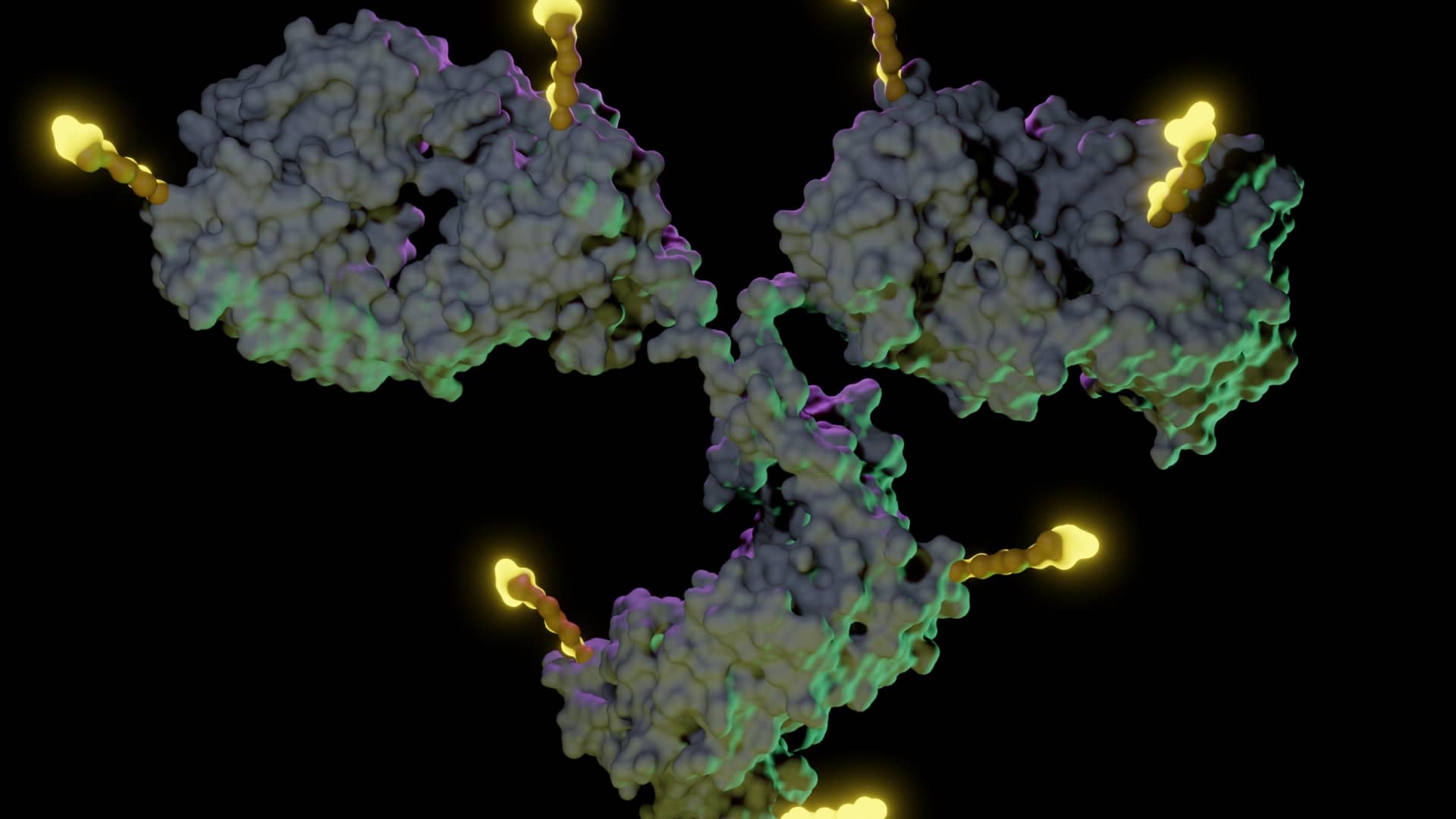
Antibody-drug conjugates (ADCs) are emerging as promising alternatives to traditional chemotherapy in cancer treatment. These targeted medicines deliver powerful chemotherapy agents directly to cancer cells while minimizing harm to healthy cells, marking a significant advancement in oncology. Major pharmaceutical companies like AstraZeneca, Daiichi Sankyo, Pfizer, and Merck are investing billions into the development of ADCs, hoping to transform cancer therapies and potentially replace more traditional approaches that often come with severe side effects.
Despite their potential, experts caution that ADCs may not fully replace chemotherapy in the near future. Dr. John Heymach, chair of thoracic and head/neck medical oncology at MD Anderson Cancer Center, expressed concern that initial expectations for ADCs have yet to be fully realized. “There’s clearly room for improvement,” he noted, highlighting the ongoing need for refinement in these treatments.
Some companies are reporting that ADCs have succeeded in replacing chemotherapy in specific scenarios. David Fredrickson from AstraZeneca remarked, “We are leading the way towards establishing ADCs as a precision-based approach to replace classic chemotherapy.” Recent presentations at the 2025 American Society of Clinical Oncology annual meeting showcased promising data for existing and experimental ADCs, suggesting a shift in the standards of cancer care.
Since the introduction of the first ADC in 2000, over a dozen have gained U.S. approval, and hundreds more are under development. High-profile acquisitions, such as Pfizer’s $43 billion purchase of Seagen in 2023, underscore the soaring interest in this drug class. Forecasts project the ADC market could reach $31 billion out of a $375 billion global cancer market by 2028.
However, challenges remain. Certain treatments have been known to prematurely release their chemotherapy payloads into the bloodstream, affecting healthy cells and leading to adverse effects. Experts emphasize the importance of adequately identifying cancer-specific proteins to target and discovering new payloads that maximize effectiveness while minimizing toxicity.
New ADCs, such as Enhertu from AstraZeneca and Daiichi Sankyo, represent the forefront of innovation. Enhertu boasts the ability to deliver more chemotherapy per dose and employs a smart linker designed to release drugs solely within tumors. Approved treatments for specific breast, lung, and gastric cancers are showing significant sales potential, with increasing interest in extending their applications.
Data from recent clinical trials suggests that dropping conventional chemotherapy in favor of ADCs can lead to enhanced efficacy and safety. Gilead’s Trodelvy, for instance, has shown promising results in aggressive breast cancer types, reinforcing the belief that ADCs may become the preferred treatment option.
Despite setbacks, including Gilead’s withdrawal of Trodelvy from the bladder cancer market following underwhelming trial results, drugmakers continue to converge on ADCs as a transformative approach to cancer therapy. Lessons learned from previous failures have prompted refocused efforts, improving dosing strategies and investigating potential combinations with existing therapies.
Innovative approaches to ADC development are also underway. AbbVie has garnered approval for an ADC targeting the protein c-Met, indicating its commitment to exploring new therapeutic pathways. Meanwhile, GSK’s reapproved Blenrep demonstrates that strategic adjustments can lead to improved outcomes in previously challenging therapies.
The collaborative landscape within ADC research is dynamic, with companies vying to create enhanced formulations that deliver better results. Combining ADCs with immune checkpoint inhibitors may create synergistic effects, enabling a powerful one-two punch against cancer. Pfizer’s Chief Scientific Officer Chris Boshoff highlighted that these combinations could result in increased response rates and improved survival outcomes.
As the ADC field evolves, industry leaders and researchers remain hopeful about integrating these therapies into broader cancer treatment regimens, potentially redefining standards in oncology for years to come.
Original Source: https://www.cnbc.com/2025/06/17/adc-cancer-drugs-pfizer-astrazeneca-merck-bet-on-chemo-replacement.html
Category :
Tags:
Publish Date: 2025-06-17 18:01:00