After 2 Nights of Devastating Anti-Immigrant Riots, Northern Irish Town Faces Uncertainty and Fear

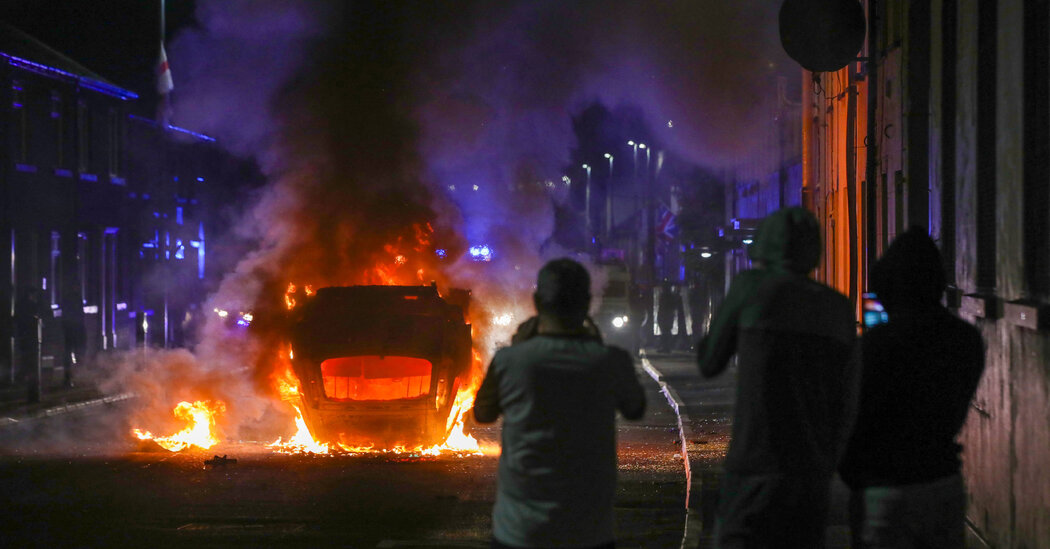
In Ballymena, Northern Ireland, broken windows were hastily boarded up on Clonavon Terrace Wednesday afternoon, revealing the aftermath of an attempted arson attack. The scene depicted the troubling unrest that has gripped the area, as homes and businesses came under siege in riots described by law enforcement as “hate-fueled acts and mob rule.” Residents remain on edge, fearing a resurgence of violence.
The turmoil erupted after two 14-year-old boys appeared in court Monday, charged with the attempted sexual assault of a girl in the same neighborhood. The boys, who communicated through a Romanian translator, denied the allegations via their lawyer, but the case ignited significant public outrage. This incident has fueled existing tensions and anti-immigrant sentiment in Ballymena, a town of approximately 31,000, further amplified by far-right groups and social media influencers celebrating the chaos.
Recent census data indicates that immigration is gradually increasing in Northern Ireland, with foreign-born residents rising from 6.5% in 2011 to 8.6% in 2021. However, the current percentage remains low compared to other European nations, and high emigration rates complicate the narrative. Experts suggest that far-right activists exploit a housing crisis alongside the growing cost of living to incite hostility toward asylum seekers and migrants.
Tuesday night’s violence saw police officers targeted with Molotov cocktails, bricks, and fireworks, resulting in injuries to 17 officers. Local politician Sian Mulholland reported the evacuation of a pregnant woman from a home that was set ablaze. The riots were also broadcast on social media, with participants sharing tactics to evade police barricades.
Amid the chaos, some residents displayed signs in their windows indicating their nationalities, reflecting a growing atmosphere of fear. One sign read “British household,” while others identified homes as belonging to Filipino families. Michelle O’Neill, Northern Ireland’s First Minister, condemned the “abhorrent” racist and sectarian violence, emphasizing that no one should have to identify their ethnicity to avoid being targeted.
In response to the unrest, police deployed water cannons and fired plastic baton rounds in Ballymena, with similar disturbances occurring in Belfast and Newtownabbey. Protests also erupted in Lisburn, Coleraine, and other towns. The family of the assault victim released a statement urging that justice be pursued through appropriate legal channels, disapproving of the violence.
British Prime Minister Keir Starmer condemned the riots and affirmed the necessity for police to conduct their investigations free from violence. Chief Constable Jon Boutcher of the Police Service of Northern Ireland expressed concern over the recent turmoil, stating that “hate-fueled acts and mob rule do nothing but tear at the fabric of our society.” Officers are currently analyzing video footage to identify those responsible for the disturbances.
A report from the Committee on the Administration of Justice highlighted a worrisome surge in anti-immigrant hostility, fueled by fabricated online narratives. Author Dessie Donnelly noted that many of these incidents portray immigrants as the source of crime, regardless of the facts. While police statistics reveal that most sex crimes in Northern Ireland are committed by native white men, the extremist messaging framing immigrants as threats gains traction among some factions.
As Ballymena continues to grapple with these unfolding events, five individuals were arrested on charges of rioting, while further investigations into a racially motivated Molotov cocktail attack are underway in nearby Cullybackey. The troubling climate calls for serious reflection on community cohesion and the impact of rising xenophobia in Northern Ireland.
Original Source: https://www.nytimes.com/2025/06/11/world/europe/ballymena-riot-northern-ireland-disorder.html
Category : Police,Police Service of Northern Ireland,Northern Ireland,Great Britain
Tags:
Publish Date: 2025-06-12 00:42:00