Unbroken Chains: Why 138 Million Children Still Labor Despite the World’s 2025 Pledge to End Child Exploitation

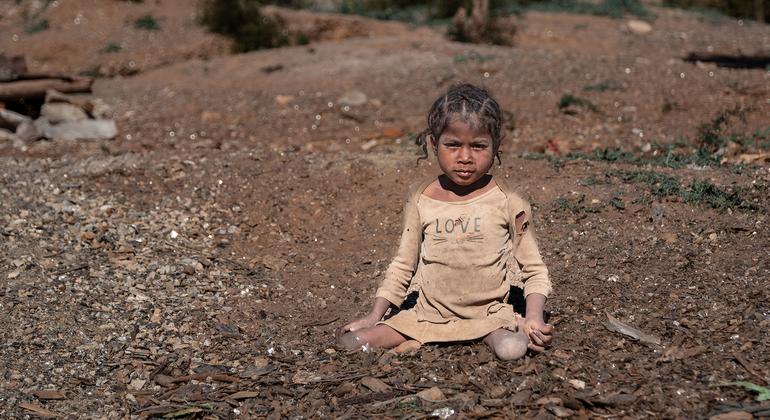
In Madagascar, approximately 10,000 children, like Tenasoa, are trapped in the perilous mica industry, a largely unregulated sector. Mica, a silicate mineral prized for its shimmering effect, is essential in a variety of products, including paints, cosmetics, and car parts. Children work alongside their families in hazardous conditions, often inhaling toxic dust and navigating unstable tunnels. Many have abandoned education, with Tenasoa’s grandfather, Soja, succinctly stating, “If we don’t work, we don’t eat. It’s very simple. Men, women, and children must all work to survive.”
The United Nations set an ambitious target in 2015 to end child labor globally by 2025. However, recent findings from the International Labour Organization (ILO) and the UN Children’s Fund (UNICEF) reveal that progress has been insufficient. Their latest Child Labour Report estimates that around 138 million children are still involved in labor, a drop of 12 million since 2020. ILO Director-General Gilbert F. Houngbo acknowledged in the report, “The findings offer hope and show that progress is possible… But we must not be blindsided by the fact that we still have a long way to go.”
Since 2000, the global child labor numbers have decreased by over 100 million, indicating a viable path toward eradication. Nevertheless, Catherine Russell, Executive Director of UNICEF, underscored that far too many children remain engaged in dangerous work, including mining, manufacturing, and agriculture. Importantly, child labor is not simply about children assisting their parents but involves harsh conditions detrimental to their health and development. ILO child labor expert Benjamin Smith clarified, “We are talking about work that is oftentimes hazardous.”
Among those affected is 13-year-old Honorine, who works daily in a Benin gravel quarry, earning her wages by the bucket and saving for her dream of becoming a hairdresser. The report further highlights the intergenerational nature of child labor, as these children often receive limited educational opportunities, perpetuating a cycle of poverty. ILO expert Federico Blanco emphasized the importance of recognizing the individual children behind the statistics, stating, “Behind every number is a child whose right to education, protection, and a decent future is being denied.”
The report features stories like that of Nur, a 13-year-old Rohingya refugee in Bangladesh whose parents withdrew him from school to support the family. A UNICEF caseworker intervened, helping Nur return to education. “I once dreamt of becoming a teacher… Now I feel that I can learn and become a teacher like I always wanted to,” he shared.
UNICEF and ILO called for comprehensive policy strategies across various governmental sectors to tackle child labor holistically, addressing underlying issues such as poverty. Ensuring parents have rights, including the right to fair wages and safe working conditions, is crucial. Smith noted, “Tackling child labor is just as important as ensuring good adult working conditions because poverty is at the heart of child labor.”
Regional disparities complicate the issue, with Sub-Saharan Africa accounting for two-thirds of the world’s child labor despite overall declines. Funding shortages pose another critical challenge; Russell warned that cuts could reverse progress, urging a renewed commitment: “We must ensure that children are in classrooms and playgrounds, not at work.” The heartbreaking case of 10-year-old Adwara in Ethiopia illustrates this struggle. Forced to work in a gold mine to support his family, he lamented, “I’d like to go to school. I’d like to become someone.”
The ongoing fight against child labor underscores the urgent need for systemic change, compassion, and concerted action from both governments and global organizations.
Original Source: https://news.un.org/feed/view/en/story/2025/06/1164211
Category :
Tags:
Publish Date: 2025-06-11 17:30:00