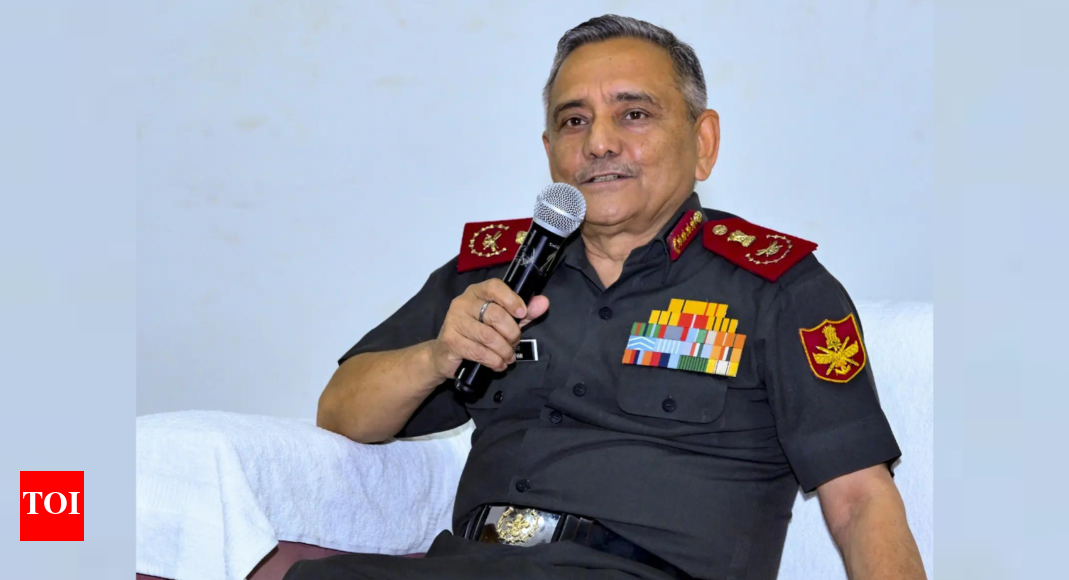
Unmasking Deception: CDS Anil Chauhan Reveals How 15% of Op Sindoor Battled Fake News for a Safer India

In a significant reflection on the recent Operation Sindoor, Chief of Defence Staff (CDS) General Anil Chauhan revealed that nearly 15% of the operational time was dedicated to combating misinformation and false narratives during the four days of hostilities with Pakistan. Describing the conflict as a “non-contact and multi-domain” scenario, he emphasized that this instance serves as a model for future warfare, integrating both kinetic and non-kinetic strategies. Speaking at the Shangri-La Dialogue in Singapore, General Chauhan underscored that India maintained complete operational clarity and autonomy throughout the crisis, undeterred by wider geopolitical shifts.
During this period, India did not observe any unusual activity along the 3,488-kilometer Line of Actual Control (LAC) with China, despite Pakistan’s close relationship with Beijing. He clarified that while Pakistan may have utilized Chinese commercial satellite imagery, there is “no proof of real-time targeting support” from China during Operation Sindoor. This statement comes amid ongoing tensions, as there are still no signs of troop de-escalation or withdrawal between Indian and Chinese forces along the LAC.
General Chauhan pointed out that approximately 80% of the military equipment acquired by Pakistan in recent years has originated from China, suggesting some level of support and maintenance from original equipment manufacturers during the conflict. In contrast, India has successfully leaned on indigenous systems such as the Akash missile, effectively integrating both domestic and foreign radar systems into a unified defense architecture.
On a strategic front, the CDS asserted that India has established a new redline regarding the issues of terrorism and proxy warfare emanating from Pakistan. He expressed hope that the lessons learned from Operation Sindoor will resonate with the adversary as cross-border hostilities halted at 5 PM on May 10. However, the Indian government made it unequivocally clear that it would respond “precisely and decisively” to any future terror attacks linked to Pakistan. This stance necessitates that the armed forces remain vigilant and prepared at all times.
Addressing the extensive misinformation campaign during the operation, General Chauhan highlighted the urgent need for a specialized information warfare unit within the Indian military. The country’s communication strategy during the conflict prioritized fact-based messaging, sometimes at the cost of slower responses. Initially, two female officers were appointed as spokespersons, while senior military leaders remained focused on operational tactics. It was only after May 10 that the Directors General of Military Operations for the Army, Indian Air Force, and Navy began updating the media.
While acknowledging the limited role of cyber operations throughout the conflict, he noted that India’s air-gapped military systems remained secure despite some denial-of-service attacks. While public platforms experienced minor disruptions, the operational systems were unaffected, reinforcing the effectiveness of India’s defensive measures.
This latest dialogue underscores the evolving nature of warfare, as India continues to adapt its military strategies in response to shifting security dynamics in the region. General Chauhan’s insights affirm the importance of robust communication strategies and readiness as essential components of contemporary conflict engagement.
Tags: Operation Sindoor, CDS Anil Chauhan, Indian military, misinformation, Pakistan, cyber operations, LAC, geopolitical strategy.
Original Source: https://timesofindia.indiatimes.com/india/spent-15-of-time-nixing-fake-news-during-op-sindoor-cds/articleshow/121544057.cms
Category :
Tags:
Publish Date: 2025-06-01 05:38:00