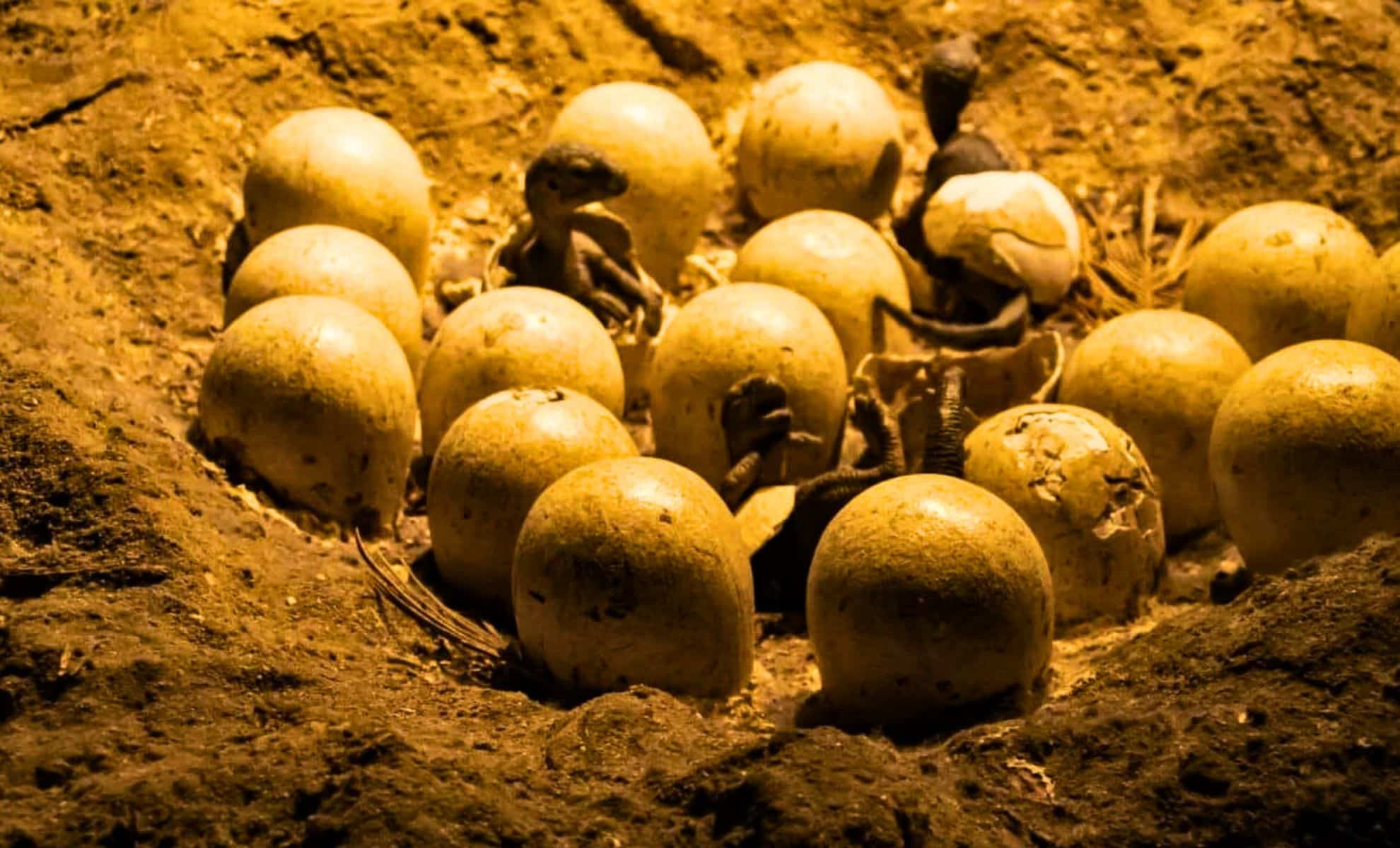
Unbelievable Discovery: 70-Million-Year-Old Dinosaur Embryo Perfectly Preserved in Fossilized Egg!

A remarkable discovery in southern China has unveiled one of the most well-preserved dinosaur embryos ever found, offering unprecedented insights into the evolutionary behaviors that link dinosaurs to modern birds. Dubbed “Baby Yingliang,” this oviraptorosaur embryo was recovered from a 17-centimeter egg believed to be between 66 and 72 million years old. After languishing in a museum warehouse for over a decade, the specimen was identified when a museum staff member noticed bones through a crack in the shell.
The Yingliang Stone Natural History Museum in Nan’an, Fujian Province, is the site of this exciting revelation. The embryo, belonging to a feathered theropod group closely related to birds, is curled in a posture that mirrors the “tucking” behavior observed in bird embryos before hatching. This remarkable preservation detail allows paleontologists to study this behavior in-depth, marking a significant first in recognizing such a posture in non-avian dinosaurs.
The egg, originally part of a collection donated in 2000, likely originated from the Shahe Industrial Park area in Ganzhou City, Jiangxi Province, during construction work. It wasn’t until 2015 that the museum team noted its unusual characteristics, leading to a collaboration with paleontologists. “The museum realized it must be an important specimen, so they contacted us to look at the egg,” explained Waisum Ma, a paleontologist at the University of Birmingham. “We were surprised to see this embryo beautifully preserved inside.”
The embryo’s posture-its head tucked against the body and feet positioned on either side-closely resembles the tucking behavior that many bird embryos assume in preparation for hatching. This behavior is regulated by the central nervous system and is vital for successful hatching. Researchers posit that this specimen is the first non-avian dinosaur embryo exhibiting such a posture, suggesting that tucking behaviors may have originated in theropods long before the first birds emerged.
The Baby Yingliang embryo measures about 27 centimeters in length and showcases an extraordinary level of articulation not often seen in fossilized dinosaur embryos. A 2021 study co-authored by renowned paleontologist Xing Lida emphasized that the positioning of this embryo had not been documented in dinosaurs prior. The authors described its posture as “reminiscent of a late-stage modern bird embryo,” highlighting the evolutionary significance of this behavior, especially since modern birds that do not exhibit the tucking position tend to have lower hatching success rates.
“This little prenatal dinosaur looks just like a baby bird curled in its egg,” noted Steve Brusatte, a paleontologist at the University of Edinburgh and co-author of the study. This further reinforces the idea that traits associated with today’s birds evolved in their dinosaur predecessors. While previous work has analyzed other oviraptorid embryos, Baby Yingliang stands out as the most complete specimen to date, offering a remarkably clear perspective on dinosaur development.
Researchers believe the egg’s extraordinary preservation may stem from rapid burial in sediment shortly after it was laid, although the exact origins of the egg remain unclear. The site in Ganzhou City has yielded numerous oviraptorid fossils, making it a pivotal location for understanding Late Cretaceous biodiversity in East Asia.
Despite the significance of this discovery, scientists caution against drawing definitive conclusions based on a single specimen. “It is very rare to find dinosaur embryos, especially ones that are intact,” stated Ma. The team acknowledges that further findings are essential to ascertain whether the observed posture was common among theropods or exclusive to oviraptorosaurs. Nonetheless, this discovery hints that avian-like behaviors may have emerged much earlier than previously thought.
Baby Yingliang is currently housed at the Yingliang Stone Natural History Museum, where it continues to be the focus of ongoing research.
Original Source: https://indiandefencereview.com/70-million-year-old-dinosaur-embryo-found-perfectly-preserved-inside-fossilized-egg/
Category :
Tags:
Publish Date: 2025-05-23 16:45:00