
At this year’s Google I/O event, CEO Sundar Pichai showcased a remarkable shift toward artificial intelligence (AI) and extended reality (XR), reaffirming the tech giant’s commitment to these rapidly evolving fields. The unveiling of the Gemini AI models, particularly the enhanced Gemini 2.5, highlighted a staggering 50-fold increase in monthly token usage, illustrating a significant leap in AI capabilities.
With the introduction of Gemini 2.5, Google aims to integrate AI across various platforms, moving beyond traditional smartphone applications. This shift sees Gemini increasingly replacing Google Assistant, signaling a strategic pivot as the functionality of the latter has reportedly diminished in recent times. Notably, Google’s newest operating system, Android XR, has been developed entirely within the Gemini framework. This foundational shift ensures that the XR experiences are inherently AI-driven, enhancing user interactions through advanced multimodal capabilities.
Moreover, Google is making strides to accelerate on-device AI adoption by enhancing LiteRT-its runtime for AI models tailored for local processing. This move is designed to optimize the performance of on-device neural processing units (NPUs), crucial for providing low-latency, secure experiences even when connectivity is unreliable. While Google emphasizes the importance of on-device AI, it also acknowledges that hybrid AI solutions, which combine on-device and cloud processing, are likely to persist.
During the event, Google also emphasized advancements in Android XR, particularly with the new Material 3 Expressive design system. This development aims to provide faster, more responsive user experiences across its suite of operating systems. Partnerships played a significant role in the XR narrative, particularly with Samsung on Project Moohan, which is set to launch this year. Google is also collaborating with Warby Parker and Gentle Monster to create AI-enhanced smart glasses, pledging $150 million to bolster these initiatives.
The announcement of Project Aura, a new XR headset developed alongside Xreal, represents Google’s attempt to bridge the gap between lightweight smart glasses and immersive devices. Though details remain scarce, Project Aura is poised to deliver enhanced 3-D augmented reality experiences, vying for competitive ground against Meta’s offerings.
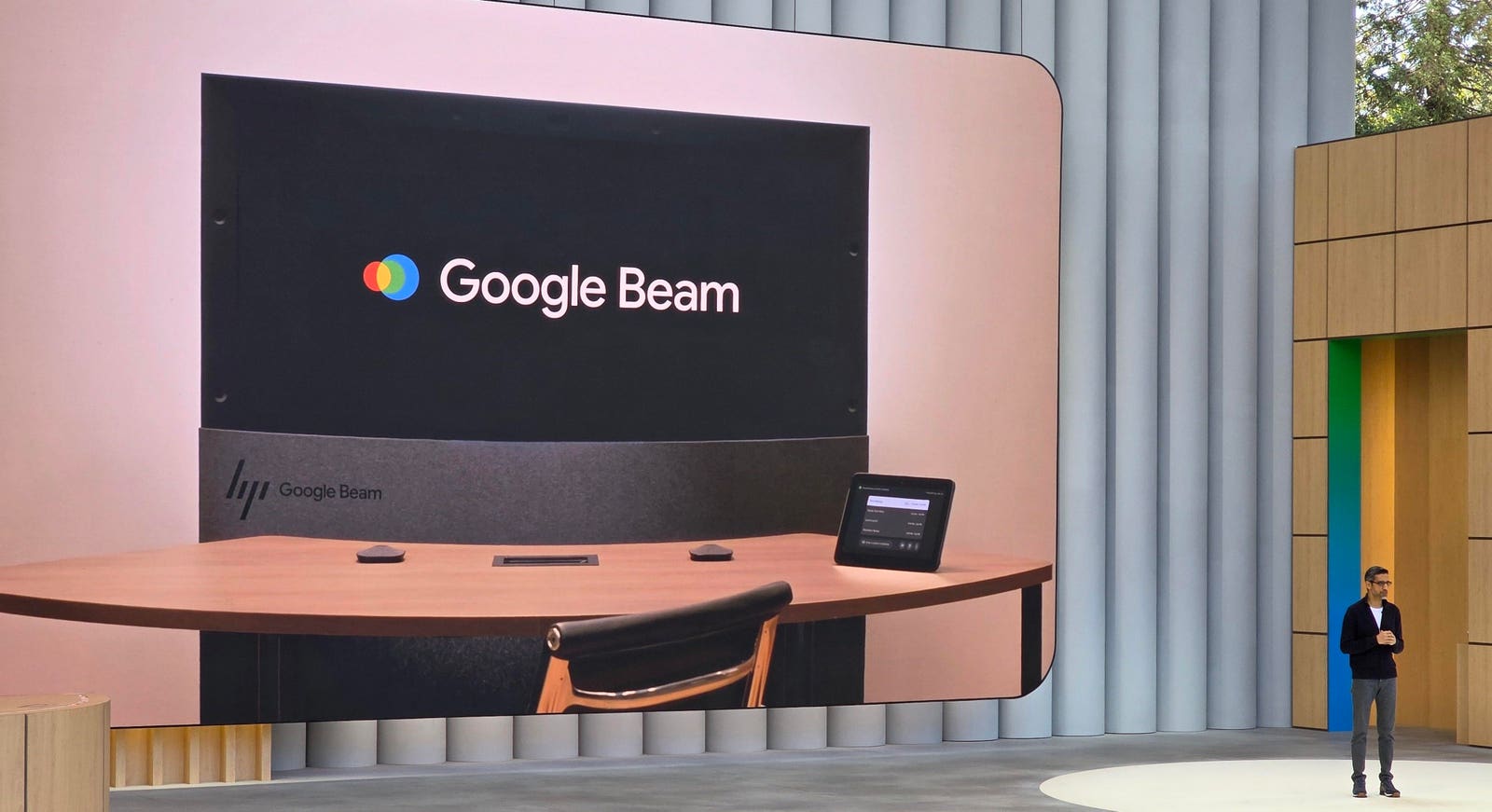
In a notable update, Google has rebranded its XR conferencing solution, previously known as Project Starline, to Google Beam. This advanced technology aims to revolutionize virtual communication by offering near-real-time translation capabilities that capture voice nuances and emotional tones, creating a more engaging interaction. Initial partners for Google Beam include major corporations like Deloitte and Salesforce, highlighting broad industry interest.
Industry analysts recognize that Google’s integration of AI and XR signifies a pivotal moment for the company, as it aligns these technologies with broader strategic objectives. Unlike previous XR initiatives that lacked coherence, Google’s current approach leverages its AI advancements to enhance the XR experience. As the market evolves, Google’s investment in partnerships and ecosystem building will be crucial for establishing its presence against competitors like Apple and Meta. While challenges remain, particularly in executing a cohesive XR strategy, the company appears poised for growth in these interconnected domains. To stay relevant, Google must continue fostering innovation and collaboration, essential for a thriving XR future where AI integration plays a central role.
Original Source: https://www.forbes.com/sites/moorinsights/2025/05/21/google-io-2025-android-takes-a-back-seat-to-ai-and-xr/
Category :
Tags:
Publish Date: 2025-05-22 01:56:00