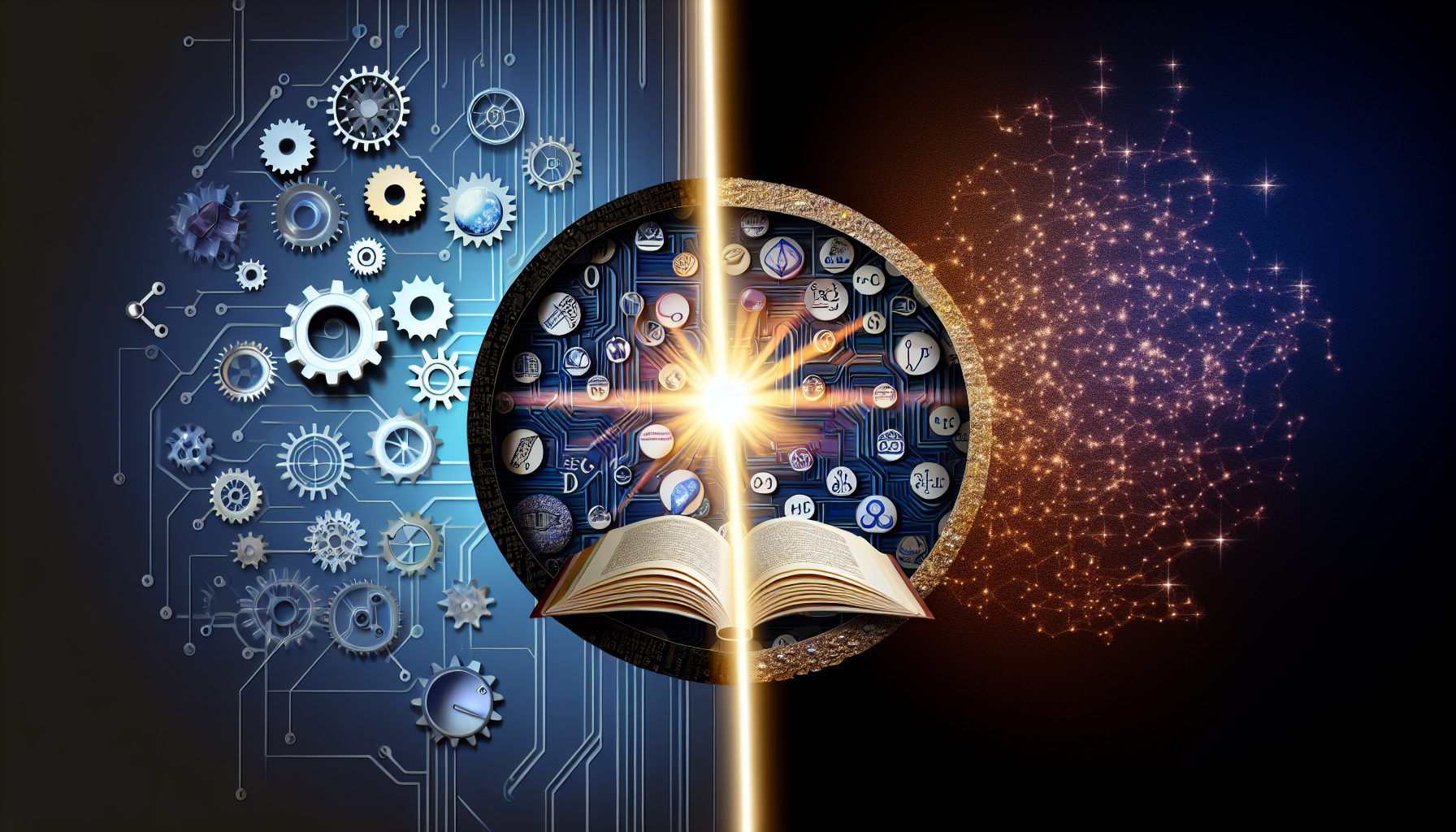
Revolutionizing Materials Science: Unleashing AI for Breakthrough Innovations

In the heart of a bustling market in my hometown, I once stumbled upon a vendor selling handmade clay pots. Each piece was unique, shaped by the artisan’s hands and influenced by the region’s rich culture. As I admired the craftsmanship, I couldn’t help but think about how innovation in materials—like those clay pots—has been a constant thread in human history. Yet, today, we stand on the brink of a revolution in materials science, one that is being powered by artificial intelligence.
Imagine a world where discovering new materials isn’t a slow, painstaking process of trial and error but a rapid, data-driven exploration. This is the promise of AI-powered materials discovery. Traditional methods often involve extensive experimentation, requiring scientists to sift through countless combinations and properties. It’s a bit like searching for a needle in a haystack, but what if we could automate that search? What if AI could help us identify the most promising materials faster than ever before?
One vivid example comes from the world of battery technology. Researchers at the Massachusetts Institute of Technology (MIT) utilized machine learning algorithms to discover a new class of materials for lithium-sulfur batteries. By analyzing vast datasets of chemical properties, the AI system was able to predict which combinations would yield better performance. The result? A potential increase in battery life and efficiency that could transform everything from electric vehicles to renewable energy storage. This isn’t just a technical achievement; it’s a leap toward a more sustainable future.
At its core, AI-powered materials discovery leverages algorithms to analyze and predict material properties, streamlining the research process. This involves training models on existing data, allowing them to learn patterns and relationships that might not be immediately obvious to human researchers. As a result, scientists can focus their efforts on the most promising avenues, reducing both time and resources spent on less viable options.
But what does this mean for the everyday person? It’s easy to think of materials science as something distant, confined to laboratories and research institutions. However, the implications are profoundly human. From the clothes we wear to the devices we use, the materials that surround us are constantly evolving. For instance, imagine textiles that are not only more durable but also biodegradable, or construction materials that can adapt to environmental changes. The innovations driven by AI could lead to products that are not only better but also more aligned with our values of sustainability and efficiency.
Here are a couple of takeaways to ponder: First, the intersection of AI and materials science is a testament to the power of collaboration. It’s not just about technology; it’s about bringing together diverse fields—chemistry, engineering, data science—to create something greater than the sum of its parts. Second, as we embrace these advancements, we must remain mindful of the ethical implications. How do we ensure that these innovations benefit everyone, not just a select few?
As we navigate this exciting frontier, it’s essential to keep our curiosity alive. What new materials might we discover next? How will they shape our world? The answers lie not just in the data but in our willingness to explore, innovate, and imagine a future where technology serves humanity in profound ways.
Sanjeev Sarma is an IT enthusiast with over 20 years of experience in enterprise software development. As the Director of Software Services and Chief Software Architect at Webx Technologies Private Limited, he is passionate about the intersection of technology and everyday life, particularly in areas like AI, cybersecurity, and digital transformation. Based in Northeast India, Sanjeev brings a thoughtful, human-centered perspective to the ever-evolving tech landscape.