China’s Retail Sales Plummet: Disappointment as Stimulus Fails to Ignite Demand, Yet Industrial Output Thrives Against Tariff Struggles!

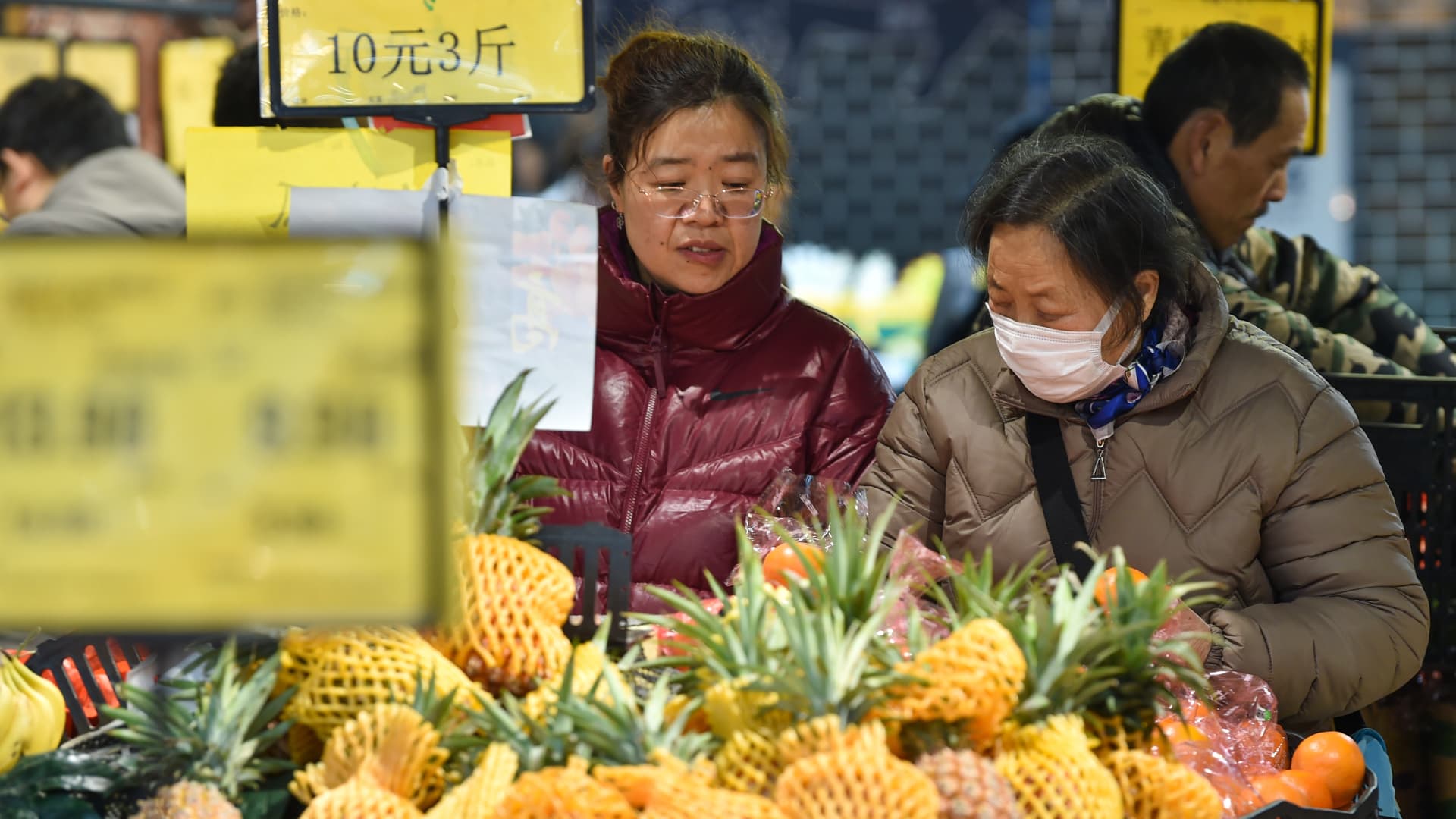
Citizens in Nanjing, East China’s Jiangsu province, were busy shopping at local supermarkets on March 9, 2024. However, recent data from China’s National Bureau of Statistics indicates a slowing in retail sales growth, raising concerns about consumer confidence in the world’s second-largest economy. Retail sales climbed by 5.1% year-on-year in April, falling short of the anticipated 5.5% growth predicted by analysts in a Reuters poll. This contrasts with a more robust 5.9% increase in March.
In addition to retail figures, industrial output maintained a steady growth rate of 6.1% year-on-year in April, surpassing expectations for a 5.5% rise, although it was a decline from the impressive 7.7% increase observed in March. This suggests that the anticipated negative impact of U.S. tariffs may not be as severe as initially feared. “We should be aware that there are still many unstable and uncertain factors in the external environment,” a spokesperson from the statistics bureau noted, emphasizing that the foundations for sustained economic recovery need further consolidation.
Fixed-asset investment also showed signs of slowing, posting a growth of 4.0% in the first four months of the year, slightly below the 4.2% forecasted by analysts. Meanwhile, urban unemployment decreased marginally from 5.2% in March to 5.1% in April, countering fears of significant job losses stemming from the ongoing U.S.-China trade conflict.
Despite challenges—including a dramatic 21% drop in U.S.-bound exports year-on-year—China’s overall export figures for April exceeded expectations. Significant increases in shipments to Southeast Asian countries helped offset losses to the U.S., which saw a 2.5% decline in total exports from January to April.
As the trade conflict continues, Fu Linghui, a representative from the statistics bureau, pointed to China’s efforts to diversify its export markets, highlighting that recent tariff reductions between the two countries could positively impact bilateral trade. However, he cautioned that domestic demand, particularly consumption, still lacks robust momentum.
In the automobile sector, growth stagnated at just 0.7% year-on-year in April, a significant downturn from the previous month’s 5.5% increase. Despite government initiatives to subsidize vehicle trade-ins and boost sales of electronics, the real estate sector continues to struggle, with investment declining by 10.3% in April.
As investor confidence fluctuates, China’s CSI 300 index dipped by 0.39% amidst a stabilized offshore yuan at approximately 7.2133 against the dollar. Following a recent meeting between U.S. and Chinese trade representatives, fears surrounding the trade war have eased, leading investment banks to revise China’s economic growth forecasts upward. However, analysts warn that short-term boosts in growth might lead to longer-term challenges.
Despite efforts to stimulate the economy, including the People’s Bank of China’s decision to cut the seven-day reverse repurchase rate, lingering deflationary pressures and dampened consumer sentiment remain concerning. Goldman Sachs theorizes that the surge in shipments ahead of tariff deadlines may temporarily support exports and industrial output, but calls for additional policy easing persist to stabilize growth and bolster employment.
As China navigates its complex economic landscape, the balance of trade, investment, and consumer confidence will be pivotal in shaping its recovery in the months ahead.
Original Source: https://www.cnbc.com/2025/05/19/chinas-april-retail-sales-growth-misses-expectations-as-consumption-remains-a-worry.html
Category :
Tags:
Publish Date: 2025-05-19 10:31:00