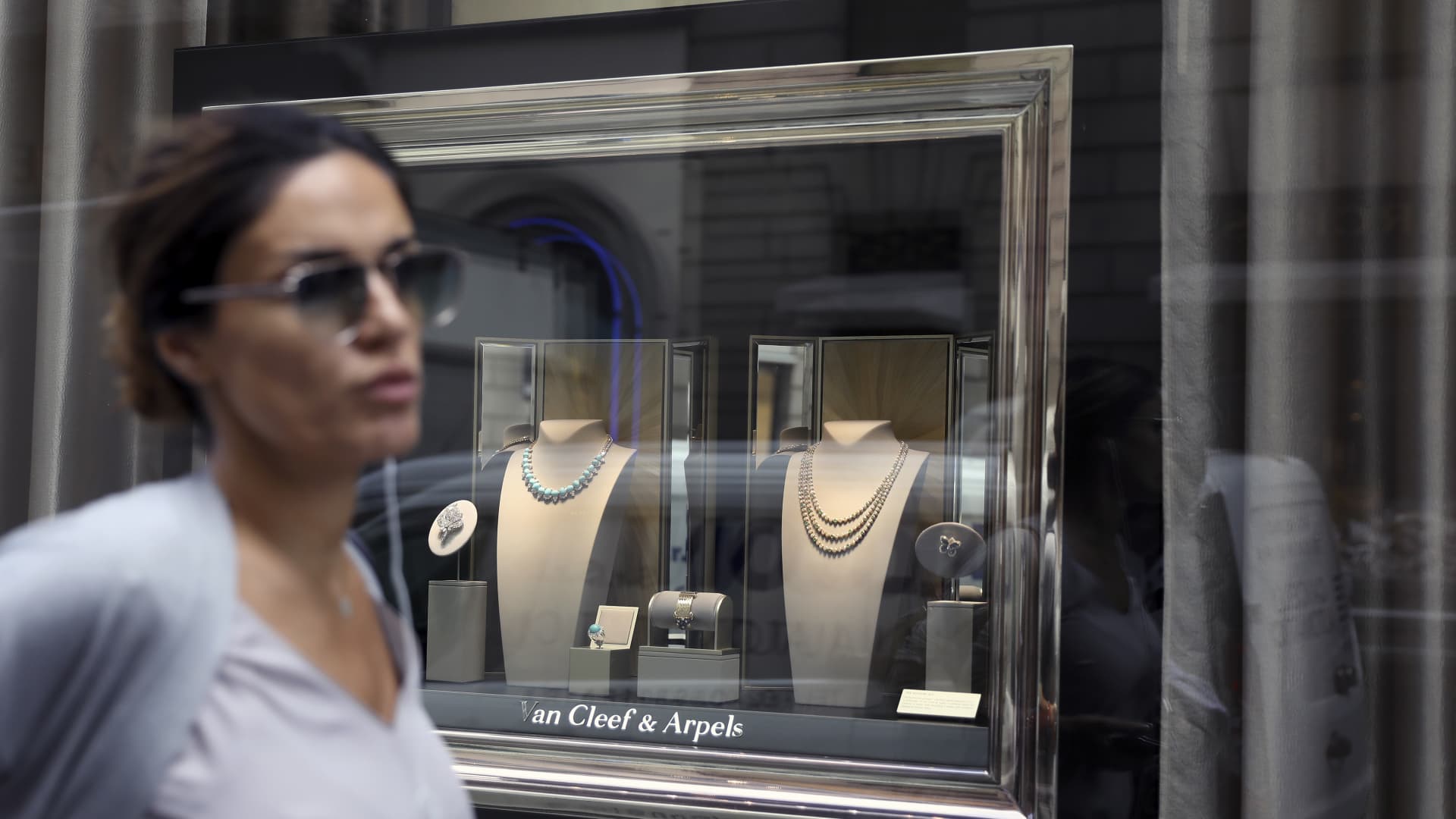
Discover the Secret: Wealthy Shoppers Invest in Jewelry Only When it Meets Their Elite Brand Standards!

Wealthy shoppers are continuing to indulge in luxury jewelry, favoring exquisite pieces from leading brands like Van Cleef & Arpels, Buccellati, and Cartier, even while the broader luxury market shows signs of contraction. This trend is particularly advantageous for Swiss luxury group Richemont, which reported surprising fourth-quarter sales, bolstered by an 11% growth in its Jewelry Maisons division. Over the full fiscal year, jewelry remained the group’s strongest segment, with an overall growth of 8%.
Despite hopes for a rebound in the luxury sector, results from major players like LVMH, Kering, and Burberry have reflected a slowdown in sales through March. LVMH, for instance, reported flat figures in its watch and jewelry division during the first quarter, down 2% on an organic basis from the previous year, largely due to subdued demand for brands such as Tiffany & Co., Bvlgari, TAG Heuer, and Hublot. “We are gaining market share in jewelry, from branded and non-branded companies,” said Richemont’s chairman Johann Rupert during an earnings call on Friday.
Remarkably, the luxury jewelry market’s dynamics contrast sharply with the performance of Richemont’s watch division, which encompasses luxury brands such as Piaget and Roger Dubuis. Watch sales plummeted by 13% this past year, a decline largely attributed to weakened demand in China, a trend that only slightly improved in the latter half of the year, thanks to a recovery in the Americas. The global watch market has been subject to significant changes, with high-end segments showing resilience despite downturns elsewhere. Luca Solca, head of global luxury goods at Bernstein, noted the lingering effects from the pandemic, stating, “Everybody and their dog has bought a watch out of Covid-19, and that will take a while to digest.”
The watch market’s slower recovery is attributed to its perception as a long-term investment, whereas jewelry has become more frequently purchased and is generally perceived as more accessible financially compared to handbags. Bernstein’s Solca pointed out that jewelry’s relative affordability and changing consumer habits are contributing to its current success.
Looking ahead, the luxury jewelry market’s resilience could offer Richemont a safeguard against ongoing global trade challenges. Rupert emphasized the company’s strategy of avoiding unsustainable price increases, a stark contrast to plans announced by other luxury firms. “The business is increasingly reliant on its jewelry arm and will hope the strength of its brands in this area will sustain it,” said Russ Mould, investment director at AJ Bell.
Nevertheless, analysts caution that Richemont faces potential obstacles that could threaten its market position. Factors such as a strong Swiss franc compared to the dollar, rising gold prices, and tariff impacts may complicate the company’s outlook. As the luxury landscape continues to evolve, Richemont’s ability to navigate these challenges while capitalizing on the strengths of its jewelry segment will be critical for sustained success in the competitive luxury market.
Original Source: https://www.cnbc.com/2025/05/18/luxury-wealthy-shoppers-spend-on-jewelry-only-if-its-the-right-brand.html
Category :
Tags:
Publish Date: 2025-05-18 11:05:00