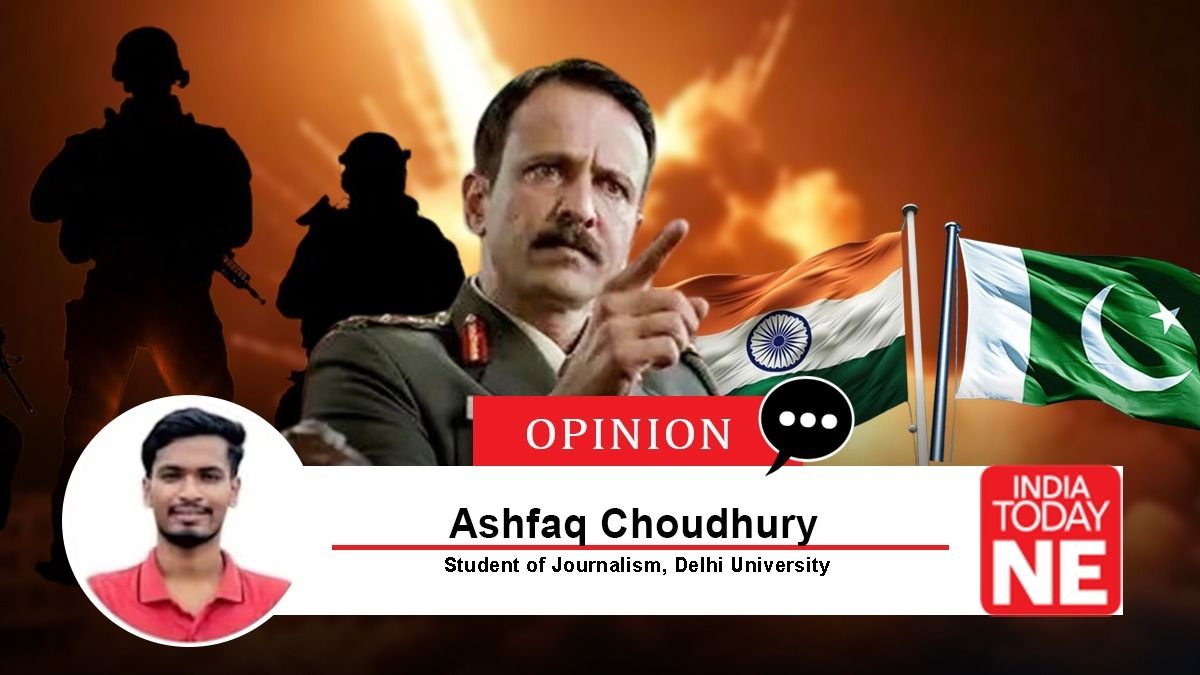

In today’s digital age, young people are increasingly influenced by what they consume on social media and streaming platforms rather than just by their families, schools, or communities. Content like films, music, memes, and short clips from older movies is constantly being repackaged and circulated, often stripped of its original context. This environment allows even older content to regain immense popularity, sometimes distorting the creator’s original message. A recent case in point is the 2008 courtroom drama “Shaurya,” which has gone viral following the tragic Pahalgam terror attack. Central to this renewed interest is the character Major Pratap, whose rising fame among Gen Z raises alarming questions about the normalization of Islamophobia in Indian popular culture.
Portrayed by Kay Kay Menon, Major Pratap is a senior Indian Army officer leading the prosecution against a young Muslim soldier accused of murdering his superior. He initially appears as a patriotic figure, committed to law and order, embodying national pride. However, as the film progresses, it becomes evident that Pratap’s actions are not driven by justice but by a deep-seated hatred towards Muslims, a sentiment he openly displays. Through forceful and impassioned courtroom speeches, he attacks the accused not only for the crime but also for his religious identity, masking his prejudice in the guise of nationalism.
What is troubling is that many current viewers do not perceive him as the antagonist he was intended to be. On social media platforms such as Instagram, X (formerly Twitter), and YouTube, clips of Pratap’s fervent monologues are shared widely and celebrated. These edited videos are often designed to appear inspirational, featuring dramatic scores and nationalist imagery. In the comments, he is hailed as a “true patriot” and a “hero,” while seldom acknowledging the film’s ultimate condemnation of his ideology.
This troubling shift in interpretation illustrates how easily fiction can be exploited to reinforce real-world ideologies. Major Pratap was designed as a cautionary figure, highlighting the peril of allowing personal hatred to masquerade as public service. Rather than being viewed as a villain, he is increasingly seen as a role model by some youth who equate anger and intolerance with strength. This phenomenon signifies a deeper societal and political issue.
India is currently experiencing significant political polarization, with religious minorities, particularly Muslims, facing suspicion and systemic bias. Hate speech and communal violence are rising, creating an environment in which a character like Major Pratap can be adopted as a symbol of a specific kind of nationalism. His confidence commands attention, and tragically, his hate is sometimes misinterpreted as bravery or honesty.
For Gen Z, raised on reels and algorithm-driven content, context is often the first casualty. Social media platforms favor short, emotional, and dramatic snippets over nuanced storytelling. Many young viewers, having never watched “Shaurya” in full, may only encounter Major Pratap through brief, impactful clips, potentially missing crucial elements of the narrative where his prejudiced views are revealed and condemned. Ironically, a story meant to challenge hatred could end up fostering it.
This issue extends beyond “Shaurya”; it reflects the broader consumption and reinterpretation of media in today’s landscape. Films, books, and other cultural products do not exist in isolation; they are shaped by discussions, shares, and reinterpretations. When narratives are stripped of their context, they risk being weaponized to promote ideas they were designed to denounce.
The ascent of Major Pratap as a cultural figure serves as a crucial alert. It reinforces the importance of representation—not only in how characters are written but in how they are remembered and utilized. It serves as a reminder that when hate gains a platform and is cloaked in nationalism, it can spread rapidly, especially among impressionable youth.
We must confront challenging questions about our educational systems, media spaces, and familial dialogues regarding the promotion of critical thinking and empathy. Are we equipping young people to question their online experiences, or are we allowing social media to shape their beliefs unchallenged?
Filmmakers have a duty too. While “Shaurya” aimed to deliver an anti-hate message, many films today dangerously intertwine nationalism and religion, leading to confusion rather than clarity. We need narratives that entertain while fostering understanding, especially in a diverse country.
Teachers, critics, and content creators must engage meaningfully with popular media, providing analysis and breakdowns that help audiences grasp the complete picture. Parents and guardians should also discuss with young people the significance of what they watch.
“Shaurya” conveys a powerful message: that hate cloaked in uniform is still hate, regardless of how eloquently expressed. However, now parts of that film are being exploited in precisely the way its creators warned against. This is not just unfortunate—it’s perilous.
The situation surrounding Major Pratap transcends a single film or character. It highlights how easily stories can be manipulated in a world where attention is fleeting, and outrage thrives. We must remain vigilant, critical, and empathetic in how we consume and distribute the media surrounding us.
Original Source: https://www.indiatodayne.in/opinion/story/major-pratap-in-shaurya-a-disturbing-new-icon-for-gen-z-normalizing-islamophobia-in-india-1214975-2025-05-17?utm_source=rssfeed
Category:
Tags:
Publish Date: 2025-05-17 14:26:00