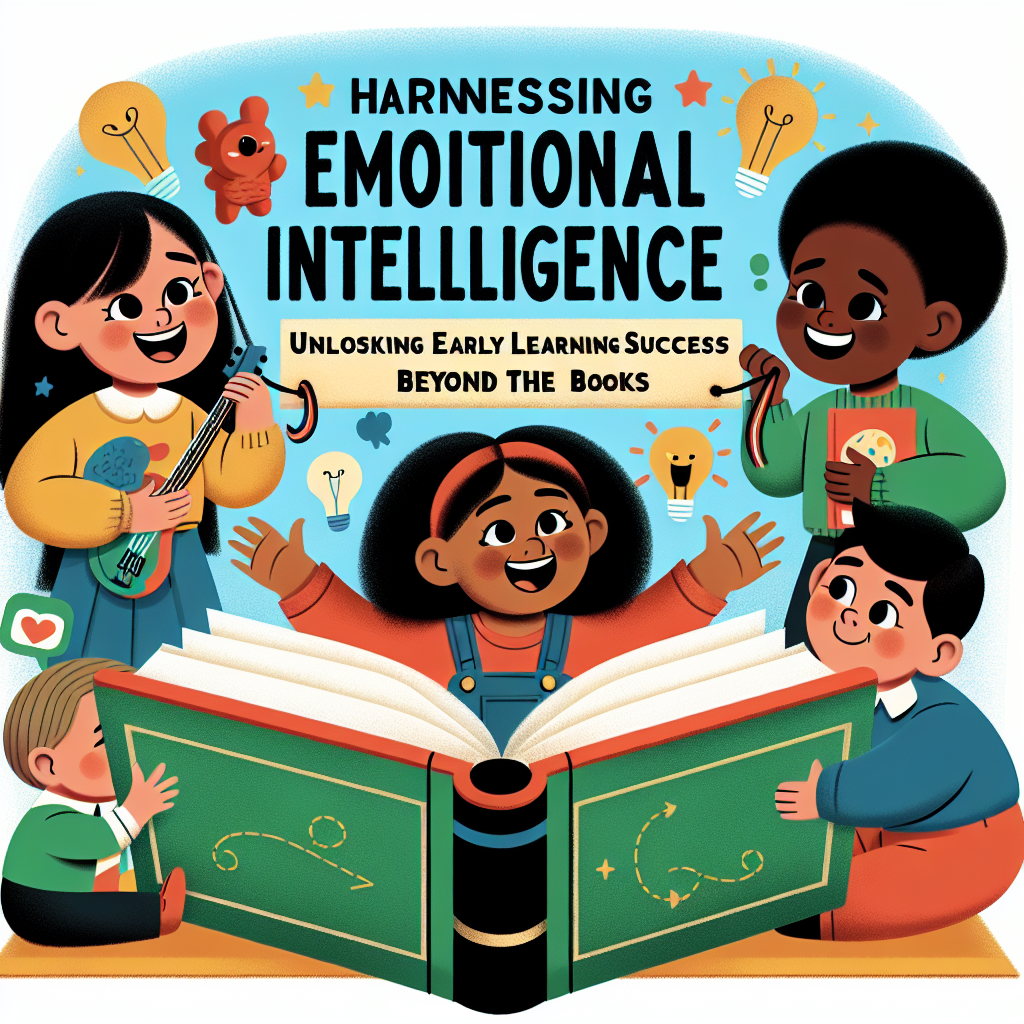
Harnessing Emotional Intelligence: Unlocking Early Learning Success Beyond the Books

Imagine a classroom full of energetic young faces, all buzzing with the excitement of learning. Now, think about the teacher, not just feeding knowledge but really tuning into the emotional wavelengths of each child—what they feel, how they connect, and what drives their curiosity. This scenario captures a truth that many of us often overlook: the hidden power of emotional intelligence in early learning. It’s not just about mastering the ABCs or solving math problems; it’s about fostering an environment where feelings get equal billing alongside facts.
As someone deeply entrenched in the technology sector, I see parallels everywhere. Just as complex algorithms require understanding the data they process, our young learners need a grip on their emotions to navigate this increasingly interconnected world. Research shows that emotional intelligence (EI) in children leads to better academic performance, improved relationships, and enhanced mental health. A 2020 study from the University of Missouri found that children who can express their emotions effectively also tend to develop stronger cognitive skills. This isn’t just data; it’s a framework we can use to reshape how we think about education.
Picture a kid named Riya, who struggles with making friends. Every time the teacher assigns group work, Riya’s anxiety skyrockets. If the educational focus remains solely on textbooks and quizzes, Riya will fall further behind—not because she lacks intellect but because she’s grappling with her emotions. A teacher who understands Riya’s plight can create a supportive environment, perhaps by encouraging cooperative games that foster social skills. Suddenly, Riya isn’t just a student; she’s a valued participant in a thriving community.
Building emotional intelligence in early education isn’t a revolutionary concept; it’s simply a wiser way to engage young minds. The classroom settings we cultivate today determine how kids interact with themselves and the world tomorrow. Incorporating EI into educational practices means teaching kids to identify their feelings, express them appropriately, and understand others’ emotions too. This is where the magic happens—when kids begin recognizing that their emotions aren’t just private experiences but shared human complexities that can enrich their lives.
So, how do we weave emotional intelligence into the curriculum without sacrificing academic rigor? Start by integrating methods like role-playing and storytelling, which develop empathy and emotional literacy. Teachers can encourage discussions about feelings in relation to stories or group activities. When children learn to discuss their emotions openly, communication skills blossom.
Another angle we can explore is leveraging digital tools that encourage emotional self-awareness. Think about applications designed for children that entertain while promoting emotional literacy, teaching kids how to articulate their feelings through gamified experiences. Technology can be an ally, crafting meaningful connections not only among students but also between students and educators.
For parents and educators alike, investing in emotional intelligence isn’t just a trend; it’s an essential component of holistic education. The benefits reach far beyond grades or college readiness. Children equipped with emotional intelligence will likely navigate adulthood with far more resilience, empathy, and collaboration—skills that are increasingly vital in our tech-saturated, global society.
In a world where success is often measured by metrics alone, it’s easy to forget that the heart of innovation, creativity, and genuine human connection lies in understanding one another emotionally. As we think about reshaping education for future generations, let’s not overlook the profound impacts of emotional intelligence. After all, while we are training young minds, we are also nurturing the spirit—enabling kids like Riya to thrive in ways that textbooks alone could never achieve.
Author Profile: Sanjeev Sarma is the Director of Software Services and Chief Software Architect at Webx Technologies Private Limited. A technology enthusiast with deep roots in the Northeast Indian culture, Sanjeev blends curiosity with insight, exploring the intersections of technology, education, and human experience.