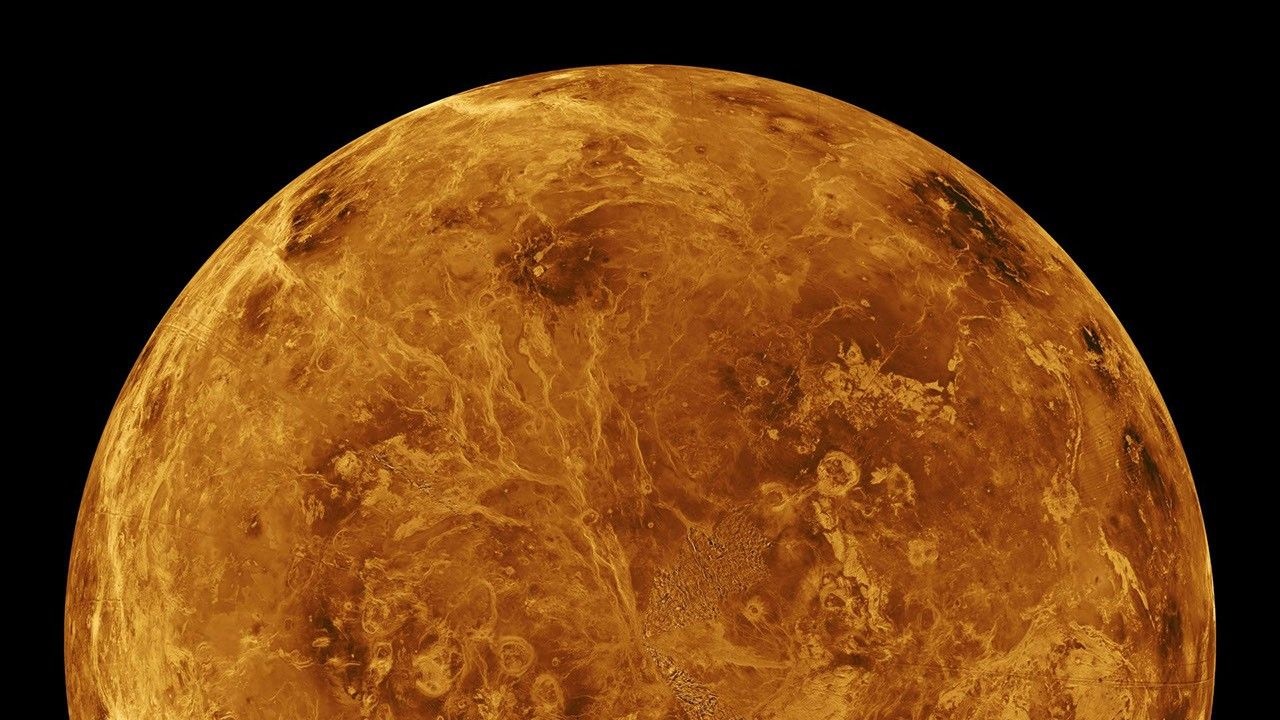

Venus, often dismissed as a geologically inactive planet, is exhibiting much more activity beneath its extreme surface than previously understood, according to new research. Unlike Earth, Venus does not have plate tectonics, the process that continually reshapes its surface. Scientists historically believed that Venus’ crust would simply accumulate and thicken as new rock formed on top, but recent findings suggest a different dynamic may be at play. This undercurrent prevents the crust from fortifying indefinitely, causing it to either break apart or melt once it reaches a critical thickness. “This breaking off or melting can reintroduce water and elements back into the planet’s interior and support volcanic activity,” stated Justin Filiberto, a study co-author and deputy chief of NASA’s Astromaterials Research and Exploration Science Division in Houston. “It reshapes our understanding of how the geology, crust, and atmosphere on Venus interact.”
The study, led by planetary scientist Julia Semprich from The Open University in the U.K., employed computer models to simulate how various rocks in Venus’ crust behave under extreme heat and pressure. The results indicate that the crust undergoes metamorphism. As it thickens, the lower layers become heavier than the mantle beneath, resulting in them peeling off and sinking. Estimates suggest that the planet’s crust reaches a maximum thickness of around 40 miles (65 kilometers), with many areas potentially much thinner. “That is surprisingly thin, given conditions on the planet,” Filiberto remarked. This mechanism could elucidate why Venus exhibits geological activity even in the absence of plate tectonics.
Recent evaluations of archival data from NASA’s Magellan mission have further contested the long-standing view of Venus as geologically dormant, revealing evidence of volcanic activity as recently as the early 1990s. “We don’t actually know how much volcanic activity occurs on Venus,” Filiberto cautioned. “We assume there is a lot, and research suggests there should be, but we need additional data to confirm it.” This expected data may come in the early 2030s, when NASA’s DAVINCI and VERITAS missions, along with the European Space Agency’s EnVision mission, will conduct detailed studies of Venus’ surface and atmosphere. These initiatives could validate whether metamorphism and crustal recycling are currently shaping Venus, and how these processes might drive its volcanic and atmospheric evolution. The findings of this research were detailed in a paper published on March 25 in the journal Nature Communications.
Original Source: https://www.space.com/astronomy/venus/venus-crust-is-surprisingly-thin-could-this-explain-why-its-so-geologically-active
Category:
Tags:
Publish Date: 2025-05-15 02:30:00