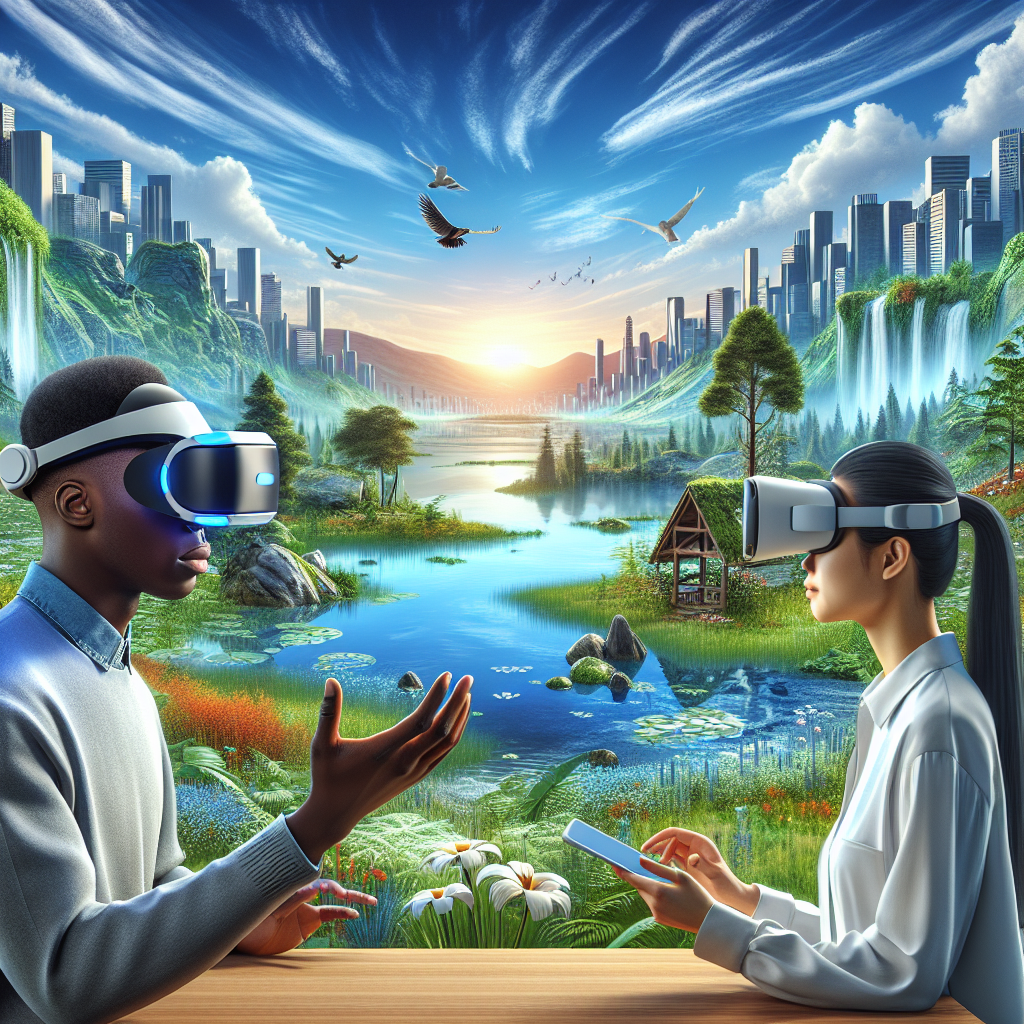
Transformative Virtual Reality Exposure Therapy: Revolutionizing Healing and Empowering Lives

Imagine stepping into a world where your fears unravel without the looming judgment of reality. Picture this: You’re sitting in a cozy, dimly-lit room, and suddenly, you’re teleported to a bustling street, perhaps steep cliffs, or maybe even the cockpit of a plane, all while wearing a headset that feels just like a pair of oversized glasses. Welcome to Virtual Reality Exposure Therapy (VRET)—a technique that’s reshaping the healing landscape for mental health challenges.
Let’s take a moment to consider Sarah, a young woman grappling with severe anxiety. A few months ago, the thought of stepping outside her home sent her heart racing. But with VRET, she’s not just retreating from her fears; she’s confronting them head-on. Under the caring watch of her therapist, Sarah wore a VR headset that transported her to various scenarios that would typically trigger her anxiety. The magic here isn’t just in the tech; it’s in how these experiences are structured. As she navigated simulated crowded spaces, her therapist was right there, guiding her through breathing exercises and cognitive techniques. To say it’s transformative would be an understatement.
Now, you might be wondering: how does this actually work? The essence lies in the carefully designed simulations that mimic real-life situations. Unlike traditional therapy, where one may only verbalize fears, VRET allows participants to engage with their phobias in a controlled and safe environment. This exposure is crucial. It’s like learning to swim: you don’t just splash around in the shallow end; you gradually venture deeper, gaining confidence along the way.
What’s impressive is the neuroscience backing. Studies have shown that interacting with anxiety-inducing stimuli in a virtual setting can lead to similar brain responses as those experienced in real life. The brain’s amygdala—the fear response center—starts to recalibrate. Gradually, what once seemed insurmountable becomes manageable. It’s not about erasing fear but about reshaping the response to it.
Yet, it’s not just anxiety and phobias that are being tackled through this approach. VRET is making waves in the treatment of PTSD, with veterans finding solace in virtual environments that help them process traumatic experiences. Think of it as gently guiding someone through the storm rather than throwing them into it. This nurturing approach fosters resilience and empowers individuals to reclaim control over their lives.
Here’s the thing though: while VRET is groundbreaking, it’s not a panacea. Like any tool, its effectiveness depends on how it’s utilized. The collaboration between a patient and a skilled therapist can’t be overstated here. You wouldn’t set out to climb Everest without a Sherpa, right?
Now, let’s reflect on a couple of practical takeaways. First, consider the role of technology in breaking down barriers. Whether it’s fear, trauma, or anxiety, the intersection of mental health and virtual reality is opening doors we didn’t even know existed. Secondly, if you find yourself or a loved one grappling with overwhelming fears, seek out professionals who are well-versed in VRET. This is a new form of healing that deserves exploration—because sometimes, facing fear head-on, even in a simulated environment, is the bravest thing one can do.
As we continue to explore the depths of human experience through technology, let’s maintain an open dialogue about its ethical implications and potential. The more we talk, the more we ensure that innovations like VRET are used responsibly, prioritizing human connection over mere technological advancement. And who knows? Maybe the next time someone shares their fear of the unknown, we’ll have more than just words to lend them; we’ll have entire worlds waiting for them to explore.
About the Author:
Sanjeev Sarma is the Director of Software Services and Chief Software Architect at Webx Technologies Private Limited. An IT enthusiast, he brings a unique blend of curiosity and insight into the realms of AI, ML, and digital transformation. Passionate about the intersection of technology and human experience, he believes in fostering innovation that drives positive change.