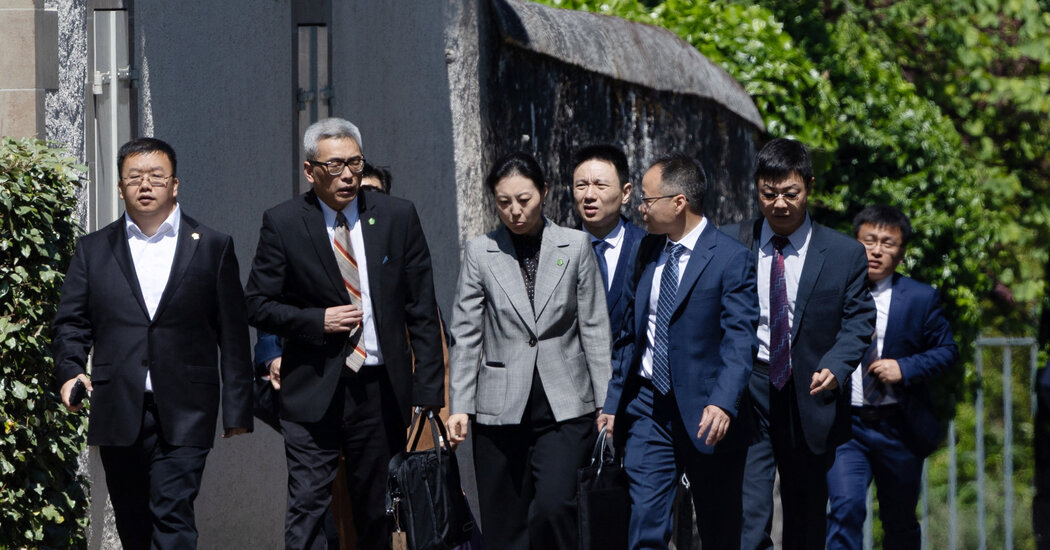

U.S. Treasury Secretary Scott Bessent reported significant advancements in discussions with China following a weekend of negotiations in Geneva. He stated that more details would emerge soon, indicating a positive trajectory in U.S.-China relations. U.S. Trade Representative Jamieson Greer, who participated in the discussions, hinted that a potential agreement could address American national security concerns related to China’s trade practices. However, he did not confirm whether any tariffs imposed by both nations would be lifted.
Chinese Vice Premier He Lifeng characterized the talks as “candid, in-depth, and constructive.” He revealed that both countries agreed to create a “consultation mechanism” aimed at addressing economic and trade issues, according to Chinese state media. Trade analyst Ana Swanson noted that while any reduction in tensions is beneficial for businesses reliant on U.S.-China trade, expectations should be tempered. She warned that the outcome could simply lead to further discussions rather than immediate tariff reductions.
In another significant geopolitical development, the fragile cease-fire between India and Pakistan continued to hold its ground as of yesterday. Following a four-day conflict, both countries declared victory, and U.S. President Donald Trump announced a cease-fire agreement facilitated by American mediation. He also expressed intentions to significantly increase trade with both nations and work towards resolving the long-standing Kashmir dispute. While Pakistan acknowledged U.S. mediation, India maintained a more cautious stance, initially refraining from emphasizing American involvement but later confirming discussions with U.S. officials.
As Trump prepares for his first major foreign trip to the Middle East this week, tensions appear to be rising between him and Israeli Prime Minister Benjamin Netanyahu. Their aligned positions on issues such as Iran and Gaza seem to be fraying. Trump’s rejection of Netanyahu’s calls for joint action against Iran’s nuclear capabilities reflects this growing strain. Meanwhile, Trump’s representatives continue to seek a resolution in Gaza despite his general support for Netanyahu’s military conduct.
In other news, Hamas has announced plans to release Edan Alexander, the last known U.S. citizen held captive in Gaza. Trump is also facing scrutiny over his acceptance of a luxury Boeing jet from the Qatari royal family, which would be used as Air Force One, raising ethical concerns regarding foreign gifts to the U.S. government. Additionally, the Trump administration is expected to permit a group of white South African refugees to enter the U.S. today, marking a notable shift in immigration policy. Trump has further stirred controversy by suggesting the renaming of the Persian Gulf to the Arabian Gulf, a proposal that has angered Iranian citizens.
In cultural news, Guinea-Bissau, a small West African nation with limited resources for the arts, recently hosted its inaugural biennale. Running through May 31, the MoAC Biss features around 150 artists from 17 countries, aiming to create more opportunities for local talent to showcase their work. As one curator remarked, culture and art are essential to the soul, highlighting the significance of this festival in a region often overlooked in the global arts scene.
Overall, these developments underline a period of shifting dynamics not only in international relations but also in cultural expression, offering a snapshot of both ongoing challenges and emerging opportunities.
Original Source: https://www.nytimes.com/2025/05/12/briefing/china-trade-pakistan-vatican.html
Category :
Tags:
Publish Date: 2025-05-12 10:05:00