
The United Nations’ top judicial authority, the International Court of Justice (ICJ), dismissed a high-profile case on Monday accusing the United Arab Emirates (UAE) of exacerbating the conflict in Sudan through support for paramilitary forces. The ICJ determined it lacked jurisdiction to assess the claims, opting by a 14-2 vote against enacting provisional emergency measures that Sudan had requested against the UAE. By a narrower 9-7 decision, the court officially removed the case from its docket.
Sudan initiated legal proceedings in March, alleging that the UAE, a signatory of the 1948 Genocide Convention, violated the accord by supplying arms and funds to the Rapid Support Forces (RSF). This powerful paramilitary group has been a significant player in Sudan’s intensified civil conflict, which erupted in April 2023 when tensions between the RSF and Sudanese military boiled over. This violent struggle has led to mass displacements, famine, and numerous fatalities, with both parties accused of severe human rights violations, including potential war crimes.
The court’s decision not to act on the merits of Sudan’s allegations left the Sudanese government without the emergency measures it sought to protect the Masalit ethnic group in Darfur. Reports indicate that the RSF, which evolved from the infamous Janjaweed militias, has been implicated in ethnic cleansing targeting the Masalit community. At the ICJ hearing, Sudan requested orders for the UAE to cease alleged genocidal activities and end support for the RSF.
In response to the court’s dismissal, Emirati foreign ministry official Reem Ketait stated that the decision was a decisive rebuttal to what she termed as the Sudanese Armed Forces’ misinformation. She emphasized the UAE’s stance that the evidence presented was inadequate and reaffirmed its claim that the court lacked the necessary jurisdiction.
The conflict in Sudan has become a complex battleground involving regional and international stakeholders. Reports have suggested that the UAE played an intricate role by allegedly supplying advanced weaponry and drones, and facilitating medical aid for RSF fighters. The Emirates has refuted claims of using humanitarian missions as a facade for arms smuggling, particularly through the Emirates Red Crescent in Chad.
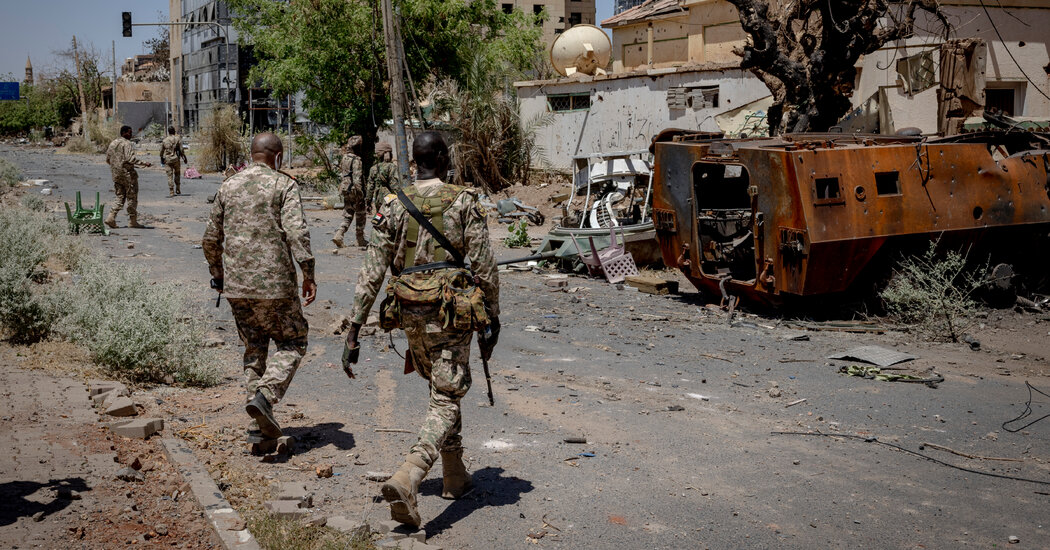
Further murkiness surrounds the conflict as recent reports indicated that Emirati authorities intercepted an effort by Sudanese military officials to transport weapons from UAE territory. As the situation deteriorates, the Sudanese military has solidified its hold over Khartoum, while the RSF exerts control over Darfur. Tensions remain high as both sides engage in aggressive military maneuvers.
The escalating violence and humanitarian crisis prompted international condemnation but little concrete action, highlighting the dire conditions faced by millions of civilians. The ICJ’s expression of deep concern over the unfolding tragedy underscores the urgent need for global attention and diplomatic intervention to alleviate the suffering of the Sudanese people.
This ongoing war presents a complex geopolitical landscape with accusations of genocide and war crimes under intense international scrutiny. As Sudan’s struggle continues, both the human cost and the intricate web of international involvement demand comprehensive coverage and elucidation for a global audience.
Original Source: https://www.nytimes.com/2025/05/05/world/middleeast/un-court-sudan-genocide-uae.html
Category : War and Armed Conflicts,International Court of Justice (UN),Rapid Support Forces (Sudan),Sudanese Armed Forces,Hamdan, Mohamed (Hemeti),Sudan,United Arab Emirates,al-Burhan, Abdel Fattah,War Crimes, Genocide and Crimes Against Humanity
Tags:
Publish Date: 2025-05-05 21:48:00