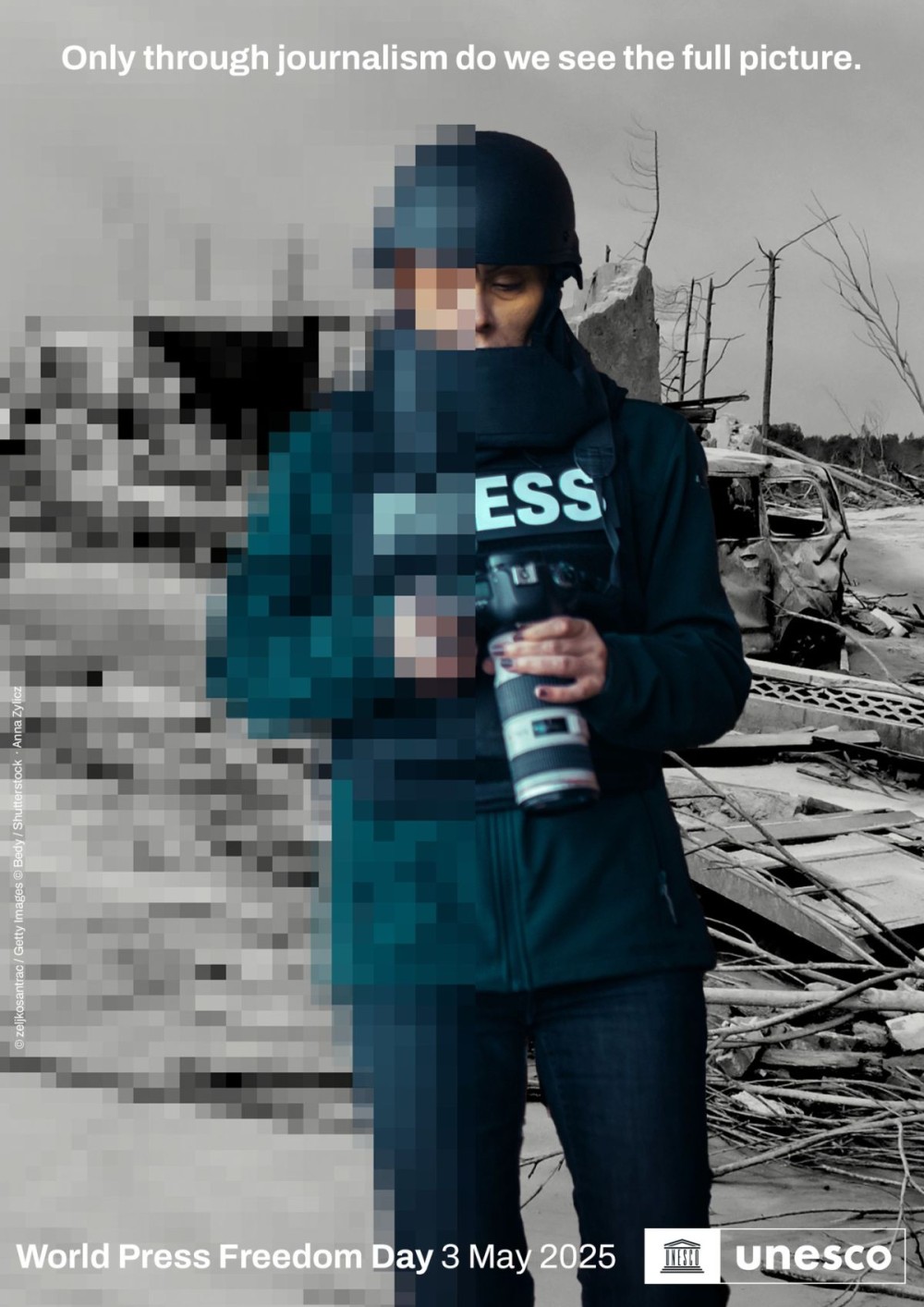

In 2025, global press freedom faces unprecedented challenges due to economic instability, rising authoritarianism, and violent conflict, as highlighted by international watchdogs and UN agencies in observance of World Press Freedom Day. The year’s theme, “Reporting in the Brave New World – The Impact of Artificial Intelligence on Press Freedom and the Media,” emphasizes the transformative role of emerging technologies like AI in reshaping journalism.
The World Press Freedom Index, released by Reporters Without Borders (RSF), alongside statements from UNESCO and the Council on Foreign Relations (CFR), reveals a concerning media landscape. Although censorship and political repression persist, the most pressing issue is the economic decline plaguing the media industry. RSF identifies significant financial strain, particularly in local and regional newsrooms, which has left vast audiences without access to reliable and independent coverage. The growing dominance of unregulated digital platforms has accelerated this deterioration, posing a substantial threat to the integrity of journalism.
The index recorded a historic low for the economic health of the media, marking the global state of press freedom as a “difficult situation” for the first time. In 2025, the average score across assessed countries plummeted below 55 points, with more than 112 countries experiencing a decline. Alarmingly, conditions for practicing journalism are now classified as “difficult” or “very serious” in over half of the world’s nations, with fewer than 25% deemed to have satisfactory conditions.
The situation is particularly dire in 42 countries, accounting for over half of the global population, where press freedom is essentially non-existent. Palestine ranks 163rd, with the Israeli army dismantling journalistic infrastructure and imposing media blackouts in Gaza, leading to nearly 200 media professionals killed in the past 18 months. Israel itself fell to 112th, dropping 11 spots, while nations like Uganda, Ethiopia, and Rwanda have also entered the “very serious” category. Hong Kong has joined countries like China at the lower end of the index, while other nations in Central Asia and the Middle East, such as Kyrgyzstan, Kazakhstan, and Jordan, have seen significant declines.
According to the Committee to Protect Journalists (CPJ), 2024 was the deadliest year for journalists in over a decade, with at least 124 lives lost. The conflict in Gaza accounted for a significant portion of these fatalities, particularly affecting Palestinian journalists. The situation has worsened in countries like Bangladesh, where legal persecution and harassment have escalated under a military-backed administration.
The CFR warns of an emerging threat from disinformation and AI-generated fake news, which can rapidly spread misinformation, undermining public trust in credible journalism. UNESCO stresses journalism’s critical role in democratic societies and urges nations to bolster protections for journalists through robust legal frameworks and emergency support.
Economic difficulties have forced nearly a third of countries to witness media shutdowns, severely impacting stability in the industry. Even nations like the United States and Tunisia are grappling with challenges as financial hardship leads to closures. In grassroots areas, the plight of journalists is exacerbated by political turmoil, with mass closures forcing many into exile, particularly in Nicaragua, Belarus, and Afghanistan.
Conversely, India has seen a modest rise to 151st in the index, though concerns about media ownership concentration persist, which undermines plurality and independence. As global press freedom continues to deteriorate, it becomes crucial for societies to recognize and address these threats to ensure a healthy democracy.
Original Source: https://www.morungexpress.com/global-state-of-press-freedom-is-difficult-a-historical-first
Category : Nagaland
Tags:
Publish Date: 2025-05-03 23:32:00