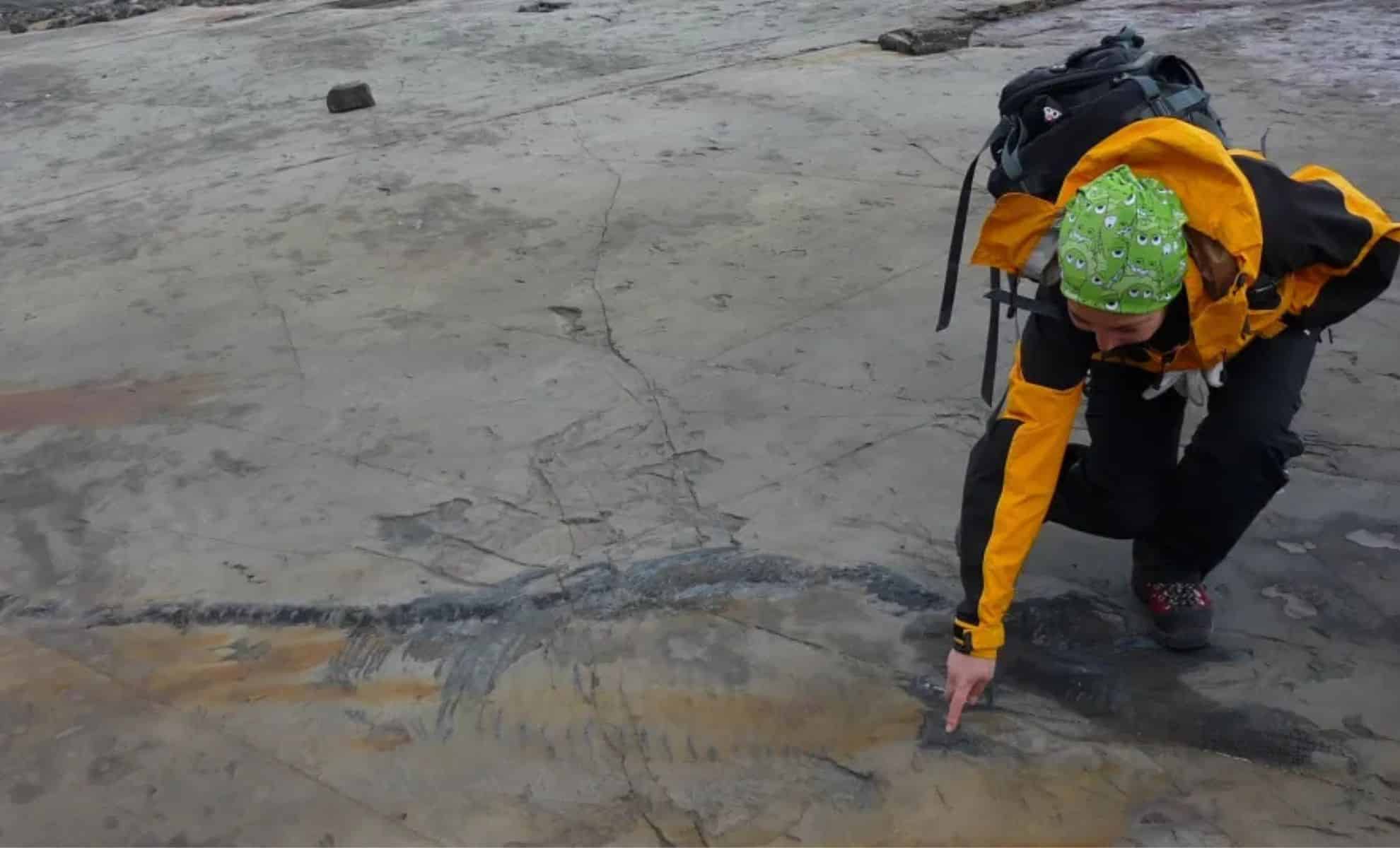
Stunning Discovery: Perfectly Preserved Pregnant Ichthyosaur Fossil Reveals Ancient Secrets

A remarkable discovery in paleontology has unveiled a 131-million-year-old pregnant ichthyosaur, affectionately named Fiona, providing scientists a rare opportunity to explore the lives of ancient marine reptiles. Fiona’s fossilized remains were airlifted from Patagonia and are now housed at the Natural History Museum Río Seco in Chile. An international research team has been analyzing these artifacts, and findings published in the Journal of Vertebrate Paleontology shine light on Fiona’s preservation, her unborn offspring, and even her last meal, which consisted of small fish remnants found within her ribcage.
Fiona’s unique preservation offers invaluable insights into her status as a dominant predator, revealing essential details about her prehistoric ecosystem. The ichthyosaur was likely buried quickly after succumbing to the seafloor, with sediments encasing her body and preventing decomposition. This exceptional state of preservation enables scientists to better comprehend the ecological dynamics of the time, including the tectonic shifts that may have influenced these marine habitats.
The revelation about Fiona has expanded understanding of the world inhabited by this apex predator over 130 million years ago. Researchers are peeling back the layers of Fiona’s life, gathering information on her migration patterns, hunting territories, and reproductive behaviors. Matt Malkowski, a co-author of the study, articulated the significance of these insights, stating, “If you are the apex predator in the ocean at the time, these are all things you care about. You care about migration pathways. You care about places that you can hunt, fish, and do your thing. You care about places where you can reproduce.”
In addition to establishing the nature of Fiona’s role as a predator, the research allows for a closer examination of her anatomical features, which may further illuminate the lifestyle and adaptations of ichthyosaurs. Judith Pardo-Pérez, the lead researcher, emphasized the groundbreaking nature of the find, noting, “The discovery of the Fiona ichthyosaur provides valuable information regarding the species, its paleobiology, and paleoecology. Moreover, its skeleton will allow us to delve deeper into aspects of its anatomy through new studies and the use of medical technology.”
Beyond investigating Fiona herself, researchers are delving into the environmental conditions of her time through advanced geochemical analyses. Malkowski elaborated on this aspect, highlighting the team’s efforts to reconstruct the oceanic ecosystem: “We’re conducting an array of geochemical analyses to understand as much as we can about the environment of this ocean basin at the time. We’re working on teasing out whether or not this is a single event or multiple events and what the triggers were.”
Fiona’s extraordinary discovery is part of a broader initiative to explore geological and environmental factors instrumental in the mass extinction events of the past, as well as the subsequent distribution of marine organisms. The ongoing research aims not only to shed light on ancient life but also to draw connections to modern ecological challenges. The insights gleaned from Fiona are poised to contribute significantly to the understanding of marine ecosystems, both past and present, as scientists continue to engage with this ancient relic of the ocean’s history.
Tags: ichthyosaur, paleontology, ancient marine reptiles, fossil discovery, marine ecosystems.
Original Source: https://indiandefencereview.com/scientists-pregnant-ichthyosaur-fossil/
Category :
Tags:
Publish Date: 2025-05-03 00:40:00