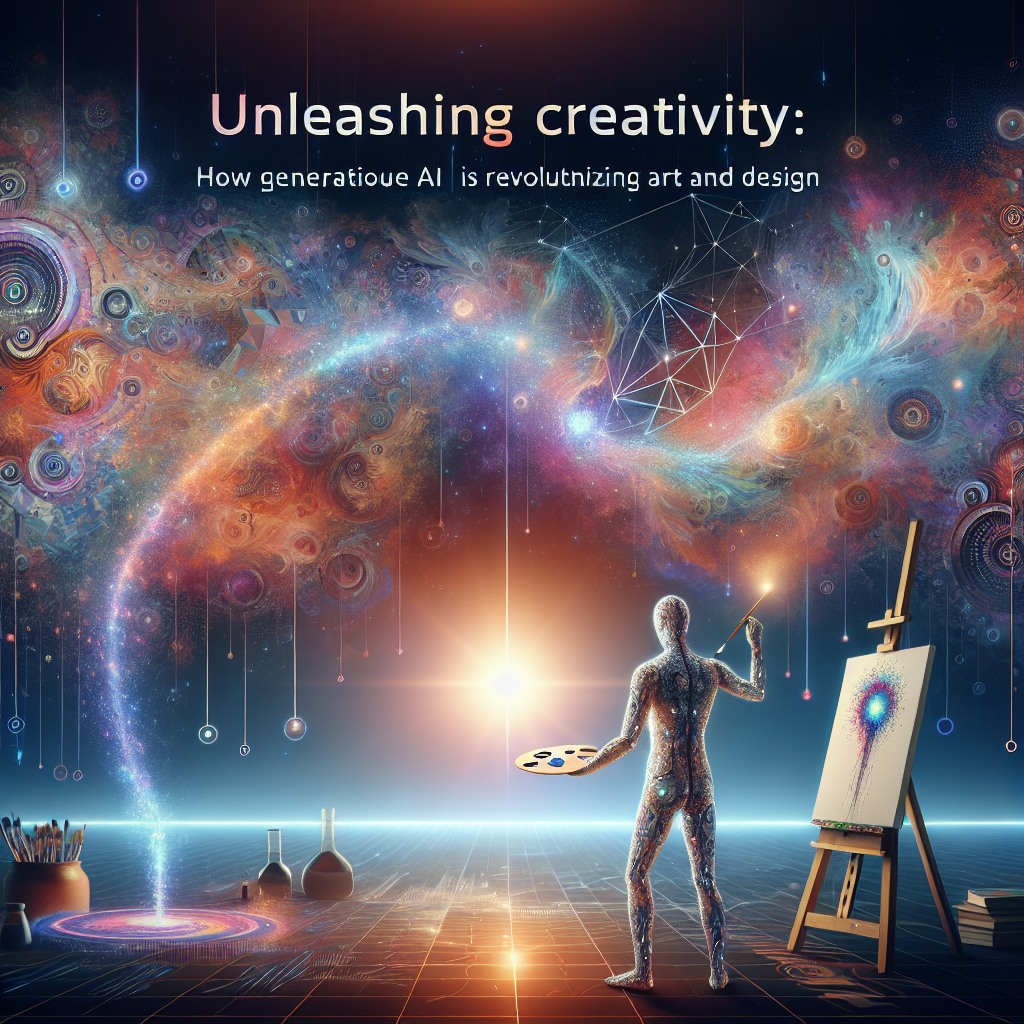
Unleashing Creativity: How Generative AI is Revolutionizing Art and Design

Unleashing Creativity: How Generative AI is Revolutionizing Art and Design
In recent years, we’ve witnessed a profound transformation in various fields, and at the forefront of this change is generative AI. As we delve into the intersection of technology and creativity, it’s clear that generative AI is not just a tool but a collaborator, enabling artists and designers to explore uncharted territories and express their visions in ways previously unimaginable.
Generative AI, fundamentally, refers to algorithms capable of producing new content—be it images, music, or even text—based on the data they have been trained on. This technology uses techniques like deep learning, specifically neural networks, to analyze vast datasets and then generate unique outputs. For artists, this capability opens a Pandora’s box of possibilities, expanding the creative toolkit beyond traditional methods.
One compelling example of generative AI in action is the use of OpenAI’s DALL-E, an image generation model that turns text prompts into stunning visuals. Artists leveraging DALL-E have produced remarkable works, transforming simple descriptions into vivid, original artwork. A recent project showcased a series of designs for fashion collections by inputting phrases like "futuristic streetwear with an ethereal twist." The results not only inspired designers but also challenged the norms of what defines creativity.
Beyond single artists, generative AI has started to permeate collaborative spaces. Take RunwayML, for instance, a platform that enables creators to use AI models without needing extensive coding knowledge. Designers can experiment with different styles, create animations, or even enhance photos, allowing them to focus on the creative aspects of their work rather than getting bogged down by technical limitations. This democratization of technology means that anyone with a spark of creativity can access advanced tools that previously required specialized knowledge.
Though some may feel apprehensive about the role of AI in creative fields—fearing it might undermine traditional artistry—it’s essential to reframe that perspective. Generative AI should be viewed as an assistant rather than a replacement. Consider the case of Refik Anadol, a media artist who integrates AI into his installations, blending data and art to create immersive experiences. His work exemplifies how AI can elevate creativity, generating dynamic visualizations that reflect real-time data, transforming spaces into living entities. This symbiotic relationship fosters innovation, allowing artists to push the boundaries of their craft without losing their human touch.
The potential for generative AI in art and design is equally exciting in more practical domains, such as marketing. Companies like Nike have harnessed AI to create personalized ads, tailoring creative content to individual preferences. By analyzing customer data, AI can help craft compelling narratives that resonate with specific demographics. This approach not only enhances engagement but also fosters customer loyalty by making individuals feel understood and valued.
Moreover, the educational aspect of generative AI cannot be overlooked. As students and aspiring designers encounter these tools, they gain firsthand experience in blending technology with creativity. Incorporating generative AI into the curriculum empowers them to think critically, experiment, and innovate. For instance, initiatives like Adobe’s Creative Cloud have integrated generative AI features, allowing students to engage with content creation while developing essential technical skills.
So, how can professionals—from established artists to budding entrepreneurs—leverage these advancements? Start by embracing a mindset of exploration. Experiment with platforms like DALL-E or RunwayML, allowing the technology to inspire new ideas. Consider collaborative projects where human creativity merges with AI capabilities. Emphasize interdisciplinary approaches: merging art with technology can lead to innovative solutions for real-world problems, whether in tourism, education, or healthcare.
In summary, generative AI has the potential to revolutionize the creative landscape, breaking down barriers and fostering collaboration. By embracing this technology, we not only enhance our creative processes but also enrich the broader narrative surrounding art and design. The idea isn’t just about using AI as a tool; it’s about fostering a culture of exploration and collaboration, propelling us into an exciting future where creativity knows no bounds. As we stand on this brink of innovation, it’s an exhilarating time for artists, designers, and creators of all kinds.