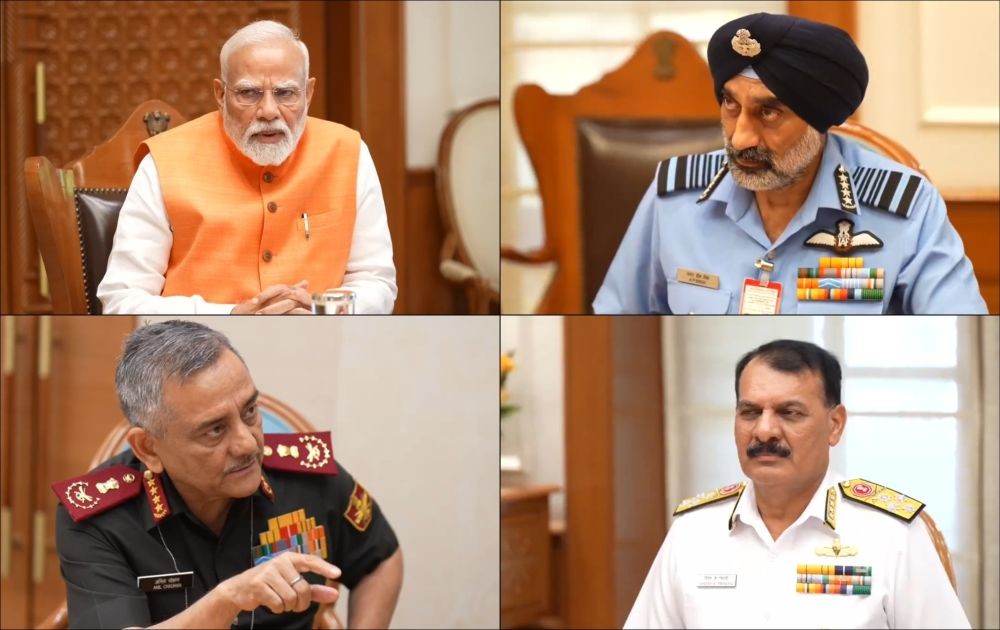
Unleashing Strength: PM Modi’s Bold Empowerment of Armed Forces in Cross-Border Terror Action

New Delhi, April 29 (IANS) – In a significant show of determination, Prime Minister Narendra Modi has conveyed a resolute message during a high-level security meeting: “India is determined to deliver a crushing blow to terrorism.” This statement signals a strategic shift, underscoring that decisive military options, including potential cross-border strikes, are firmly on the table following the tragic Pahalgam terror attack, which resulted in the deaths of 26 people, predominantly tourists.
PM Modi’s commitment to grant the Indian Armed Forces “full operational freedom” in choosing the “mode, targets, and timing” of their response marks a pivotal moment for India’s defense strategy. This directive aligns political will with military capability, empowering defense forces to act both defensively and offensively based on real-time intelligence and situational developments.
Security experts emphasize that this approach alleviates bureaucratic delays that often hinder rapid military action, allowing commanders on the ground to respond swiftly. Such actions could range from precision strikes to covert operations and cyber interventions aimed at disrupting terrorist networks.
India has previously explored cross-border military actions, such as the surgical strikes conducted in 2016 following the Uri attack, and the 2019 airstrikes in Balakot after the Pulwama incident. Given this historical context, the latest developments could indicate a resurgence or expansion of the surgical strike doctrine, potentially evolving into a more sustained strategic offensive.
Sources reveal that troop readiness has notably increased along the Line of Control (LoC) and the international border. Enhanced surveillance measures, including drones and electronic intelligence gathering, are actively monitoring terrorist activities and movements across Pakistan-occupied Kashmir (PoK). The intelligence agencies appear to be working closely with military leadership, suggesting that actionable intelligence may already be available.
Pakistan-based terrorist organizations such as Lashkar-e-Taiba and Jaish-e-Mohammed are now under intensified scrutiny. The Pahalgam attack, which targeted civilians, is perceived as a calculated effort to incite unrest in Kashmir and tarnish India’s global standing.
In light of these threats, India is reportedly preparing for targeted retaliation that aims to dismantle not just the immediate terrorist presence but also the financial and logistical networks supporting them. Diplomatic strategies are already in motion, including the suspension of the Indus Waters Treaty and the expulsion of Pakistani nationals holding short-term visas, reflecting a multi-faceted approach — military, diplomatic, and economic — designed to isolate Pakistan on the international stage.
Should India choose to execute a military response, it will likely be accompanied by diplomatic efforts reiterating its right to self-defense under Article 51 of the UN Charter. The national sentiment is leaning towards action; however, the Modi administration appears to be crafting a methodical, yet assertive, strategy.
The deadly Pahalgam attack may serve as a watershed moment, prompting India to redefine its approach to cross-border terrorism. PM Modi’s unequivocal message is one of the most assertive in recent history, preparing the ground for what could be a landmark counter-terrorism operation. Whether through another surgical strike, covert retaliation, or a multi-faceted offensive, one thing is clear: India is ready to shift from a defensive posture to one of resolute action against terrorism.
Original Source: https://www.morungexpress.com/what-pm-modis-free-hand-to-armed-forces-against-terror-means-for-cross-border-action
Category : India
Tags:
Publish Date: 2025-04-29 23:48:00