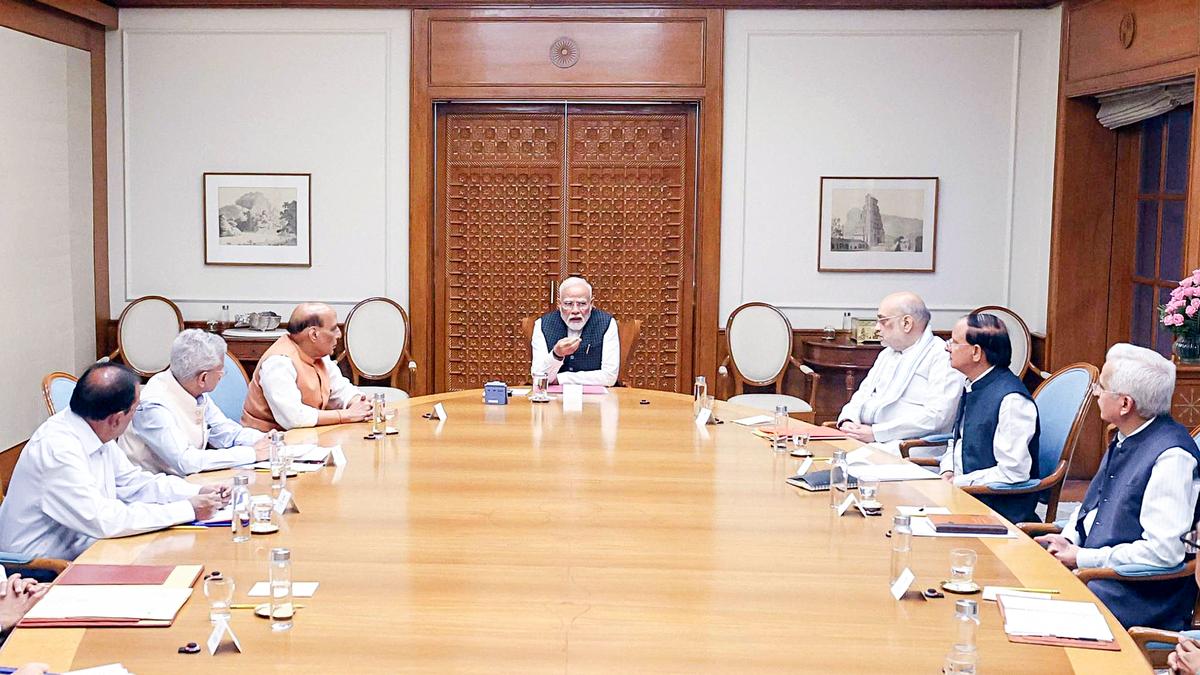

India has announced a temporary suspension of the Indus Water Treaty (IWT) with Pakistan, citing concerns regarding Pakistan’s alleged support for terrorism. This move signals a potential shift in the longstanding water-sharing agreement, which has been in place since 1960. As India confronts these geopolitical challenges, experts highlight that the country, as the upper riparian state, has various strategic options at its disposal.
Pradeep Kumar Saxena, who served as India’s Indus Water Commissioner for over six years, emphasized the importance of this development. He suggested that this suspension could be a precursor to a more significant policy change. “This could be the first step towards the abrogation of the treaty if the government so decides,” Saxena explained in an interview with PTI on April 23, 2025. His insights draw attention to the complexities of managing transboundary water treaties amid changing political landscapes.
The IWT has been a cornerstone of Indo-Pakistani relations, enabling both countries to share the waters of the Indus River system amicably for over six decades. Despite past conflicts, the treaty has largely endured, underscoring its critical role in regional stability. However, Saxena highlights certain legal pathways available to India, referencing Article 62 of the Vienna Convention on the Law of Treaties. This article allows for the repudiation of treaties under the doctrine of “fundamental change of circumstances,” a clause that India could potentially invoke if the situation with Pakistan deteriorates.
While this suspension has not immediately led to the treaty’s termination, it underscores India’s growing discontent with Pakistan’s alleged activities. The Indian government has frequently raised concerns about cross-border terrorism and its implications for national security. This diplomatic maneuver could put additional pressure on Pakistan to address these issues credibly, as water management is crucial for both nations.
As the upper riparian country, India holds a certain degree of leverage over the Indus water system, which it could utilize strategically. The suspension allows India to reconsider its engagement with the treaty and potentially alter water allocations, impacting Pakistan’s agriculture and hydroelectricity sectors crucially dependent on these waters. This development has sparked intense discussions among policy analysts and environmental experts about the broader implications for South Asia’s water security.
The international community will likely monitor these developments closely, considering the potential ramifications on regional peace and cooperation. The Indus basin affects millions of lives, and any disruption could lead to significant humanitarian and environmental consequences. Hence, any decision concerning the IWT must be taken with considerable caution and foresight.
This evolving narrative around the Indus Water Treaty places a renewed focus on water diplomacy in South Asia. The suspension serves as a reminder of the intricate linkages between water rights and geopolitics. As India explores its options, the coming months will be critical in determining the future of the IWT and its role in Indo-Pakistani relations.
This story highlights the ongoing complexities and challenges of international water treaties against the backdrop of regional tensions. With India and Pakistan being pivotal players in South Asia, their decisions will have far-reaching impacts on peace, security, and cooperation in the region and beyond.
Original Source: https://www.thehindu.com/news/national/pahalgam-jammu-kashmir-terror-attack-tourists-dead-injured-pakistan-april-24-2025/article69485323.ece
Category :
Tags:
Publish Date: 2025-04-24 09:03:00