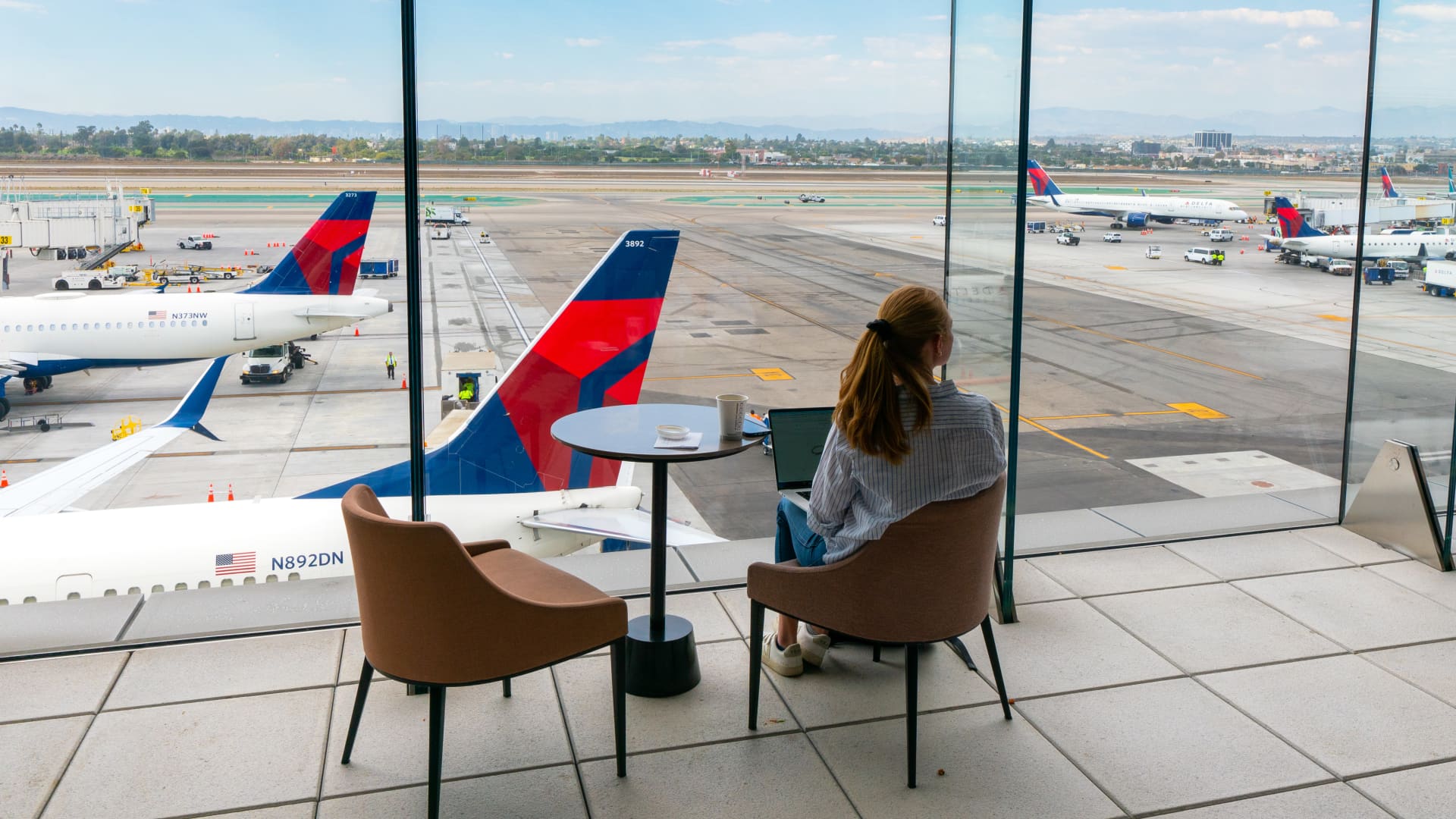

Airlines act as economic barometers, and recent signals from industry leaders suggest stormy weather ahead. Delta Air Lines and Frontier Airlines have rescinded their 2025 forecasts, citing hazy economic conditions and declining short-term demand. This comes as airline CEOs, including Delta’s Ed Bastian, express concerns over slowing bookings, particularly in corporate travel. Bastian highlighted, “I think we’re acting as if we’re going to a recession,” on CNBC’s “Squawk Box,” reflecting a shift from his earlier optimism about 2025 being a landmark financial year for the airline.
The warning signs are evident as consumer sentiment sharply declined, according to the University of Michigan survey. Bank of America also noted a dip in discretionary spending on services like tourism earlier this year. Airlines are now depending more on wealthier leisure travelers to sustain revenue, banking on their penchant for luxury despite economic uncertainties. Carriers such as Delta and others have invested significantly in premium seating and amenities, hoping travelers will continue to opt for these higher-priced options.
In a bid to draw travelers to more luxurious experiences, airlines have been expanding plush airport lounges and upgrading in-flight services, including first-class and business-class cabins. Spirit Airlines, known for budget travel, even tapped into this trend by promoting their spacious “Big Front Seat” with a nod to a pop culture reference on Instagram, suggesting an age not “meant to live an uncomfortable life.”
Changes in strategy are apparent as Delta and Frontier scale back growth plans, especially for domestic flights during low-demand periods. Delta President Glen Hauenstein noted softness in the main cabin for both consumer and corporate travel sectors. However, he remains bullish on international routes and premium offerings, stating, “We continue to see greater resilience in international and our diversified revenue streams.”
Meanwhile, United Airlines, a key competitor to Delta, is offering insights into consumer trends with its focus on high-end refurbishments and new destinations targeting affluent travelers. Despite these efforts, international travel challenges persist, with reduced demand for flights between the U.S. and Canada, impacting the broader $50 billion U.S. international travel deficit.
Last month, non-U.S. citizen visitor arrivals in the U.S. were significantly down compared to pre-pandemic numbers, according to the U.S. Commerce Department. This weaker demand among international travelers may result in more competitive fares, even to popular destinations, as carriers attempt to stimulate interest.
Scott Keyes, founder of travel deal site Going, suggests this summer could be particularly promising for European travel, predicting more affordable options for international excursions. As he noted, “The stars are aligning to boost the odds,” indicating potential opportunities for travelers seeking bargains amid the current economic landscape.
In summary, airlines are navigating a complex economic environment, leaning heavily on premium service offerings while managing shifts in demand and preparing for possible headwinds in the broader travel market.
Original Source: https://www.cnbc.com/2025/04/14/airlines-bet-on-rich-travelers-in-first-class-despite-economic-concerns.html
Category :
Tags:
Publish Date: 2025-04-14 17:31:00