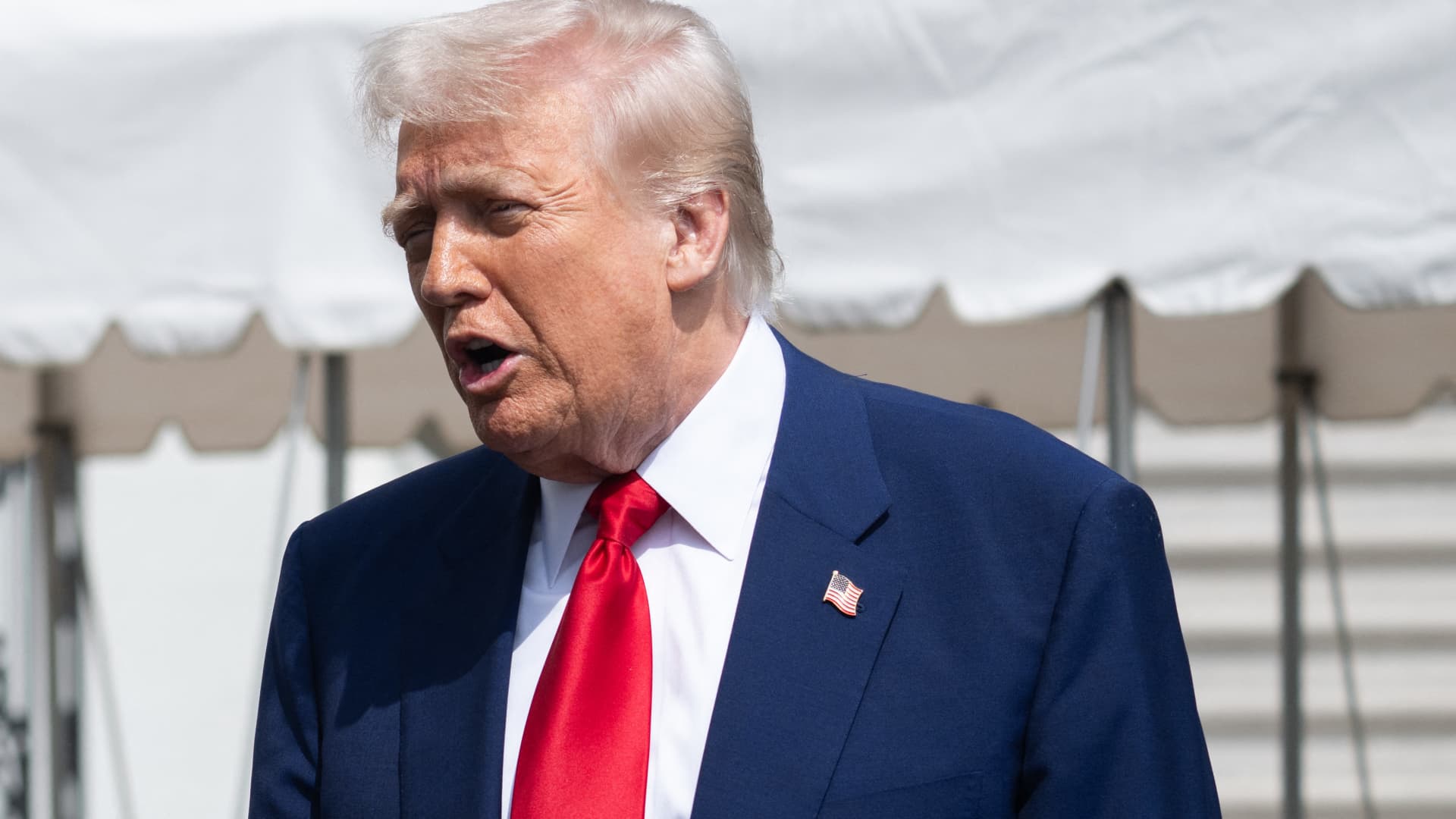

The U.S. economy is caught in a complex situation following President Donald Trump’s sweeping new tariffs, which aim to reshape global trade dynamics but are raising concerns of inflation and economic slowdown domestically. During a press conference on the impacts of these tariffs, Federal Reserve Chair Jerome Powell highlighted that the Fed’s dual mandate of full employment and low inflation may be challenged if tariffs spike prices and economic growth stalls. UBS chief U.S. economist Jonathan Pingle emphasized that the Fed might need to be highly reactive as this policy unfolds.
Wall Street is bracing for core inflation to surpass 3% unless negotiations on these tariffs succeed in lowering them. This scenario has spurred market volatility, with a sell-off observed as the tariffs hit. President Trump remains undeterred, stating confidently that the tariffs will eventually boost the U.S. economy, despite immediate market reactions.
Critics, including CEOs like Altimeter’s Brad Gerstner, have voiced concerns over the tariff strategy, labeling it as extreme and possibly detrimental to both U.S. and global economic stability. The tariffs, which include a 25% levy on imported vehicles, have prompted automakers like General Motors and Stellantis to adjust production schedules in response, highlighting the significant operational shifts companies are undergoing to align with new trade conditions.
Trade tensions have escalated with reciprocal actions from other countries. Canada, for example, has matched the U.S. auto tariffs, potentially disrupting integrated production systems shared across North America. Critics argue these moves could slow economic growth and increase consumer prices.
The tariffs also threaten sectors like technology and retail, where reliance on international supply chains is critical. Nvidia and other American tech stocks have experienced notable declines as investors worry about the impact on innovation. Retailers such as Dollar Tree face stark financial challenges with increased costs from high exposure to Chinese manufacturing.
In the beverage industry, new tariffs impose additional costs on imported alcohol, although they were not as severe as initially anticipated. Investors are reassessing priorities within the stock market, with fast-food chains becoming a safe haven amidst economic uncertainty.
As legal and economic debates continue, the Federal Trade Commission Chair Andrew Ferguson has issued a warning against price fixing, reinforcing that tariffs are not a green light for unfair practices. Meanwhile, political and economic leaders like Bill Ackman argue for immediate trade negotiations to mitigate potential damage.
Overall, the new tariffs, while aimed at recalibrating trade imbalances, are creating ripples across the U.S. economy, prompting diverse industry responses and heightening scrutiny on the administration’s global trade strategy. As market participants and policymakers alike grapple with these changes, the potential for economic turmoil looms.
Categories: Economy, Business, Trade, Federal Reserve, Markets
Tags: US Economy, Tariffs, Fed Policy, Trade War, Inflation, Market Reaction
Original Source: https://www.cnbc.com/2025/04/03/trump-tariffs-live-updates-stock-market-trade-war.html
Category :
Tags:
Publish Date: 2025-04-04 01:42:00