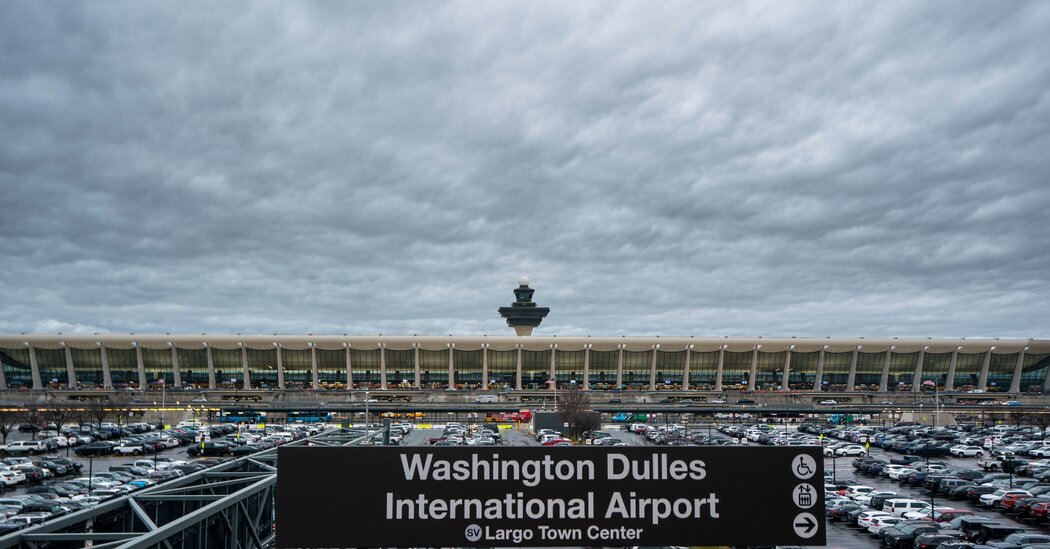

Mohammad Rahim Wahidi, the Taliban’s former ambassador to Spain, is currently in custody after being detained by U.S. immigration officials upon arriving at Washington Dulles International Airport on Saturday. The detention follows a federal judge’s decision on Monday declining to release him immediately, underscoring the ongoing complexities of U.S. immigration and national security policies.
Wahidi, who is a lawful permanent resident of the United States, was detained under provisions of the Immigration and Nationality Act that allow the deportation of noncitizens deemed national security risks. His lawyer, Hassan Ahmad, describes this as a misuse of the law. While Wahidi’s wife, Mary Shakeri-Wahidi, is a U.S. citizen and has been actively involved in the legal proceedings, the case remains complicated amidst broader immigration enforcement strategies.
Recent policies have witnessed the use of similar legal measures by the Trump administration to cancel the visas of numerous students involved in pro-Palestinian demonstrations. Such actions have come under scrutiny as officials attempt to connect protests against Israel to potential “adverse foreign policy consequences,” which could justify deportations. This policy approach has affected student activists like Mahmoud Khalil, Rumeysa Ozturk, and Momodou Taal.
Wahidi’s situation deviates from these cases, as his troubles seem tied to family connections rather than personal political activities. His brother-in-law is reportedly wanted by U.S. authorities linked to a purported scheme to assassinate an Iranian journalist, a detail the Justice Department disclosed in November.
Furthermore, Wahidi’s past in Spain involves controversy, as he was relieved of his ambassadorial duties following accusations of sexual assault. However, no criminal charges were filed, and he left Spain without incident.
Upon Wahidi’s return trip to the U.S. on a Turkish Airlines flight, he endured more than 30 hours of detention without access to legal representation. Ahmad’s court filings revealed Wahidi was interrogated by several officers, suspected to be Federal Bureau of Investigation agents. Judge Leonie Brinkema of the U.S. District Court for the Eastern District of Virginia has since ordered that Wahidi must remain within the court’s jurisdiction, halting his transfer to distant Immigrations and Customs Enforcement facilities, as seen in other similar cases.
Ahmad, who has also advocated on behalf of Badar Khan Suri, a Georgetown University postdoctoral student facing deportation over campus protests, stresses the apparent unfairness surrounding these detentions. Judge Brinkema, while refraining from ordering Wahidi’s immediate release, directed the enforcement officials to adhere to proper detention standards and allow Wahidi access to his attorney, reinforcing his legal rights as the case unfolds.
Both Ahmad and the Customs and Border Protection spokesperson have yet to comment publicly as Wahidi’s legal status remains in a delicate phase. His case highlights the ongoing interplay between U.S. immigration law, national security considerations, and individual civil liberties, factors continuing to ignite rigorous debate across the political spectrum. As this situation progresses, it adds a critical narrative to the discourse on immigration procedures and the political implications tied to national and international security issues.
Original Source: https://www.nytimes.com/2025/04/01/us/politics/taliban-ambassador-detained.html
Category : Immigration Detention,Deportation,United States Politics and Government,Immigration and Customs Enforcement (US),Taliban,Mohammad Rahim Wahidi
Tags:
Publish Date: 2025-04-02 00:26:00