Unveiling the Impact: Powerful Key Takeaways from America’s Secret Military Partnership with Ukraine

The ongoing conflict in Ukraine has reached a critical juncture as diplomatic and military maneuvers shape the battlefield. Recently, with former President Donald Trump expressing intentions to mend ties with Russian President Vladimir Putin, calls for an end to hostilities have intensified. However, for years before Trump’s potential return to power, the United States and Ukraine maintained a highly intricate partnership, leveraging intelligence, strategic planning, and technological prowess, a collaboration that remained concealed from the public eye until now.
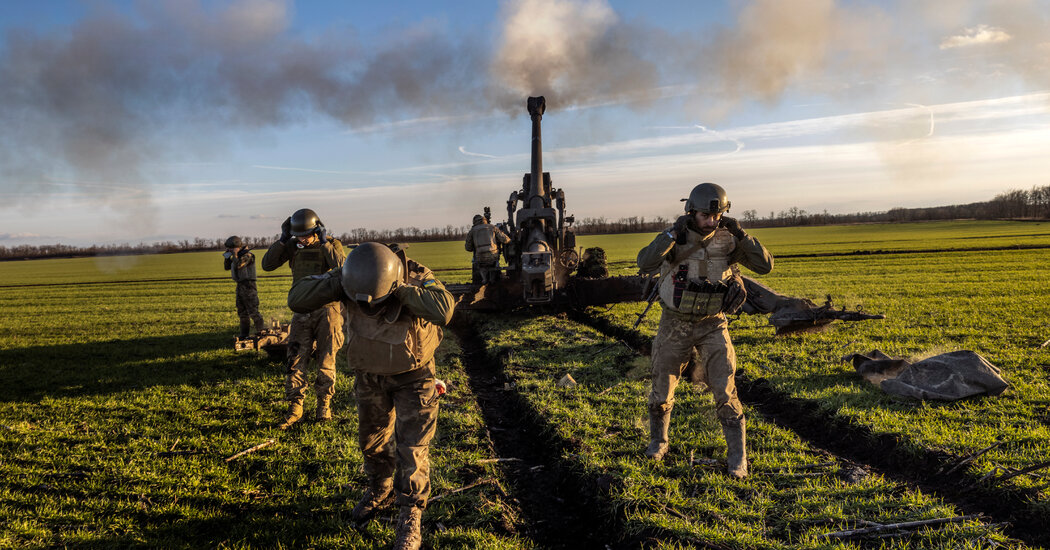
A thorough investigation by The New York Times has unveiled the depth of American involvement in Ukraine, surpassing public knowledge and transparency offered by the Pentagon, which openly accounted for $66.5 billion in weaponry supplied to Ukraine. Central to this covert alliance was a U.S. base in Wiesbaden, Germany, where American personnel provided precise coordinates of Russian forces to Ukrainian counterparts. This collaboration, known as Task Force Dragon, aimed to offset Russia’s numerical superiority with precise intelligence and advanced weaponry, including the highly effective HIMARS systems deployed in spring 2022. These weapons’ satellite-guided capabilities allowed Ukrainian forces to inflict heavy casualties, turning the tide in their favor by late 2022.
Despite initial declarations from the Biden administration that the U.S. was not directly engaged in the conflict but merely aiding Ukraine, actions taken were often shrouded in secrecy. The administration cautiously expanded its involvement, gradually easing restrictions to permit American advisors in Ukraine, even close to combat zones, while maintaining a delicate balance to avoid escalating tensions with Russia. Notably, the U.S. Navy and the CIA provided essential intelligence for Ukrainian drone operations targeting Russian assets, both in contested waters and within Crimea.
By January 2024, the partnership culminated in Operation Lunar Hail, a meticulously planned, coalition-backed campaign that significantly disrupted Russian military capabilities in Crimea. This operation represented the evolving geopolitical dynamics, with the U.S. accommodating riskier engagements, exemplified by the authorization of precision strikes within Russian territory to protect Ukraine’s northern borders. The CIA played an instrumental role, securing variances to enable pivotal strikes, including the impactful drone assault on a Russian munitions depot in Toropets.
However, Ukrainian internal politics ultimately influenced military outcomes. A planned 2023 counteroffensive faltered due to strategic disagreements between Ukrainian military leaders. President Volodymyr Zelensky sided with Col. Gen. Oleksandr Syrsky, whose plan to target Bakhmut clashed with the broader strategy endorsed by Gen. Valery Zaluzhny, which aimed at severing Russian supply lines through an assault on Melitopol. Divisions in military priorities weakened the effort, leading to a collapse and paving the way for Russia’s advantage.
The complexities of the U.S.-Ukraine alliance underscore the delicate interplay of diplomacy, military strategy, and intelligence in international conflicts. As geopolitical alliances and domestic politics continue to shape the course of the war, the ramifications of secret partnerships and evolving strategies underline the intricate fabric of modern warfare, influencing the broader narrative of global security and diplomatic relations. The involvement of continental players, coupled with the dynamic between U.S. policy decisions and battlefield realities, remains pivotal in determining the conflict’s ultimate trajectory.
Original Source: https://www.nytimes.com/2025/03/30/world/europe/us-ukraine-military-war-takeaways.html
Category : Russian Invasion of Ukraine (2022),United States International Relations,United States Defense and Military Forces,Missiles and Missile Defense Systems,Espionage and Intelligence Services,Central Intelligence Agency,Defense Department,Defense Intelligence Agency,National Geospatial-Intelligence Agency,National Security Agency,North Atlantic Treaty Organization,United States Army,United States Navy,Biden, Joseph R Jr,Zelensky, Volodymyr,Putin, Vladimir V,Syrsky, Oleksandr,Zaluzhny, Valery,Trump, Donald J,Ukraine,Wiesbaden (Germany),United States
Tags:
Publish Date: 2025-03-30 09:31:00