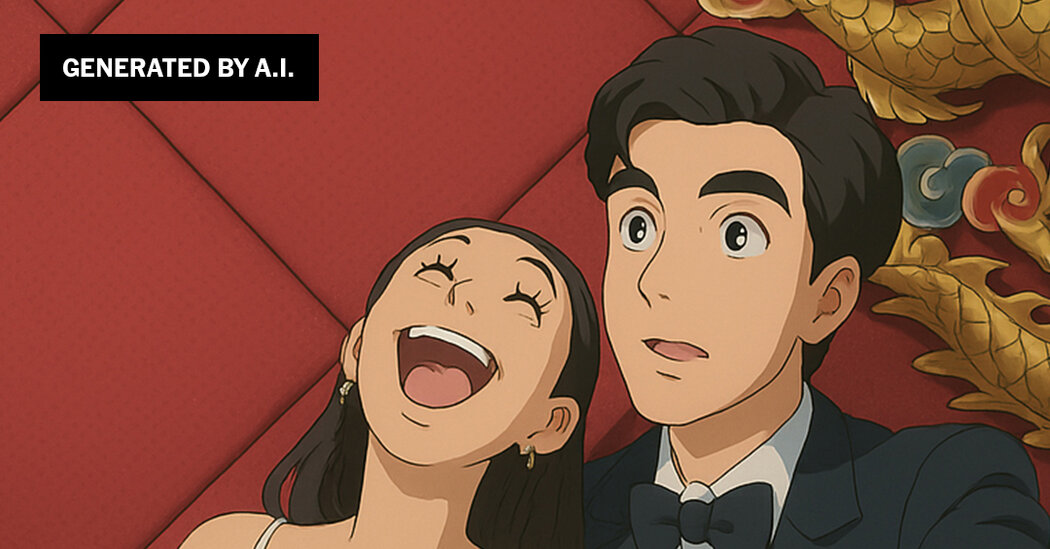

Hayao Miyazaki’s animated films, renowned for their intricate hand-drawn artistry, often require a painstakingly lengthy production process spanning several years. However, with a recent update to ChatGPT by OpenAI, creating artwork in Miyazaki’s iconic Studio Ghibli style has been significantly expedited. This innovative technology, announced on Tuesday, allows users to transform any photograph into an image reminiscent of Studio Ghibli’s "My Neighbor Totoro" or "Spirited Away" in mere seconds. As a result, social media platforms have been flooded with Ghibli-inspired images, ranging from personal selfies to family portraits and even memes.
OpenAI CEO Sam Altman himself became an emblem of this trend, humorously changing his profile picture on X to a Ghibli-style depiction. Yet among the whimsical adaptations, some users controversially applied the technology to create darker images, including scenes reminiscent of tragic events like 9/11 and the murder of George Floyd.
Kouka Webb, a New York dietitian, expressed emotional resonance after transforming her wedding photos into Studio Ghibli-style images, citing their comforting connection to her Japanese heritage. Webb shared her creations on TikTok, where they garnered attention, including criticism for utilizing AI over traditional human artistry. This sentiment echoes widespread apprehension among artists who fear AI’s potential to overshadow their creative identity.
The contentious nature of AI in creative fields has drawn criticism from artists and creatives facing the rise of technologies like ChatGPT. Hayao Miyazaki himself previously labeled AI-driven art as "an insult to life," a sentiment that resurfaced on social media following the new feature’s launch. This reflects broader industry concerns about AI’s impact, including those voiced in a 2024 open letter signed by high-profile figures such as Kazuo Ishiguro, Julianne Moore, and Thom Yorke, who condemned the unlicensed use of creative works for training AI models.
Meanwhile, The New York Times has taken legal action against OpenAI, alleging copyright infringement over the usage of their published content without proper authorization. OpenAI has rebuffed these claims, stating they are committed to ethical practices.
Amidst the enthusiasm, reservations linger about AI’s encroachment into creative domains, as voiced by Long Island City sculptor Emily Berganza. While Berganza admired the accuracy of AI-generated Ghibli-style images, she remains cautious about AI’s implications for the future of artistry, describing it as a potential "threat." OpenAI has responded by implementing restrictions on what can be ‘Ghiblified,’ to strike a balance between creativity and ethical constraints. "Our goal is to give users as much creative freedom as possible," stated Taya Christianson, OpenAI’s spokesperson, emphasizing their commitment to maintaining responsible generation standards.
As AI-generated art becomes more sophisticated, the conversation surrounding its place in society continues to evolve. While some, like Berganza, are exploring the shift with an open mind, broader industry implications and ethical considerations remain pressing topics for both creators and consumers in the art world.
Original Source: https://www.nytimes.com/2025/03/27/style/ai-chatgpt-studio-ghibli.html
Category : Studio Ghibli,Social Media,Artificial Intelligence,Animated Films,ChatGPT,OpenAI Labs,Altman, Samuel H,Miyazaki, Hayao
Tags:
Publish Date: 2025-03-28 02:42:00