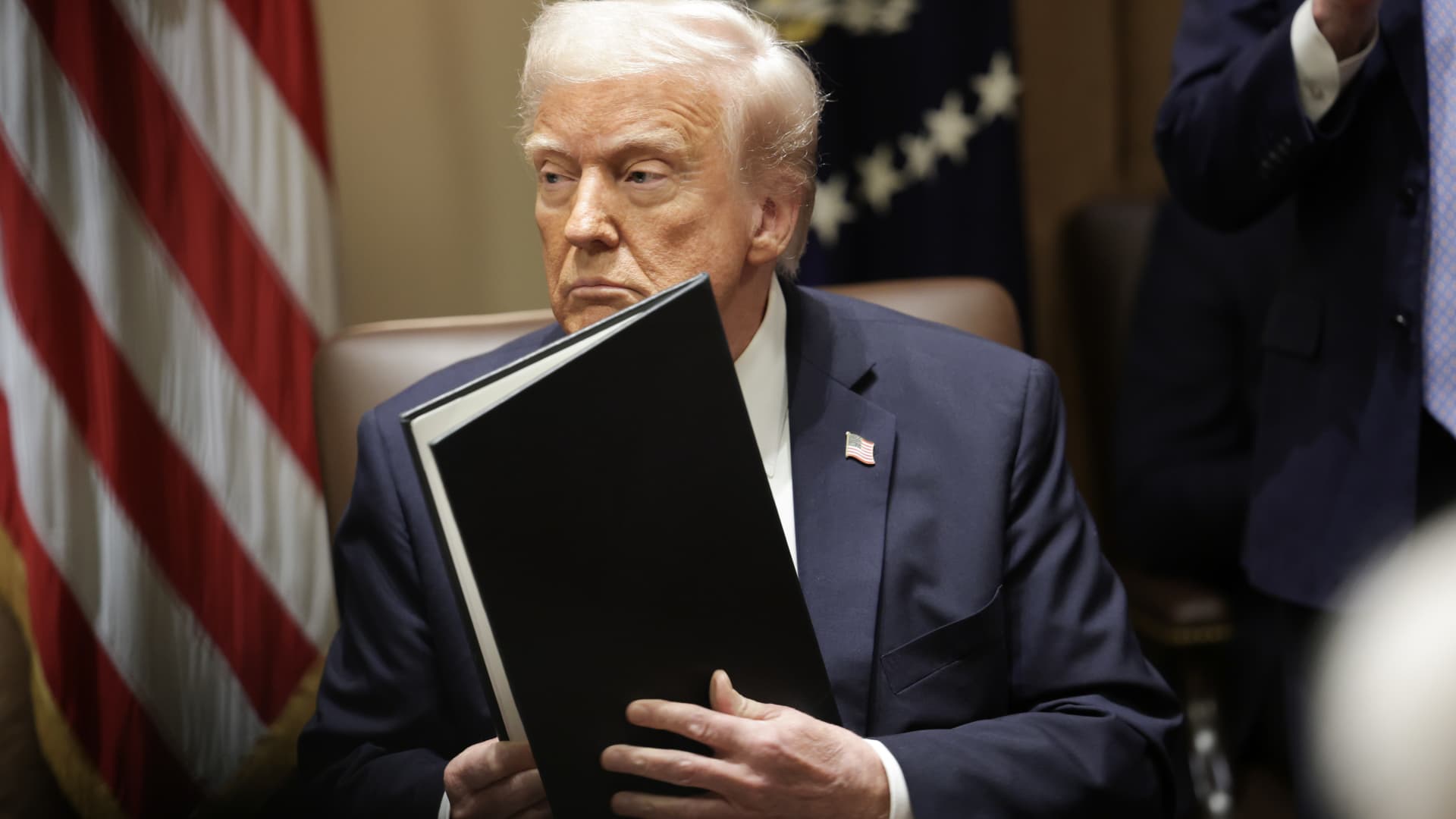

U.S. President Donald Trump announced plans to impose a 25% tariff on all vehicles entering the country that are not manufactured in the United States. This decision, disclosed during an Ambassador Meeting in the Cabinet Room of the White House on March 25, 2025, comes as a part of his broader trade strategy. Stocks reacted quickly to the news, dropping to session lows as investors tried to digest the potential impact of these tariffs on the auto industry and the wider economy.
The tariffs are expected to officially commence before April 2, coinciding with the launch of Trump’s comprehensive “reciprocal tariff” initiative. At a recent Cabinet meeting, Trump hinted at these tariffs, stating that they would be announced in the forthcoming days and integrated with the broader reciprocal tariffs expected to commence on April 2. This timing aligns with the date Trump has termed “liberation day,” signaling a significant reorientation of U.S. trade policies.
This latest move continues Trump’s longstanding focus on rebalancing trade relationships, particularly by imposing heavy tariffs on foreign entities that levy duties on U.S. goods. The new tariffs would not only target countries with existing import duties but would also extend to nations implementing other trade mechanisms deemed unfavorable, such as value-added taxes. However, the administration has recently indicated potential flexibility in their approach. Trump noted that there would be “flexibility” in the tariffs, and they might be “more lenient than reciprocal.” Treasury Secretary Scott Bessent also mentioned that countries could negotiate in advance to avoid the tariffs set for April 2.
Trump’s announcement has introduced uncertainty within both the financial markets and among business leaders. The recurring shifts in policy direction have created challenges for companies trying to plan for future operations, particularly those reliant on international supply chains. The unpredictability linked with these trade decisions has been a characteristic of Trump’s administration, frequently departing from traditional trade diplomacy methods.
As industries and investors brace for potential disruptions, the automotive sector is particularly sensitive, given its reliance on global supply chains and cross-border manufacturing. The impact on consumer prices and the supply chain could be substantial if tariffs raise the cost of vehicles and parts imported into the United States.
These tariff announcements are part of Trump’s broader strategy to protect American industries by encouraging domestic production and discouraging offshoring activities. As the situation develops, affected businesses and trade partners are closely monitoring any potential negotiations or shifts in policy.
The trade landscape appears poised for change as industries navigate the implications of these tariffs set against a backdrop of evolving international economic relations. With the tariffs’ anticipated start fast approaching, marketplaces and international allies are on high alert, preparing for the possible economic ripple effects of this significant policy shift.
Stakeholders and policymakers will have to watch closely for further updates and clarifications from the Trump administration as April 2 approaches. For now, the world waits to see how these developments unfold and influence the U.S. economy and global trade dynamics.
Original Source: https://www.cnbc.com/2025/03/26/trump-could-sign-new-auto-tariffs-as-soon-as-wednesday-white-house-says.html
Category :
Tags:
Publish Date: 2025-03-27 02:50:00