Unveiling Insights: Four Eye-Opening Takeaways from Keir Starmer’s Revealing Dialogue with The New York Times

In a recent diplomatic development, President Donald Trump’s outreach to Russian President Vladimir V. Putin, aiming to resolve the conflict in Ukraine, has sent ripples across Europe. Among the European leaders significantly impacted is Britain’s Prime Minister Keir Starmer, who, initially focused on domestic issues during his election, now finds himself navigating complex international waters. Starmer is emerging as a pivotal figure on the global stage, particularly in this critical phase for the trans-Atlantic alliance, working closely with French President Emmanuel Macron to spearhead Europe’s response to peace negotiations. The British Prime Minister has also played a crucial mediating role between Trump and Ukrainian President Volodymyr Zelensky, urging Trump to prevent leaving Europe exposed to Russian aggression.
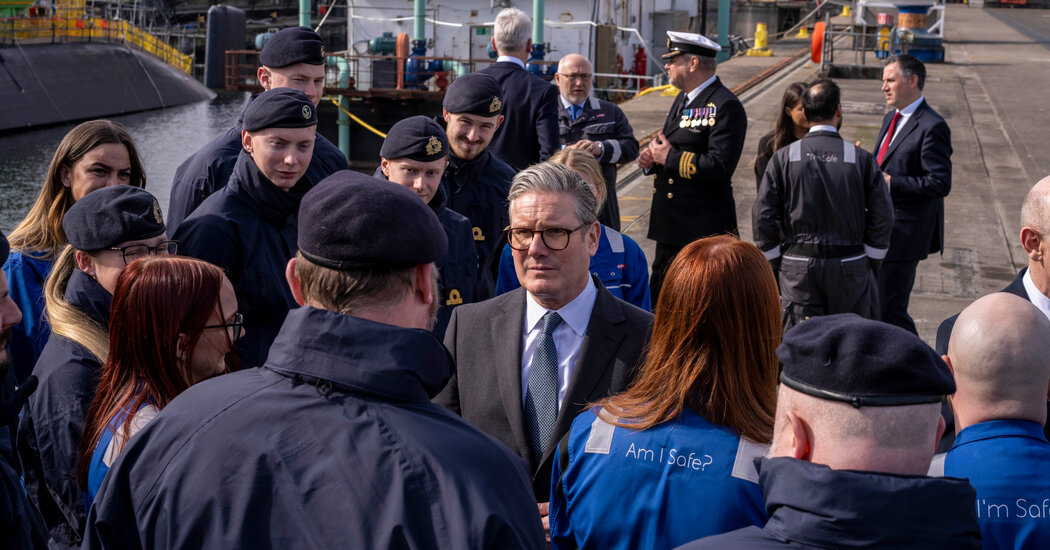
Speaking to The New York Times, Starmer emphasized that Europe must be actively involved in securing any peace agreement between Ukraine and Russia. While he acknowledged Trump’s efforts in reducing hostilities, Starmer expressed persistent skepticism about Putin’s intentions, highlighting the necessity for solid security arrangements. “I don’t trust Putin,” Starmer stated, emphasizing the potential for Russia to violate agreements without stringent safeguards in place. He has been instrumental in forming a coalition to deter Russian threats, though public commitments from European nations remain scant, with only Britain and France pledging military support. Starmer noted that the process is still in its infancy, with discussions evolving but concrete plans yet to be finalized.
Starmer reiterated the importance of maintaining a strong “special relationship” with the United States, recognizing the unique defense and intelligence ties between the two nations. “We are intertwined in a way no two other countries are,” he commented, underlining the strategic necessity of this relationship. Starmer’s efforts to establish a rapport with Trump seem productive, as he noted multiple engagements and a shared desire for peace in Ukraine while reaffirming Trump’s commitment to NATO.
In navigating these diplomatic waters, Starmer has also acknowledged the renewed diplomatic role of the British royal family. He highlighted how a letter from King Charles III to President Trump played an influential role, reflecting Trump’s affection for the British monarchy. Starmer refrained from speaking on behalf of the royals but noted their significance in global diplomacy, as King Charles has engaged with various world leaders, including those impacted by Trump’s policies.
Reflecting on security and defense, Starmer emphasized the urgency for European nations to enhance their military capabilities, reminiscing about the optimism that followed the fall of the Berlin Wall. He expressed concern about current Russian activities reminiscent of past conflicts, stressing that the time for rhetoric has passed, and action is necessary. “The moment for talking is over and the moment for action is now,” he declared, urging European countries to prioritize defense investments amidst rising global tensions.
This article delves into the intricate dynamics shaping international relations, defense strategies, the peace process, and the roles of key figures such as Starmer, Trump, Putin, Macron, and Zelensky, highlighting the evolving geopolitical landscape.
Original Source: https://www.nytimes.com/2025/03/23/world/europe/keir-starmer-interview-takeaways.html
Category : International Relations,Defense and Military Forces,Peace Process,Nuclear Weapons,Starmer, Keir,Trump, Donald J,Putin, Vladimir V,Macron, Emmanuel (1977- ),Zelensky, Volodymyr,Europe,Great Britain,New York Times,North Atlantic Treaty Organization
Tags:
Publish Date: 2025-03-23 09:31:00