Breaking: Israel Intensifies Gaza Ground Offensive Amid Relentless Hamas Rocket Attacks on Tel Aviv

The Israeli military has intensified its operations across the Gaza Strip as tensions with Hamas escalate, marking a potential shift toward full-scale conflict. On Thursday, Israeli forces conducted raids in Rafah in southern Gaza and Beit Lahiya in the north, a day after reclaiming part of the Netzarim corridor in central Gaza. These developments followed the collapse of a fragile two-month cease-fire, disrupted by an Israeli aerial offensive targeting Hamas.
Hamas responded by launching rockets at Tel Aviv, marking the first such attack in months. Despite these provocations, the rockets caused no casualties, the Israeli military reported, as they were intercepted or landed in open areas. The escalation emerged after Israel’s insistence that the cease-fire could not persist unless Hamas released all hostages held in Gaza, while Hamas accused Israel of breaching the agreement.
Prospects for renewed peace appear bleak. Israel and Hamas remain at odds over next steps, with Israel demanding Hamas disarm its military wing—a demand Hamas firmly rejects. Husam Badran, a senior Hamas leader, residing in Doha, Qatar, emphasized, “If you do that, you’re giving the occupation an opportunity to kill without any Palestinian response.”
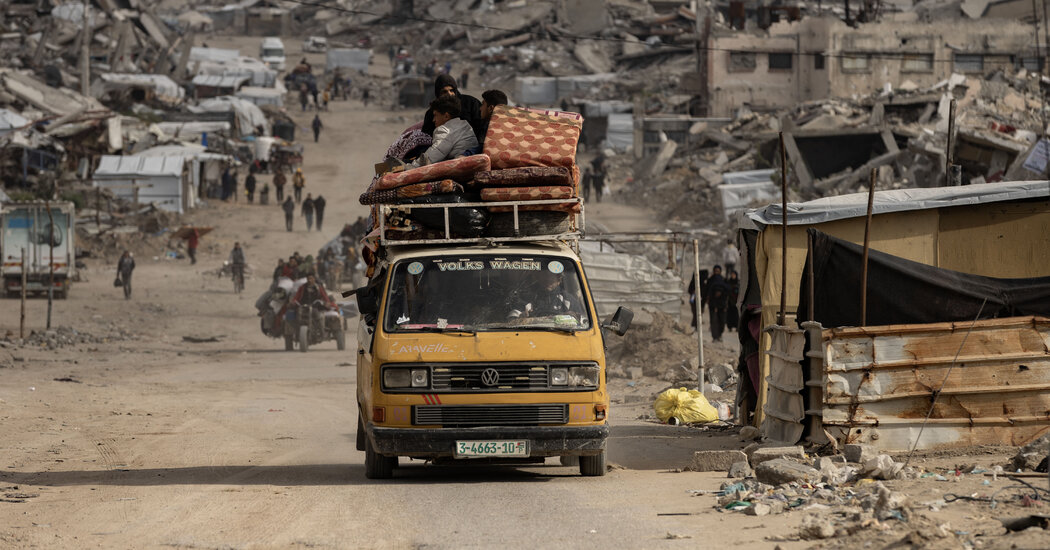
The conflict’s toll in Gaza has been severe, with over 500 deaths reported in the latest violence, including many children, according to Gaza’s health ministry. Civilians are caught in the crossfire, struggling with food shortages and soaring prices as the conflict intensifies. Abdelkarim al-Harazin, a doctor in Gaza, lamented the fleeting benefits of the cease-fire, such as reopened border crossings and aid influxes, now overshadowed by renewed hostilities.
Globally, reactions are mixed. The United States has endorsed Israel’s actions, with White House spokeswoman Karoline Leavitt affirming President Trump’s full support following Hamas’s rocket attacks. Meanwhile, Israel issued warnings to civilians in southern Gaza to evacuate, declaring an impending military strike due to militant activity in the area.
Hamas claims key leadership losses, stating that Israeli strikes have killed several senior figures. Israel corroborated targeting these individuals, citing security concerns. The broader conflict has devastating effects, with approximately 48,000 fatalities reported in Gaza over the past 15 months, as noted by the Gazan health ministry. The conflict reignited when Hamas launched a surprise attack on Israel on October 7, 2023, killing around 1,200 and taking 250 hostages.
Mediation efforts, led by the United States, aim to revive cease-fire talks. Middle East envoy Steve Witkoff proposed extending the truce in exchange for hostage releases. Hamas indicated potential flexibility over such proposals, with Badran stating, “The problem isn’t the numbers. We’re acting positively with any proposal that leads to the start of negotiations over a permanent truce.”
Complicating matters, the Houthi militia in Yemen, aligned with Hamas, resumed missile attacks on Israel, triggering air-raid alarms. The United States has responded by targeting the Houthis in Yemen, seeking to halt their aggression. A week of violence underscores the region’s volatility, with diplomatic solutions remaining elusive as Israel and Hamas maintain firm stances.
In summary, the Israeli-Hamas conflict is intensifying, with increasing military actions, fraught diplomatic negotiations, and international ramifications, as communities brace for the uncertain future.
Original Source: https://www.nytimes.com/2025/03/20/world/middleeast/hamas-attack-tel-aviv-israel-gaza.html
Category : Israel-Gaza War (2023- ),Defense and Military Forces,Civilian Casualties,Peace Process,Kidnapping and Hostages,Hamas,Netanyahu, Benjamin,Gaza Strip,Israel,Tel Aviv (Israel)
Tags:
Publish Date: 2025-03-21 06:35:00