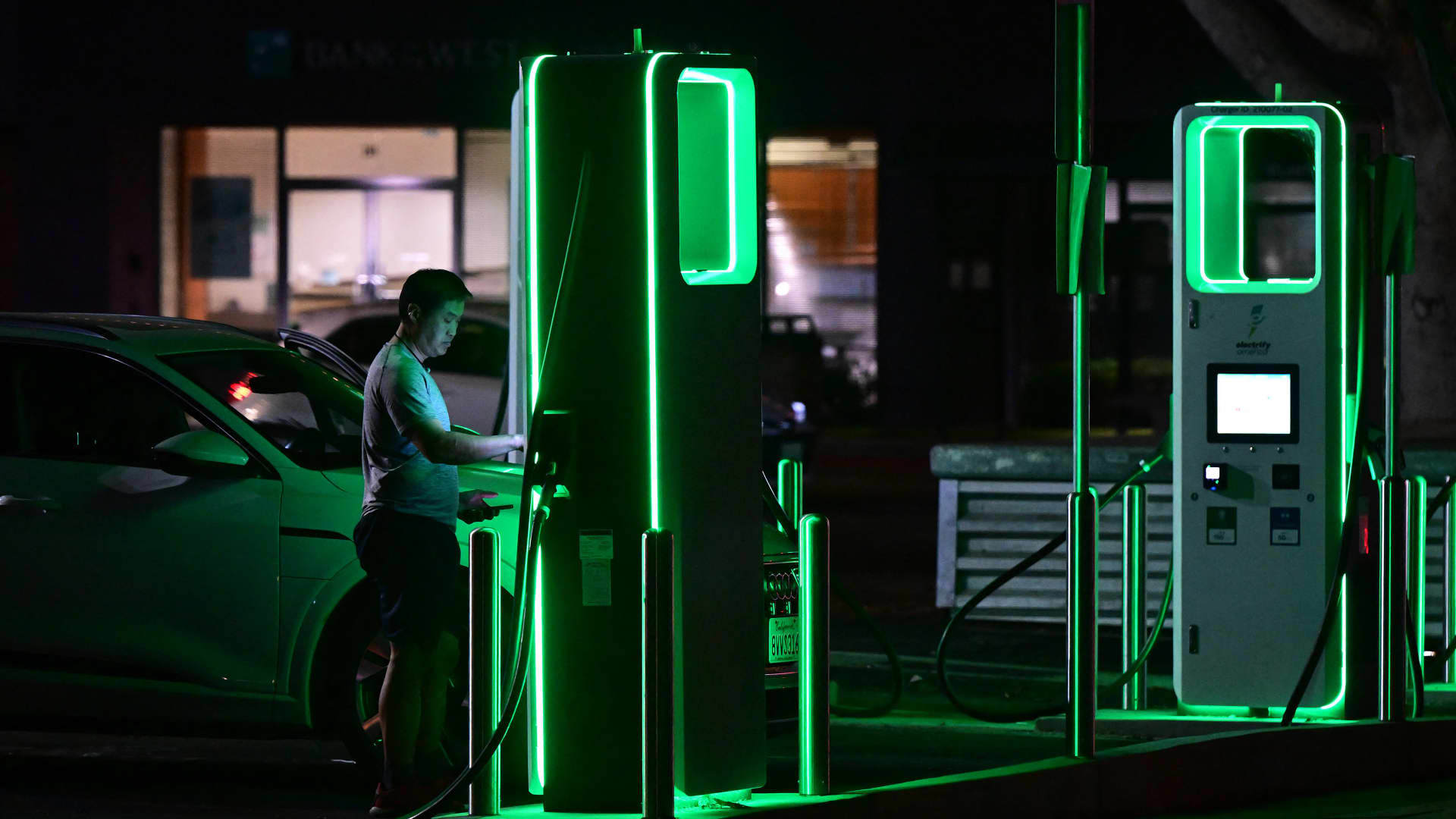

The surge in electric vehicle (EV) ownership continues to reshape the American automotive landscape, with approximately six million battery electric vehicles and plug-in hybrids now navigating U.S. roads. This significant, albeit still minority presence contrasts with a declining appetite for traditional combustion engines, evidenced by 2024’s sales of gasoline cars dipping below 80% for the first time in decades. Automakers persist in their investment toward cleaner energies despite a noticeable slowdown in EV sales, reflecting a substantial, though not universal, consumer shift where range anxiety isn’t as prominent a deterrent anymore.
However, the EV market faces a potential upheaval as the current administration moves to cut federal incentives crucial to EV expansion. With charging infrastructure a known anxiety point for prospective buyers, the sector strives to mollify these concerns by enhancing public charging availability. According to the Paren AFDC+ Charger Database, the U.S. boasts around 68,000 Level 2 and Level 3 charging stations, offering 266,000 ports. Yet, policy and market uncertainties, exacerbated by a freeze on federal funding programs like NEVI, challenge infrastructure expansion efforts.
Under President Biden’s administration, the National Electric Vehicle Infrastructure (NEVI) program aimed to bolster charging stations through a $5 billion allocation. However, a February 6 memo from the U.S. Department of Transportation froze this program. Transportation Secretary Sean Duffy affirmed ongoing contracts are still funded, but new projects are currently on hold. Consequently, many states ceased further project development due to reimbursement uncertainties, as indicated by Jim Tymon from the American Association of State Highway and Transportation Officials.
The NEVI program’s suspension underscores how political priorities can impact authorized funding. Alterations to such legislated programs typically necessitate congressional action. Nevertheless, the administration’s unilateral decision has sparked legal disputes, with federal courts potentially being called to clarify the NEVI situation.
This pause creates ambiguity for EV charging entities, notably for pure-play companies like ChargePoint, Blink Charging, and EVgo. Each has adapted to the shifting landscape; for instance, ChargePoint’s CEO, Rick Wilmer, categorizes NEVI as a minor component of company revenue. Similarly, EVgo and Blink express more dependence on state incentives and private partnerships than federal grants.
The broader industry outlook shows resilience against federal funding disruptions. A mere fraction of new charging ports relies on NEVI funds, indicating the sector’s potential self-sufficiency. Supporting this view, Craig Irwin of Roth Capital Partners suggests the most resilient companies are those advancing without relying heavily on subsidies.
Tesla exemplifies such independent growth through its proprietary supercharger network, despite its substantial NEVI funding reception. Led by Elon Musk, Tesla’s maneuvering within the politicized EV landscape underscores broader industry tensions.
The current EV infrastructure scenario points to inevitable industry consolidation and strategic pivots, as companies adjust to policy shifts and market demands. Despite these uncertainties, the consistent rise in EV adoption reinforces the sector’s ongoing transformation, setting the stage for an evolving energy future.
Original Source: https://www.cnbc.com/2025/03/16/trump-war-on-biden-climate-policy-creates-new-form-of-ev-range-anxiety.html
Category :
Tags:
Publish Date: 2025-03-16 21:51:00