
In a recent Fox News interview on “Sunday Morning Futures,” President Donald Trump stopped short of dismissing concerns that his economic policies, particularly the imposition of aggressive tariffs against trade partners, could trigger a recession. Speaking with host Maria Bartiromo, Trump, reflecting on the economic anxieties, commented on the complexities of his trade strategies but remained optimistic about their long-term benefits. “I hate to predict things like that,” he remarked. “There is a period of transition… We’re bringing wealth back to America.” However, his policies have shaken markets and stirred fear among industries, especially automakers, suggesting that the road to economic enhancement might be bumpy.
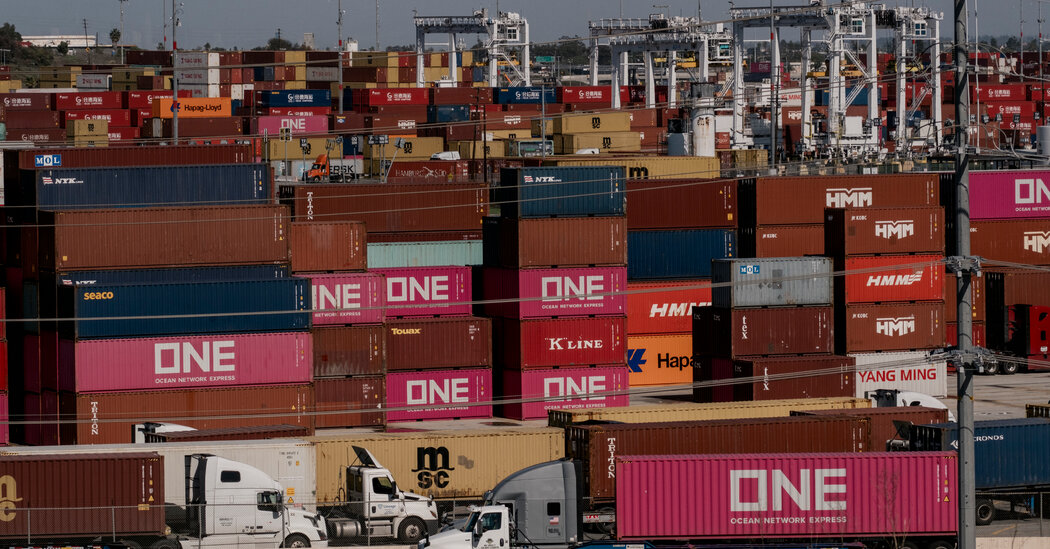
Trump’s recent tariffs on nations like Canada, Mexico, and China have intensified global trade tensions, prompting retaliatory tariffs from these countries. Canada has responded with duties on $20.5 billion of American exports, and China is amplifying its tariffs on U.S. goods. Despite the upheaval, Trump remains steadfast, indicating plans to bolster tariffs on foreign steel and aluminum, with a 25% tariff expected soon. Further levies are anticipated on April 2 under the guise of “reciprocal tariffs” meant to counteract international trade practices that Trump claims have disadvantaged the U.S.
During the interview, Bartiromo emphasized the business community’s desire for certainty. “Public companies want to ensure clarity after April 2,” she noted. Trump, however, conveyed that the pursuit of clarity might be overstated, asserting, “Our country has been ripped off for many decades… we’re not going to be ripped off anymore.” His unpredictable tariff strategy has stirred pessimism amongst economists, heightening fears of an economic downturn as businesses hesitate to invest and hire amid the ongoing uncertainty.
The broader economic picture entering Trump’s second term reveals a slowing growth pace, a cooled labor market, and inflationary concerns persisting despite being below peak levels seen in 2022. Trump’s core economic policies—including tariffs, deportation measures, and spending cuts—are likely to challenge the current economic sturdiness. Tariffs, in particular, are expected to raise consumer prices and curb economic growth, as both businesses and consumers reassess their financial strategies.
The Federal Reserve faces a daunting task, grappling with elevated inflation and its ability to bolster the economy should financial conditions worsen. Fed Chair Jerome Powell recently pointed out that while the economy remains solid, the looming threat of Trump’s tariff plans could be disruptive, especially concerning inflation and growth dynamics.
This sentiment is echoed by Austan Goolsbee, president of the Chicago Fed, who noted the growing concern over stagflation—a mix of stagnant growth and inflation—emerging on the horizon. Despite these warnings, Commerce Secretary Howard Lutnick expressed optimism on NBC’s “Meet the Press,” arguing that tariffs could enhance economic growth by spurring profits for American businesses.
Lutnick dismissed recession forecasts from financial entities like JP Morgan and Goldman Sachs, asserting a firm belief in the administration’s fiscal strategy. He suggested that deficit reduction efforts and expanded oil drilling could stabilize interest rates and lower energy prices despite potential increases in foreign goods costs. “Foreign goods may get a little more expensive,” Lutnick observed, “But American goods are going to get cheaper, and you’re going to be helping Americans by buying American.” While some economists challenge this view, Lutnick remains unwavering in his advocacy for a strategy that prioritizes domestic economic strength over global economic stability.
Original Source: https://www.nytimes.com/2025/03/09/us/politics/trump-recession-lutnick.html
Category :
Tags:
Publish Date: 2025-03-10 00:37:00