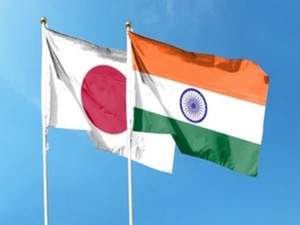

The Indo-Pacific region has become the epicenter of global security, with authoritarian expansionism threatening sovereignty and disrupting regional stability. In this volatile landscape, India and Japan, two democracies with shared values and interests, must deepen their strategic cooperation to safeguard their nations and the region. The stakes have never been higher.
A recent event at the Centre for Integrated and Holistic Studies (CIHS) in New Delhi brought together policymakers, scholars, and security experts to discuss the future of Indo-Japan relations. Minister Noriaki Abe, Minister for Political Affairs at the Embassy of Japan, highlighted the need for deeper engagement between the two nations in the face of rapidly evolving regional dynamics. The discussions focused on economic collaboration, security partnerships, and technological cooperation, which are crucial to ensuring regional resilience.
The assertive posture of the Communist Party of China (CPC) in the Indo-Pacific is a major concern. Beijing’s aggressive military maneuvers in the South China Sea, economic coercion, and territorial incursions have escalated tensions, challenging the sovereignty of nations across the region. India and Japan must intensify their security and economic cooperation to counter these challenges.
The informal Quadrilateral Security Dialogue (QUAD) grouping, comprising the United States, Australia, India, and Japan, has demonstrated its effectiveness in boosting military interoperability, intelligence-sharing, and securing critical maritime corridors. However, the security of the Malacca and Sunda Straits, vital chokepoints, requires greater attention. The CPC’s growing influence in Myanmar and Cambodia poses a direct challenge to freedom of navigation, making a coordinated Indo-Japanese approach essential.
India and Japan has made significant investments in maritime domain awareness (MDA), deterring territorial encroachments and securing vital trade routes. Japan’s advancements in maritime technology, combined with India’s naval capabilities and strategic location, create a formidable alliance for safeguarding sea lanes. The two nations have also championed the Asia-Africa Growth Corridor (AAGC), a transparent and sustainable alternative to China’s Belt and Road Initiative (BRI), which enforces economic dependencies through unsustainable debt-driven projects.
In the digital domain, India and Japan must strengthen cooperation to counter China’s dominance in 5G networks, artificial intelligence, and digital infrastructure. By jointly investing in secure digital corridors, semiconductor supply chains, and advanced cybersecurity frameworks, the two nations can safeguard critical technologies and infrastructure, countering state-sponsored hacking, misinformation campaigns, and intellectual property theft.
As the world moves towards an increasingly digital future, India and Japan must develop robust cyber resilience frameworks to counter emerging threats. Japan’s expertise in advanced technology, combined with India’s strong IT and cybersecurity capabilities, makes this partnership well-suited to addressing these challenges. The stakes are high, but the potential benefits of a strengthened Indo-Japan partnership are immense, securing a more peaceful and prosperous future for the Indo-Pacific region and beyond.
Original Source: https://www.morungexpress.com/why-india-and-japan-should-deepen-ties-amid-volatile-geographical-landscape
Category : India
Tags:
Publish Date: 2025-03-09 21:03:00