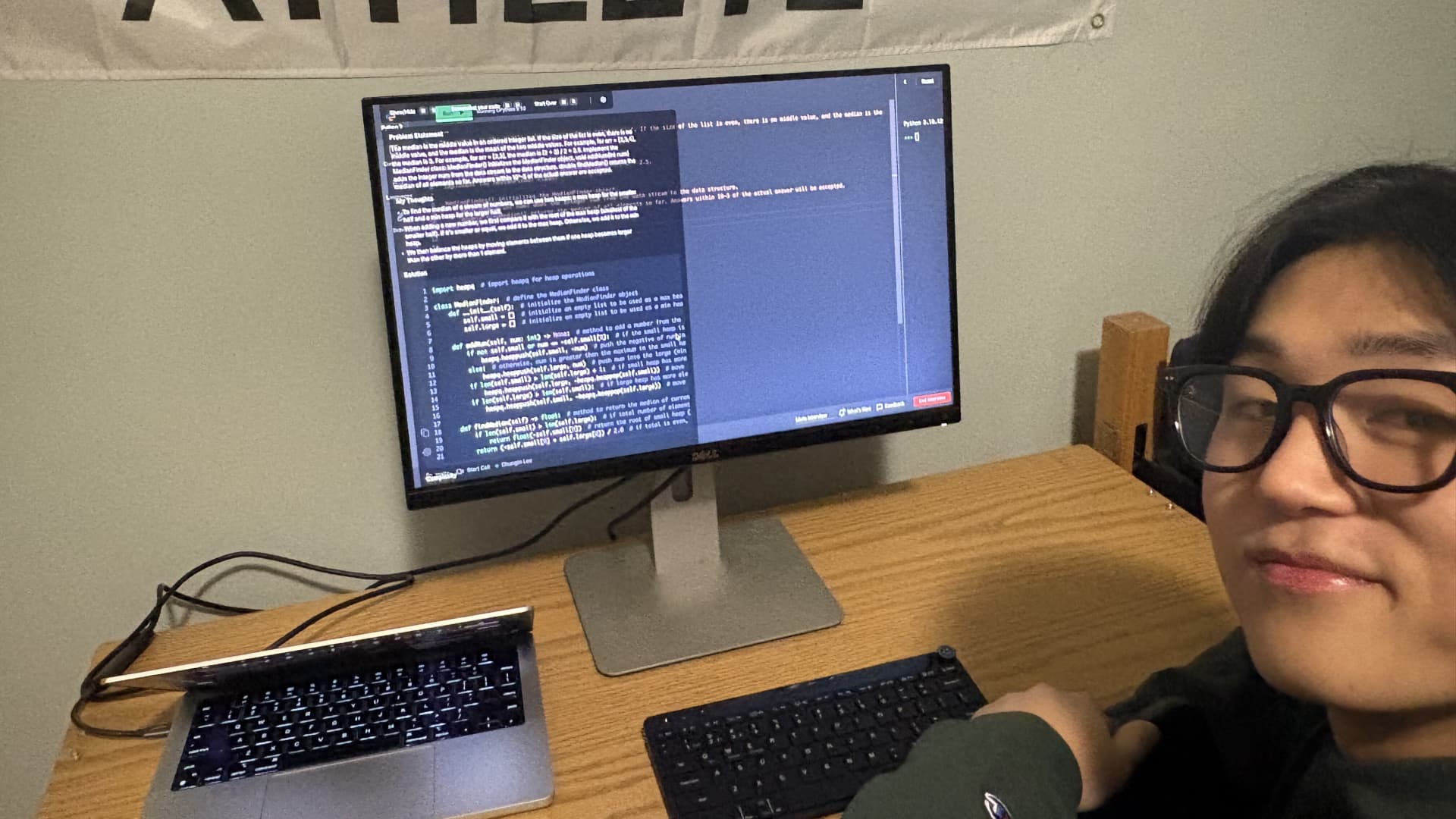

A new wave of artificial intelligence (AI) is transforming the job interview process—specifically for software engineers—by providing tools that allow candidates to cheat. Chungin “Roy” Lee, a 21-year-old computer science student from Columbia University, has turned this trend into a business. After receiving internship offers from tech giants like Amazon, Meta, and TikTok, Lee chose to forgo them and instead relocate to San Francisco to focus on his startup, Interview Coder. The company aims to assist software engineers in leveraging AI to outperform traditional job interview assessments, a move that’s sparked controversy.
Columbia University has initiated disciplinary action against Lee amidst this revelation, though the institution declined to comment directly. Lee asserts the ubiquity of AI in programming underscores the need for interview formats to adapt. His startup capitalizes on the inadequacies of remote interviews, now prevalent since the COVID-19 pandemic, where candidates often utilize AI-driven support off-camera, providing them with a competitive edge during technical assessments.
Generative AI, particularly since OpenAI launched ChatGPT in 2022, has seen widespread industry adoption. Google, for instance, attributes over 25% of its code generation to AI tools, according to CEO Sundar Pichai. Paradoxically, the same technology that aids in development is causing recruitment challenges. Companies are inundated with candidates using AI tools like Interview Coder and Leetcode Wizard, which can generate and refine code solutions instantly and discreetly during virtual interviews.
Interview Coder’s appeal lies in its ability to remain undetectable through webcams and screen-recording measures employed by platforms like Zoom and Google Meet. Despite attempts from hiring managers to observe subtle cues, such as eye movements or delayed responses, the tools have honed their efficiency, making such methods less reliable.
The response from companies has been mixed. Google, among others, is reconsidering traditional in-person interviews due to the scalability of AI-aided cheating. Google CEO Sundar Pichai addressed this issue in a recent town hall, indicating possible shifts to hybrid interview models as the tech industry grapples with how to evaluate genuine candidate skills amidst growing AI reliance.
However, some companies have already reverted to older methods. Deloitte, in its U.K. graduate program, and AI innovators like Anthropic, which explicitly discourage AI assistance during applications, signal a broader hesitancy within the sector to fully embrace AI tools during hiring. Amazon asks candidates to agree not to use unauthorized tools during interviews.
Lee’s business enjoys financial success, boasting robust subscription sales, despite ethical concerns and criticism from industry professionals. Encouraged by shared frustrations with platforms like Leetcode—known for challenging candidates with algorithmic problems—Lee’s tactics resonate with many dissatisfied software engineers.
In a tech landscape on the brink of AI-driven change, Lee argues that companies unable to adapt swiftly face the greatest risk. As businesses increasingly use AI in processes, he posits that failing to integrate AI into hiring norms is an oversight borne by employers, not applicants. Yet, as hiring practices evolve, industry leaders remain tasked with finding new methods to ensure talent is both authentic and well-assessed.
The push for balancing AI utilization in job evaluations continues, with varying approaches emerging among competitors as the sector wonders whether AI inclusivity in interviews marks progress or poses ethical challenges.
Original Source: https://www.cnbc.com/2025/03/09/google-ai-interview-coder-cheat.html
Category :
Tags:
Publish Date: 2025-03-09 17:30:00