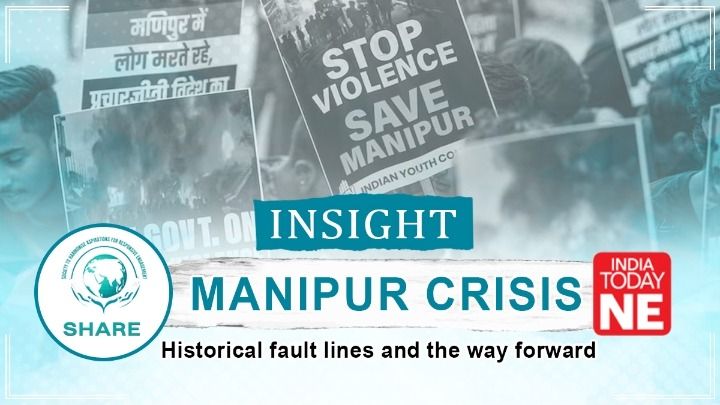
Unraveling the Manipur Crisis: A Deep Dive into the Emotional Struggle Over Identity, Land, and Heritage

For 19 months, Manipur, in northeast India, has been engulfed in violence, highlighting deep-rooted ethnic conflict and socio-political divisions. The tension peaked on May 3, 2023, in a violent clash between the Meitei and Kuki communities, resulting in 250 deaths, 1,600 injuries, and over 60,000 displaced individuals. These people now reside in temporary relief camps, grappling with immense loss and uncertain futures. The conflict underscores a battle for honor and identity amidst unresolved historical grievances.
Manipur, a state with 3.2 million residents across 23,356 square kilometers, hosts three main ethnic groups: the Meiteis, Nagas, and Kukis. The Meiteis, primarily Hindu and number 53% of the population, are largely confined to the resource-limited Imphal Valley. In contrast, the largely Christian Nagas (22%) and Kukis (16%) control 90% of the land in the surrounding hills. This unequal land distribution has fueled resentment and demands among the Meiteis for Scheduled Tribe status, exacerbating ethnic tensions.
Religious demographic shifts further complicate the socio-political landscape, with the Hindu population decreasing from 62% in 1961 to 41% today, and Christians rising to 41%. Historical narratives, claims of original inhabitance, and the impact of the Armed Forces (Special Powers) Act have also intensified unrest.
Indigenous insurgencies and systemic inequities contribute to the volatility. Manipur’s legislature, often seen as neglecting Kuki- and Naga-dominated regions, increases feelings of marginalization, while cross-border issues like drug trafficking sow further discord. Community-driven organizations, such as the Meira Paibis—once grassroots activists—struggle in the polarized environment.
To achieve peace, Manipur requires commitment to equitable development, land reforms, and rebuilding trust through dialogue. The state and central governments are urged to prioritize these measures over political expediencies to secure a peaceful future for the region. These insights come from the Society to Harmonise Aspirations Responsible Engagement (SHARE), which aims to inform policy for North East India.
Original Story https://www.indiatodayne.in/opinion/story/manipur-crisis-a-complex-conflict-of-identity-land-and-history-1129726-2024-11-30?utm_source=rssfeed
Category :
Tags:
Publish Date: 2024-11-30 08:00:00