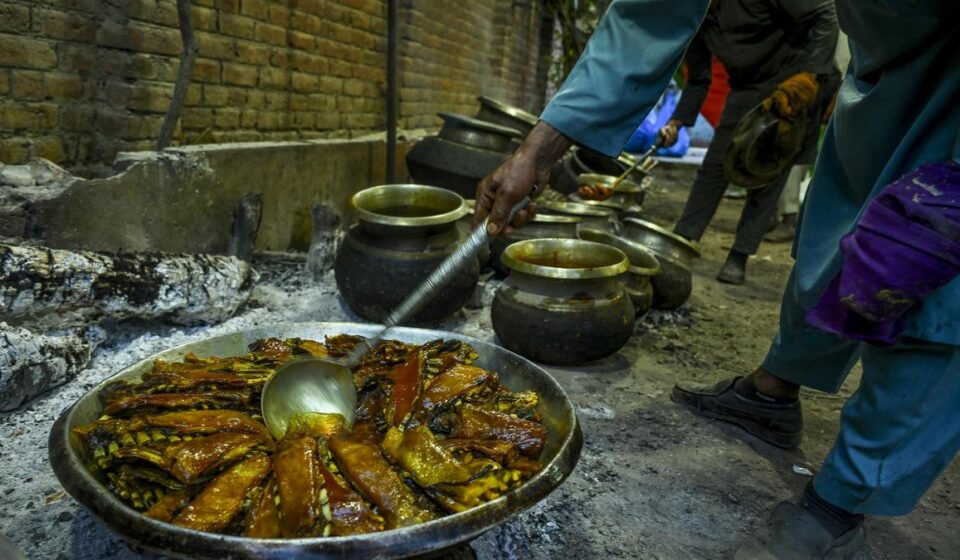

Experts have identified Kashmir’s wazwan — the elaborate, meat-heavy feast served at weddings and festivals — as a key cultural factor behind the region’s sharp rise in diabetes, warning that repeated high-calorie meals, a rice-heavy daily diet and long sedentary winters are combining to increase metabolic risk. A wazwan can feature more than 30 mutton and chicken preparations and add up to 4,500-5,500 calories, several times the average daily requirement, according to Diabetes Simplified for Kashmir, released on World Diabetes Day (November 14). The book was co-authored by endocrinologists Mohammad Hayat Bhat and Shahnawaz Mir and cardiologist Nasir Shams.
The authors say repeated post-meal spikes in glucose and lipids after feasts of this scale are likely contributing to the region’s rising burden of abnormal blood sugar. Such exposure accumulates over time rather than occurring in isolation, they argue.
The warning comes amid a marked increase in diabetes cases in Jammu and Kashmir. According to Union Ministry of Health and Family Welfare data, the Union Territory screened more than 2.15 million people and diagnosed 48,623 with diabetes. In 2025-2026, 2.84 million people were screened and 85,948 were found to have diabetes. Over the past three years, the Union Territory added 2.18 lakh new patients to its diabetes burden, the data suggest.
Aside from more widely seen risk factors such as poor physical activity and tobacco use, the book identifies Kashmir’s distinctive lifestyle as a major contributor. It notes that the daily plate remains rice-centric, with large portions of rice translating directly into a high post-meal glycaemic load. Traditional dietary patterns — rice-heavy meals, salt tea, preserved winter foods and elaborate festive feasting — persist largely unchanged even as urbanisation and declining physical activity have replaced subsistence agriculture and labour-intensive living.
The book says the rapid shift cannot reflect genetic change. It points instead to a compressed nutrition and lifestyle transition. Type 2 diabetes prevalence in Kashmir has risen sharply within a single generation: a 1999 survey found known diabetes in just 1.89% of adults, with 4.25% undiagnosed, while recent Indian Council of Medical Research-INDIA data show 7.8% prevalence.
Kashmir’s prolonged winters add to the risk, the experts say. Heavy snowfall and sub-zero temperatures for several months compress daily life indoors, warmed by the hammam and the kangri, a portable firepot carried beneath the pheran. The convergence of high food intake with a pronounced sedentary winter period appears to produce a compounding, rather than merely additive, metabolic burden across the Kashmiri year, the authors state.
The doctors also warn that large meals can be risky and may act as a sudden trigger for heart attacks. Overeating should be considered a heart attack trigger, much as extreme physical activity and severe anger episodes can provoke an attack, they said.
Original Source: https://www.thehindu.com/news/national/jammu-and-kashmir/as-diabetes-spikes-in-kashmir-the-health-lens-turns-to-the-fabled-wazwan/article71705566.ece
Category:
Tags:
Publish Date: 2026-11-16 03:00:00