
The Architecture of Credit: What India’s Private-Credit Boom Reveals About Our Data Stack
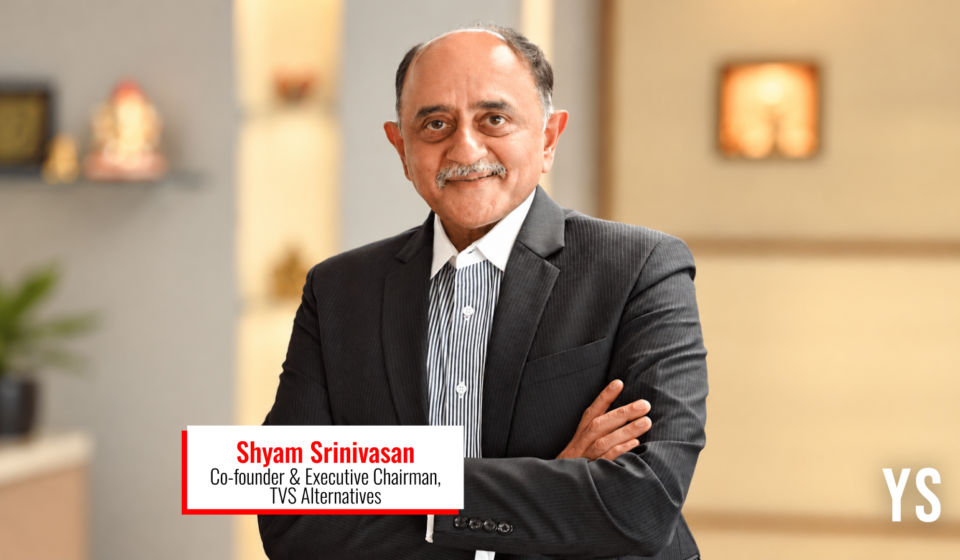
I have often argued that the most consequential enterprise architecture decisions are not made in server rooms-they are made in regulatory filings. The news that TVS Capital has launched TVS Alts, a private-credit platform targeting Rs 750 crore (with a Rs 500-crore green-shoe option) to write secured loans of Rs 40–100 crore, is a case in point.
The context is telling. The fund has filed with SEBI and awaits approval. Domestic funds now account for 74% of the $3.5 billion in private-credit deal value in H1 2026, while SEBI’s amended AIF regulations and the April amendments to the Insolvency and Bankruptcy Code are reshaping the plumbing of Indian capital. This is not merely market activity-it is a fundamental reconfiguration of India’s financial data architecture.
Here is what I find architecturally interesting: the investment team has assessed 42 opportunities, with only two or three in active consideration. That is a funnel, not a pipeline. At a target ticket size of Rs 40–100 crore, the ratio of assessment to deployment is the real operational bottleneck. For a fund targeting 17% returns, underwriting must be systematic without becoming mechanical. This is where the “data-to-decision” architecture becomes non-trivial.
The IBC amendments are particularly revealing. When the IBBI consults on corporate insolvency rules to reduce “procedural delays,” it is effectively addressing what I call process debt-the accumulated data friction that slows credit resolution. Every month of delay in a resolution is a systems gap in the credit lifecycle. For enterprise architects, this is a useful mental model: regulatory reform is often the business layer’s way of patching an infrastructure problem.
The MSME Parallel
The same architecture that TVS Alts is building for Rs 40–100 crore lending-collateral assessment, security documentation, credit profiling-is structurally identical to what MSME lending requires at Rs 40–100 lakh. The difference is unit economics and data infrastructure. India’s DPI challenge is not about payments; it is about configuring the Account Aggregator, GSTN, and MCA data layers into a credit-assessment pipeline that works for small-ticket borrowers.
For Northeast India, this matters enormously. The “missing middle” of enterprises here does not lack creditworthiness-it lacks data traceability. The private-credit boom is a useful sandbox: it demonstrates what a well-structured credit-assurance pipeline looks like under institutional oversight. The question is whether we can learn from it before building, or build it wrong and spend a decade on process debt.
What This Means
- Credit decisioning is a data architecture problem. The fund that wins is not the one with the most capital; it is the one with a repeatable, auditable assessment process.
- Regulatory reform is data governance. IBC and SEBI amendments are reducing the process debt that inflates the cost of credit.
- Domestic capital is sovereign infrastructure. When Kotak Alts closes Rs 5,000 crore entirely from domestic investors, it signals structural depth-not just a market narrative.
- The blueprint scales down. The architecture of Rs 75 crore private credit can inform the architecture of Rs 75 lakh MSME credit, if the DPI integration is right.
Every credit decision is a promise backed by a system. India’s private-credit maturity will not be measured by fund size-it will be measured by the integrity of the underwriting pipeline behind it. That is the architecture that matters, and it is being built one regulatory amendment at a time.
About the Author: Sanjeev Sarma is the Founder Director and Chief Software Architect at Webx Technologies. With a core focus on Generative AI integration, Cloud-Native Scalability, and Enterprise Software Architecture, he has spent over two decades driving digital transformation across Northeast India and beyond. Beyond his corporate leadership, Sanjeev is deeply invested in shaping the future of the IT industry. He serves as an Industry Expert on the Board of Studies for Assam Don Bosco University’s School of Technology, advises state technology committees, and actively mentors emerging tech startups at STPI. He brings a unique, dual perspective of high-level enterprise execution and future-ready academic curriculum development.