From Brand to Belief: Architecting Trust That Scales

Belief Is an Architecture Problem
Every marketing conference I attend, I hear teams obsess over CAC, ROAS, and funnel velocity. What I almost never hear discussed is the only metric that truly compounds: whether your customer believes you.
Attention has become cheap infrastructure. Belief has not.
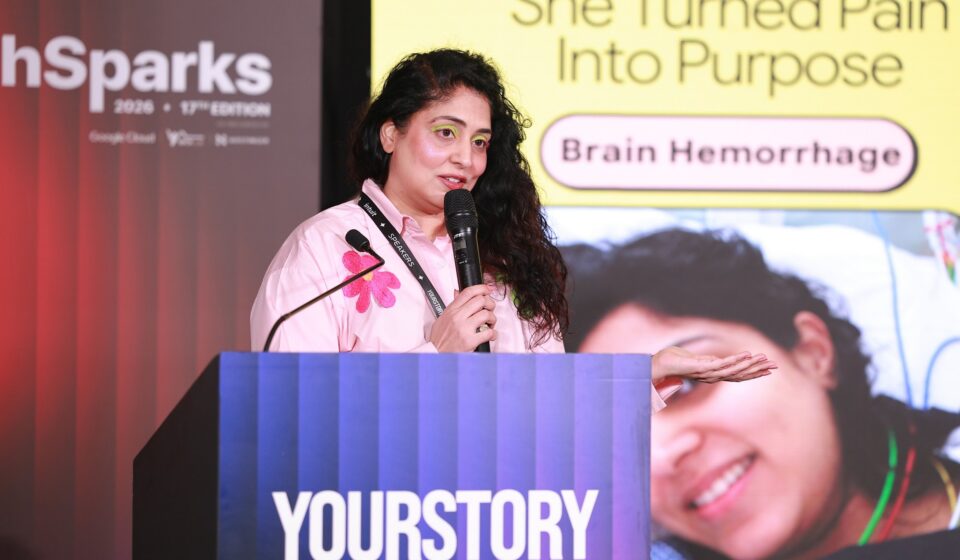
That tension was on full display at TechSparks 2026 in Bengaluru, where Soulflower’s Natasha Tuli drew a line every founder should memorize: a first purchase proves your marketing worked; a repeat purchase proves your product did. Her playbook – filming her soap production despite “trade secret” warnings, building a non-oily hair serum that violated her own brand’s orthodoxy, and eventually deploying “Ask Natasha,” a bot trained on her years of after-midnight customer DMs – reads less like a marketing story and more like a systems design story.
The founder as a single point of failure
Tuli was disarmingly honest about her bottleneck: she personally held the social media passwords, answered DMs past midnight, and admitted she cannot do it forever. That is not a staffing problem; that is a classic SPOF confession. Every enterprise has an equivalent – the veteran engineer who alone understands the legacy billing system, the support lead who knows why that one workaround exists. What “Ask Natasha” really represents is institutional knowledge capture: years of genuine conversations becoming the corpus, her judgment becoming the model’s constraints. Generative AI has quietly made tribal knowledge encodable at near-zero marginal cost. Most organizations are still leaving that asset unindexed.
Transparency is observability
When Tuli filmed her manufacturing line, she applied a principle we in engineering already live by: show your work, and confidence follows. We build dashboards, audit trails, and explainable pipelines because observability earns trust. She did the same with a soap factory. The bet – that the process itself is the moat – is the same bet serious architects make on auditable systems over black boxes. Trust is a non-functional requirement; it simply never appears on the NFR list. It should.
The sacred-cow tax
It took Tuli two years to convince her co-founder to build that serum, because oils were “the brand.” I see this constantly in enterprise modernization: legacy identity masquerading as strategy. The customer’s behaviour was the requirement; brand orthodoxy was the technical debt. And like all debt, the delay compounded interest.
One caution, though. Scaling presence is not the same as counterfeiting it. A persona bot must be disclosed, bounded, and faithful to the voice it encodes – otherwise a trust asset becomes a trust liability overnight.
A note for India’s builders
This is why the D2C moment fascinates me for the founders I mentor at STPI, including many building from the Northeast. Physical proximity was once the only way a small brand earned belief. Conversational AI now lets a founder in Guwahati feel present for a customer in Kochi at 1 AM. That is frugal innovation – trust infrastructure without headcount. But it only works if the underlying conversations are real. The bot amplifies character; it cannot fabricate it.
Takeaways
- Put trust on the NFR list. If you can’t design for believability, you’ll only ever optimize attention.
- Capture tribal knowledge while the expert is still in the building. Past conversations are your most defensible training data.
- Automate presence, never counterfeit it. Disclose the bot; preserve the voice.
- Price your sacred cows. Orthodoxy that blocks customer needs is debt with a marketing budget.
Tuli closed with three questions: why customers choose you, why they return, and how you’ll retain their trust as you grow. I would frame it one way: every architecture is ultimately a promise, and the market audits whether you keep it at scale.
Attention is rented by the click. Belief is owned – and like any good architecture, it is built one honest decision at a time.
About the Author: Sanjeev Sarma is the Founder Director and Chief Software Architect at Webx Technologies. With a core focus on Generative AI integration, Cloud-Native Scalability, and Enterprise Software Architecture, he has spent over two decades driving digital transformation across Northeast India and beyond. Beyond his corporate leadership, Sanjeev is deeply invested in shaping the future of the IT industry. He serves as an Industry Expert on the Board of Studies for Assam Don Bosco University’s School of Technology, advises state technology committees, and actively mentors emerging tech startups at STPI. He brings a unique, dual perspective of high-level enterprise execution and future-ready academic curriculum development.