The Buyout Reckoning: BioWare, EA, and the Cost of Sustained Growth

The Hardest Line of Code Is the One You Delete: BioWare, EA, and the Architecture of Letting Go
Thirty years ago, BioWare was not a line item. It was the studio that helped define the modern role-playing game – Baldur’s Gate, Mass Effect, Dragon Age. This week, its name appears in a restructuring memo.
Most of the industry will read this as another layoff headline. I read it as something far more instructive: a painful but honest masterclass in portfolio architecture.
The signal, stripped of noise
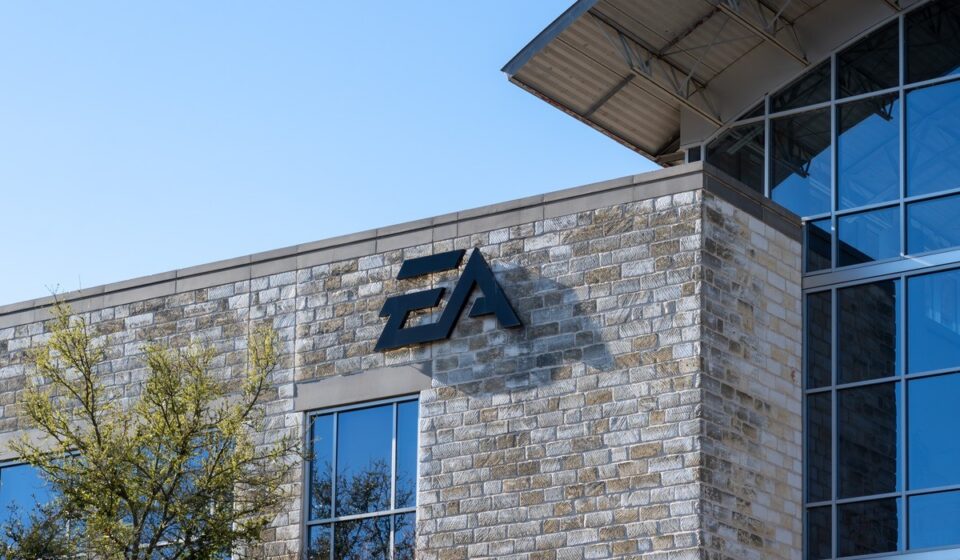
EA is cutting roughly 3% of its global workforce – around 400 people – and shutting down BioWare, closing its Edmonton workspace and halting the early-development Mass Effect project. About 50 of those affected are BioWare people. The Sims roadmap is being consolidated around “Project Evergreen” while “Project Lotus” pauses, and the company is concentrating its two biggest bets on a Marvel Iron Man title and the next Star Wars Jedi game. All of this unfolds under new ownership – Saudi Arabia’s PIF, Silver Lake, and Affinity Partners – following last year’s $55bn acquisition.
Subtraction is the hardest architectural decision
Every engineering organization is fluent in adding – services, features, headcount. Almost none are disciplined at subtracting. EA’s leadership used the vocabulary of what I have long called the sunset discipline: “we’ve challenged assumptions, confronted hard realities, imagined new possibilities.” In two decades of building and modernizing systems, I have rarely seen an organization fail because it could not start something. I have seen many fail because they could not stop something.
Legacy without a forward path is elegant debt
BioWare’s IP is cultural heritage – but heritage is not a pipeline. When an early-development bet cannot out-argue two better-capitalized flagships, extending it is sunk-cost gravity, not strategy. Architects know this feeling intimately: the beloved monolith everyone respects and no one will fund. EA chose depth over optionality – two flagships over a divided roadmap. Depth compounds. Optionality only rents.
Ownership shapes architecture
Here is the quieter story. When capital partners own the company, engineering roadmaps get read through a capital-efficiency lens, and exploratory R&D is the first line to be challenged. The uncomfortable lesson for every CTO and founder: your architecture is a financial document whether you like it or not. If you cannot articulate, in the language of capital, why a platform or an experiment deserves to exist, someone else will make that argument in a room you are not in.
Shutdowns leak knowledge, not just headcount
Four hundred people is the visible number. The invisible one is tacit knowledge – toolchains, domain memory, the “why” behind a decade of decisions. Any enterprise that decommissions a system without deliberate knowledge capture isn’t cutting cost; it is transferring risk to whoever rebuilds next. If you must close the door, close it with a knowledge-transfer plan, not just a farewell email.
A note closer to home
In Indian enterprises and in government technology, I have watched departments defend legacy systems long past their useful life – not because the systems work, but because retiring them demands a governance courage we rarely design for. The BioWare decision is a reminder that the sunset discipline is learnable, and that not learning it is far more expensive. And to the young professionals I mentor at STPI: even legendary studios are not annuities. Build skills that travel – deep fundamentals, broad systems thinking.
What I’d put on the whiteboard
- Treat decommissioning as a first-class capability, with the same rigor you give a launch.
- Measure focus by what you stop, not what you start.
- Capture knowledge before you close the door – otherwise you’re only relocating risk.
- Learn to speak the language of capital; architecture must argue its own ROI.
- For careers: portability beats pedigree.
EA did not just close a studio; it closed a chapter. And chapters, unlike code, cannot be refactored back. The future is rarely blocked by what we lack – it is blocked by what we refuse to retire.
EnterpriseArchitecture #LegacyModernization #Strategy #Leadership #ProductPortfolio
About the Author: Sanjeev Sarma is the Founder Director and Chief Software Architect at Webx Technologies. With a core focus on Generative AI integration, Cloud-Native Scalability, and Enterprise Software Architecture, he has spent over two decades driving digital transformation across Northeast India and beyond. Beyond his corporate leadership, Sanjeev is deeply invested in shaping the future of the IT industry. He serves as an Industry Expert on the Board of Studies for Assam Don Bosco University’s School of Technology, advises state technology committees, and actively mentors emerging tech startups at STPI. He brings a unique, dual perspective of high-level enterprise execution and future-ready academic curriculum development.